Invisible work, unequal pay
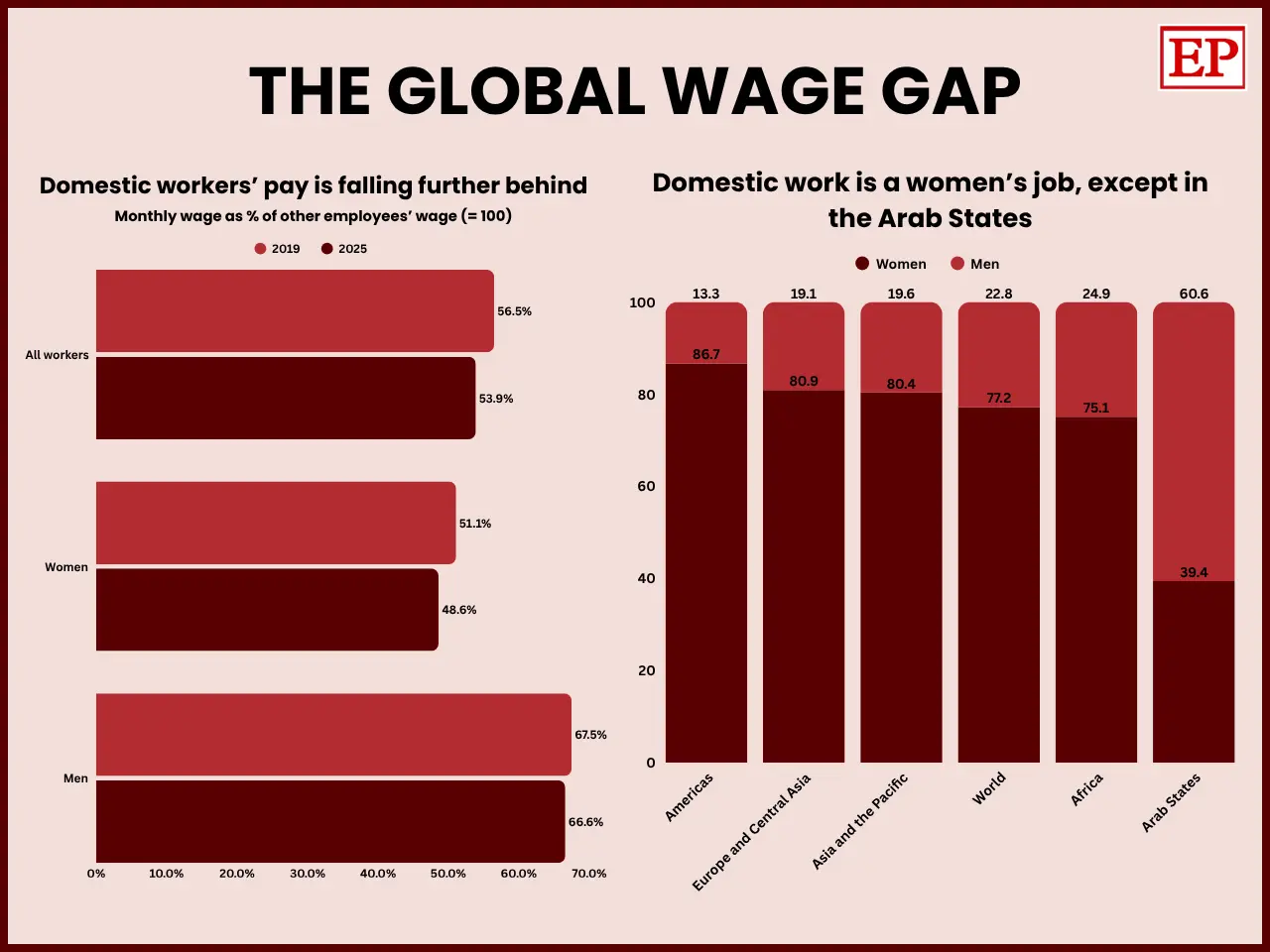
Despite doing essential jobs such as cleaning, cooking, and caring, domestic workers globally earn only 53.3% less than other employees on average per month. New estimates from the International Labour Organization show the disparity is increasing despite the adoption of Convention No. 189 to protect domestic workers’ rights. There are now approximately 80 million domestic workers worldwide compared to 75.6 million in 2019. Since then, disparities have grown, with their earnings relative to other employees falling from 56.4 to 53.3%.
While this may seem so, many countries (including India) have seen an increase in the wages given to domestic workers. However, these increases have not matched those of other employees. As women make up 77 per cent of the workforce, their average wage is only 48 per cent of other employees. Men earn 65.8 percent of the wage.
Protection Still Needed
Approximately 66.5 million domestic workers (or 83.1%) are informally employed and therefore do not have proper labor and social protections. A large proportion of the workers (35.2%) work 49 hours a week or more. The ILO puts emphasis on ensuring domestic workers are acknowledged and protected like any other worker.