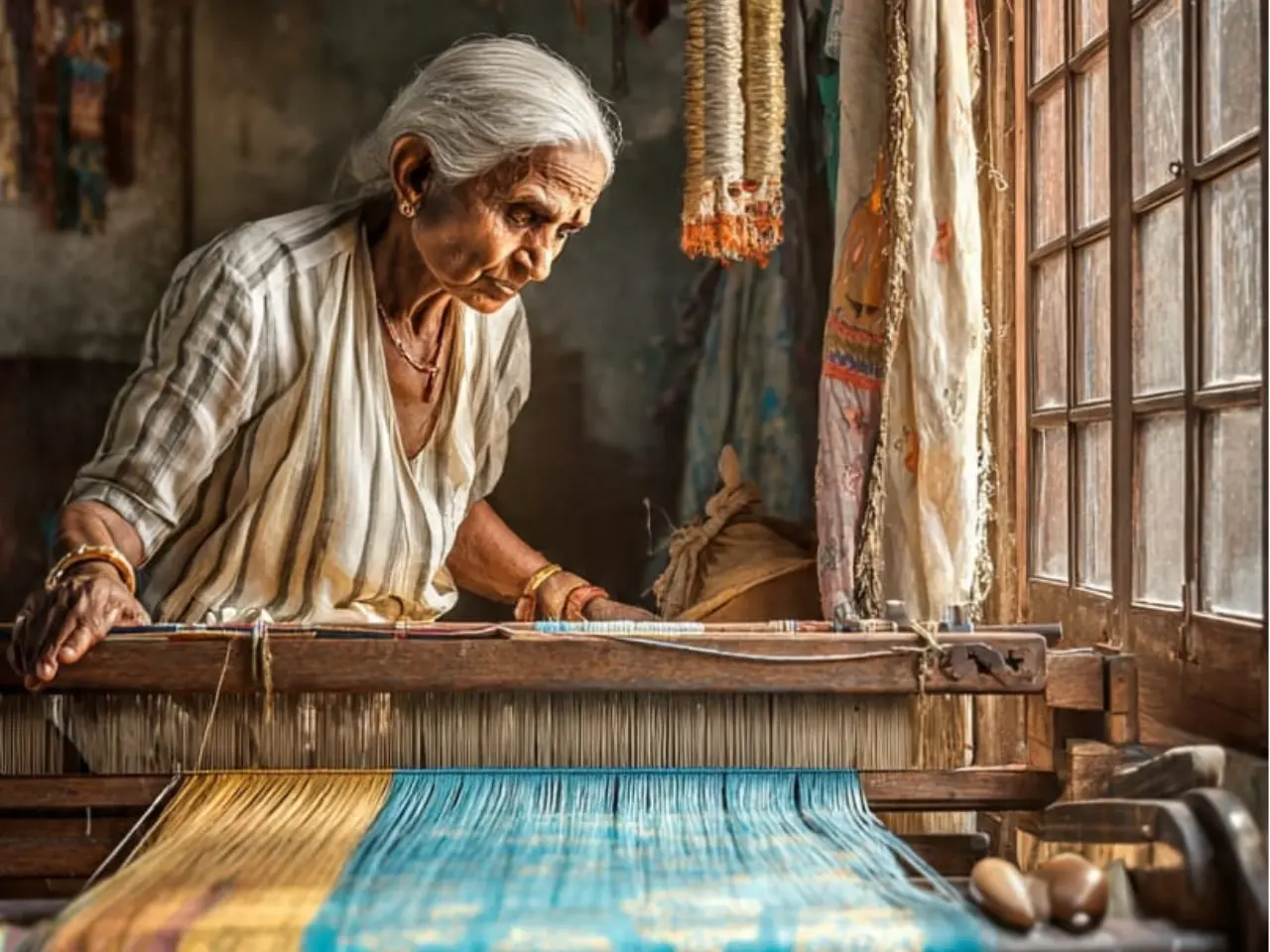
New Delhi: The colorful designs and skilled weaving of the handloom products of India are winning admirers across different corners of the world. With the increase in the demand for sustainable and handmade goods among the foreign customers, India is taking several measures to develop and export its handloom products. Handloom has always been regarded as the lifeline of the rural economy and the pride of the rich culture of India. Whether it is the Banarasi silk sarees of Uttar Pradesh or Kanchipuram silks of Tamil Nadu or Pochampally Ikat of Telangana, every handloom product holds a distinct significance. It is the authenticity that differentiates handloom from other textile fabrics. Unlike other products that are produced through machines, every handloom product is made under the guidance of the skilled hands of the weavers. Moreover, handloom textile products are environment-friendly since they do not require electricity in the process of manufacturing.
In light of its export capacity, the Government of India has taken many steps to help the weavers and market Indian handloom products internationally. The first step is the National Handloom Development Programme (NHDP), which offers financial assistance and training to the weavers.Another step that the government took was the introduction of the India Handloom Brand to give premium-quality handloom products a distinct identity. This step has helped to gain the trust of the international buyers and has helped in making India a reputed name in the textile industry.The government has been increasing the efforts in terms of marketing and export promotion by helping in participating in international trade fairs and exhibitions. E-commerce has been used by artisans in the digital era as a means of increasing market reach. This is achieved because of government assistance to online advertising and digital channels, which have made it possible for artisans to reach their customers globally without relying on middlemen and with export potential.
As industry specialists say, some prominent programs are behind the success of the government's activities, such as the National Handloom Development Programme (NHDP), Handloom Marketing Assistance (HMA), Raw Material Supply Scheme (RMSS), and India Handloom Brand program. The listed projects helped weavers gain access to good-quality raw material, modern designs, skilled training, and better marketing opportunities. At that, the Handloom Export Promotion Council (HEPC) made an important contribution in making contact between Indian exporters and international buyers through trade fairs and global exhibitions. The results of these projects are becoming more noticeable.
The handloom products of India are winning popularity in international markets due to their sustainable and authentic nature. Increased participation in global exhibitions and the use of Internet platforms help increase export opportunities for Indian weavers and their producer organizations. That is why many weaving communities enjoy higher incomes and better market access, while traditional handloom techniques remain intact for future generations. One of the other important steps taken is the registration of the unique handloom products under Geographical Indication (GI) tags. The Geographical Indication tag helps to safeguard the identity of the products and also boosts their value and popularity in the international market.
According to the industry experts, these steps are not only aiding in increasing the export income but are also helping the livelihoods of millions of handloom weavers. In this way, India is making its handloom industry a source of economic development and cultural sustenance.With the increase in global preference for sustainable and handmade products, India's handloom industry seems poised to make its mark in international markets in the coming years.