Where is the money going?
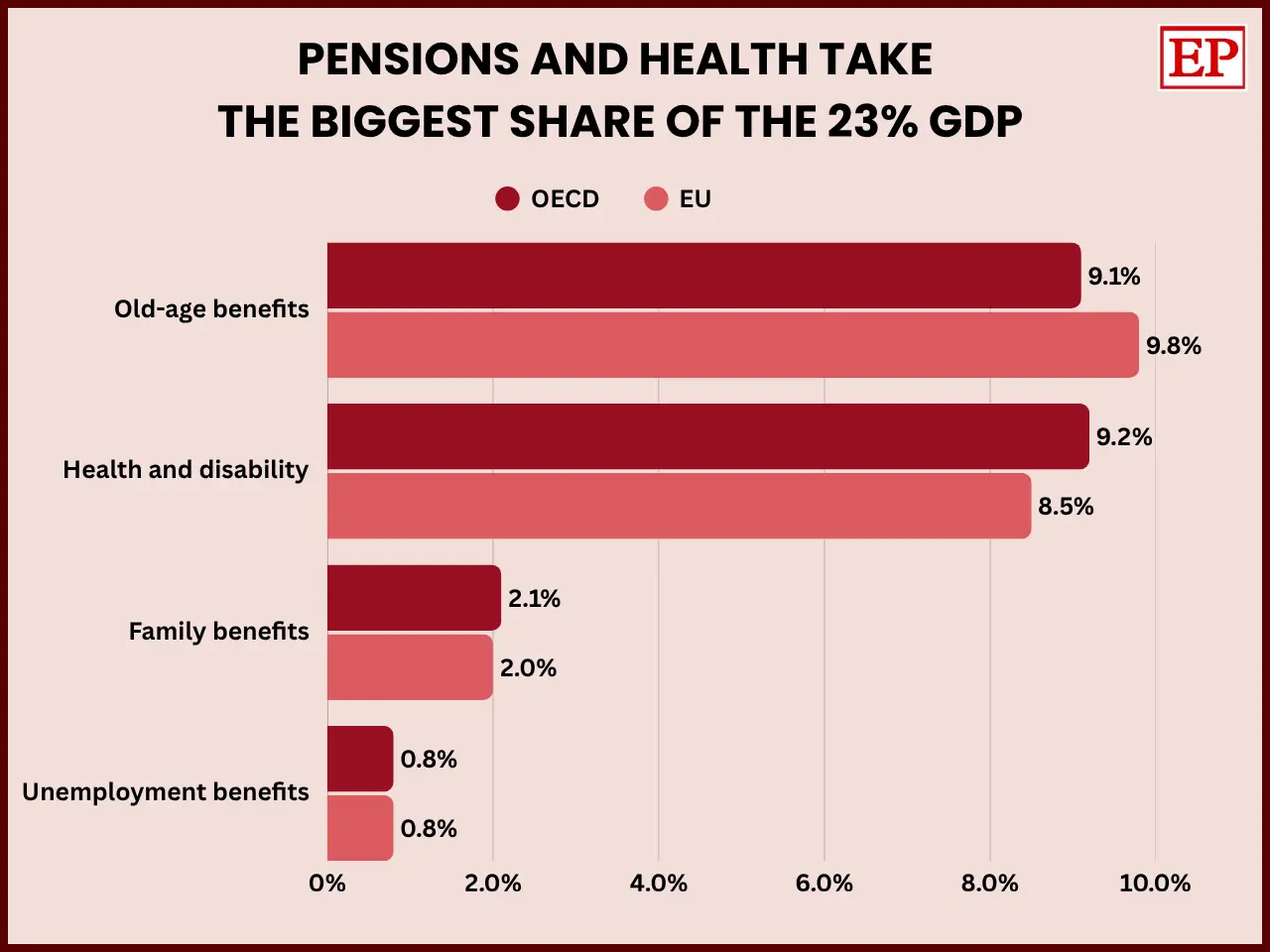
The largest portion of public spending on social protection is on pensions and health (23% of GDP). In the OECD 9.1% of GDP is spent on old age benefits, whilst in the EU 9.8% of GDP is spent on old age benefits. Health and disability costs make up 9.2% and 8.5%, respectively. Family benefits and unemployment are much smaller with family benefits making up around 2% and unemployment 0.8%.
Why costs will increase
As populations become older, costs will increase. By 2045 pension spending is expected to increase by 1.1% of GDP in the OECD, and health and long-term care spending will increase by 1.5%. However, social security contributions are in danger of becoming a problem. These are mostly levied on wage income and make up about half of public social expenditure. Working-age populations are decreasing, and irregular work is increasing, causing labor income to decrease.
Broadening the base
The OECD suggests that there are limited areas to reduce spending, so governments could look to increase the base. This could include increasing taxes on capital income, inheritance, and property. Benefits that are not linked to employment, such as child support, should be funded by general revenue. It is important to increase coverage. 14% of employment are self-employed in the EU but only pay 4% of contributions. Also tackling undeclared work will ensure workers are protected and the system strengthened. If nothing is done, there could be an increase in the gap between increasing demand and decreasing resources.