International banking businesses are rising
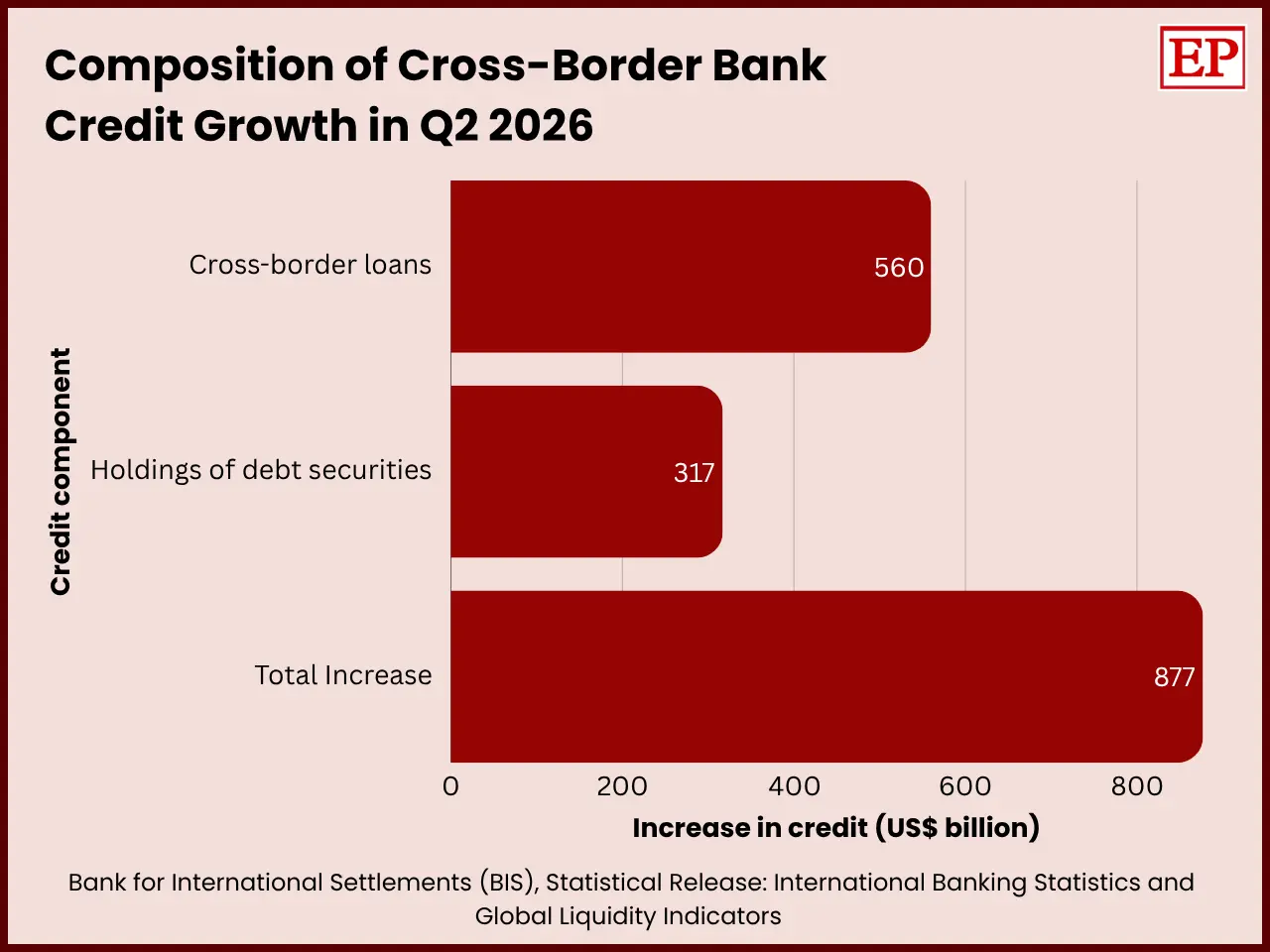
The international banking industry had growth in the second quarter of 2026. The total amount of international credits supplied by banks grew by 11% from last year to a total of $40.7 trillion. (Bank for International Settlements Statistics). This increase was a result of an increase in cross-border lending and debt securities held by banks. This resulted in overall international credit increasing by $.877 billion. Loans accounted for an increase of $560 billion in cross-border credit provided by banks during the second quarter and $317 billion from debt securities. Clearly there is growth in international banking as a whole as banks are increasing their exposure to international debt securities.
Overall, there was an increase in cross-border claims of $1.3 trillion during the second quarter. This figure excludes currency fluctuations and breaks in the statistics. Claims include more financial instruments than just banking credits. It formed almost half of the total increase, amounting to $424 billion. US dollar-denominated credit added a $383 billion increase in credits in these currencies. An increase of 11% was seen in cross-border credits in both currencies when compared to last year.
Growth in credit is varied in emerging economies
EMDEs witnessed growth in credit around the world despite the variations in figures. According to the BIS, international credit grew by $105 billion during Q2, resulting in an annual growth rate of 8.9%.
Emerging Europe saw the highest annual growth with 19%, followed by Africa and the Middle East, which grew by 17%. There was still strong growth in Latin America and the Caribbean with 9.3% annual growth in cross-border bank credit.
However, emerging Asia did not see the same trend, with cross-border bank credit growing by $25 billion in the quarter but actually falling 2.9% compared with last year. These regional figures show that not all countries are seeing the benefit from more activity in the global banking sector. Some emerging markets are seeing more cross-border credit, while others are in fact seeing annual negative growth.
Euro Gains Ground in Global Foreign Currency Credit
Looking at the BIS global liquidity indicators, we can see that there are some interesting trends in the composition of cross-border bank credit to non-bank sectors. This includes lending to non-bank sectors through bank credit, as well as international debt instruments. Euro foreign currency credit was growing at a higher rate than USD and JPY. International debt instruments have grown by 13% annually in euros, whilst those denominated in USD have only grown by 6.7%.
This has meant that more of the foreign currency credit is being offered in Euros since 2022. This includes credit to emerging markets and developing economies. However, this shows that slowly there is a change in the currencies used in international financing, although the USD is still playing an important role.
Overall, this suggests that the international banking sector is increasing. There are changes in the regional and currency composition of credit growth. This can be seen in the continuing growth of cross-border credit to emerging economies and the increase in euro financing.