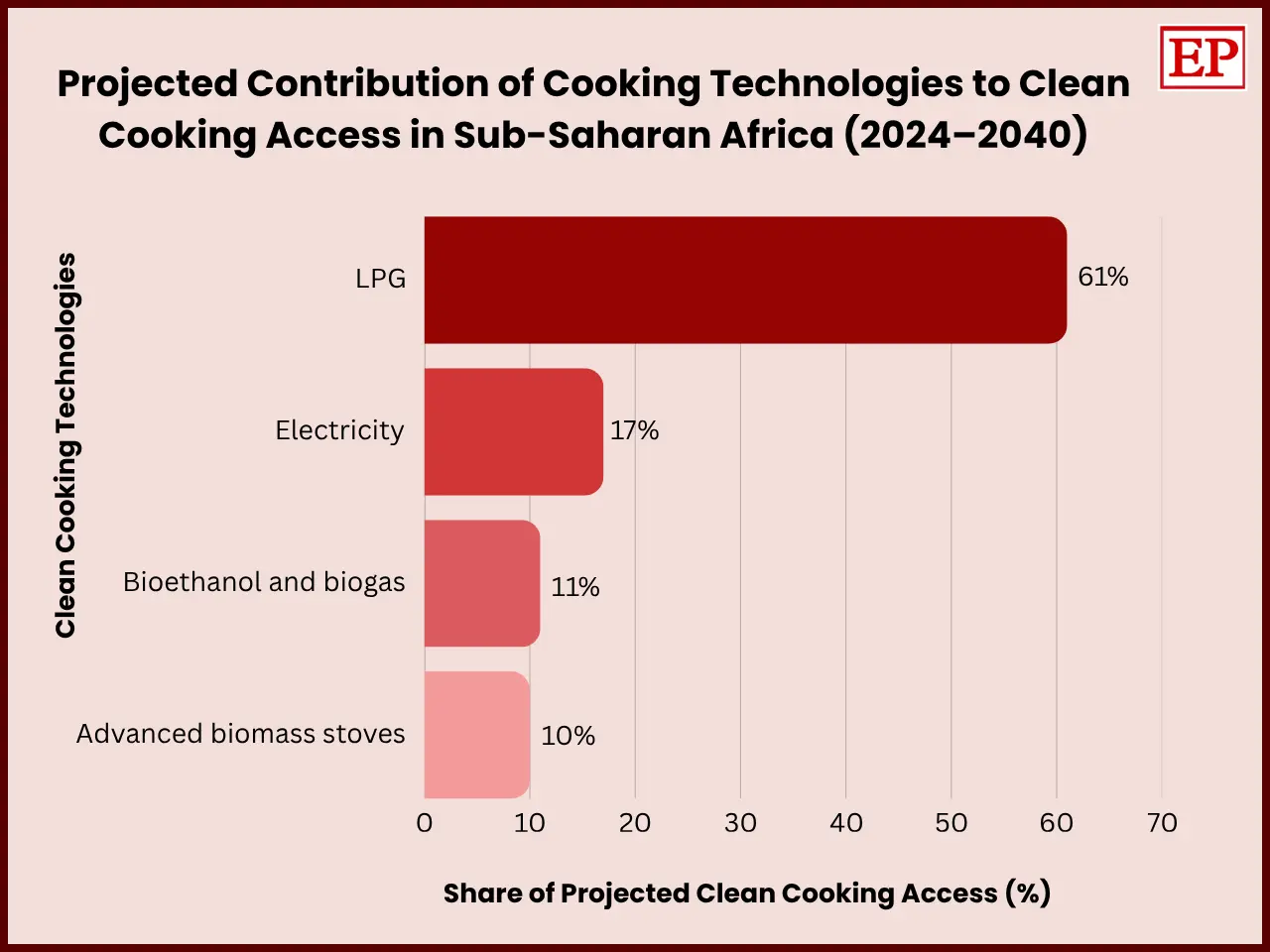
African infrastructure investments are starting to boost the development of clean cooking supply chains. The continent is steadily transitioning from traditional cooking fuels. Access to clean cooking is an economic and developmental challenge, since traditional reliance on biomass fuels in Africa still has negative impacts on public health, household welfare, and sustainability.
Africa’s energy infrastructure investments are starting to play a significant role in facilitating this transition. Enhanced capabilities of storage facilities, electricity grids, and local manufacturing make the creation of a reliable, clean cooking market possible.
Infrastructure Expansion Supports Energy Supply
Improvement in capital investment in Africa is benefiting various components of the clean cooking supply chain. An increased storage capacity of LPG has helped in improving infrastructural support for fuel distribution. Expansion of the electrical networks will also support the adoption of electric cooking technologies. Investments in bioethanol and pellet production are also diversifying the alternative cooking fuels' supply.
Investment and Local Manufacturing Drive Market Development
Investment levels indicate the increasing economic significance of the sector. As per IEA, direct investment in the sub-Saharan cooking sector in 2023 amounted to roughly USD 675 million, a 10% annual increase. Most of the investment is going towards LPG activities, indicating the significance of fuel delivery and storage systems.
The scale-up of cookstove manufacturing and home fuel production can help create jobs, reduce import dependence, and develop regional value chains. Challenges such as price, lack of access to financing, and lack of infrastructure, however, still need to be overcome for more people to adopt cleaner fuels.
Global estimates by the International Energy Agency suggest that it will require an average annual USD 37 billion of total investment to get the entire region to 2040 inclusive. Therefore, it will be essential to generate public and private capital in order to make infrastructure development into energy and economic prosperity.