Asia will account for 59% of global growth in 2026, affirming Asia's role in the global economy as identified in the United Nations Conference on Trade and Development (UNCTAD) projection. The forecasts constitute a mixed regional growth landscape with many emerging economies having high expected growth.
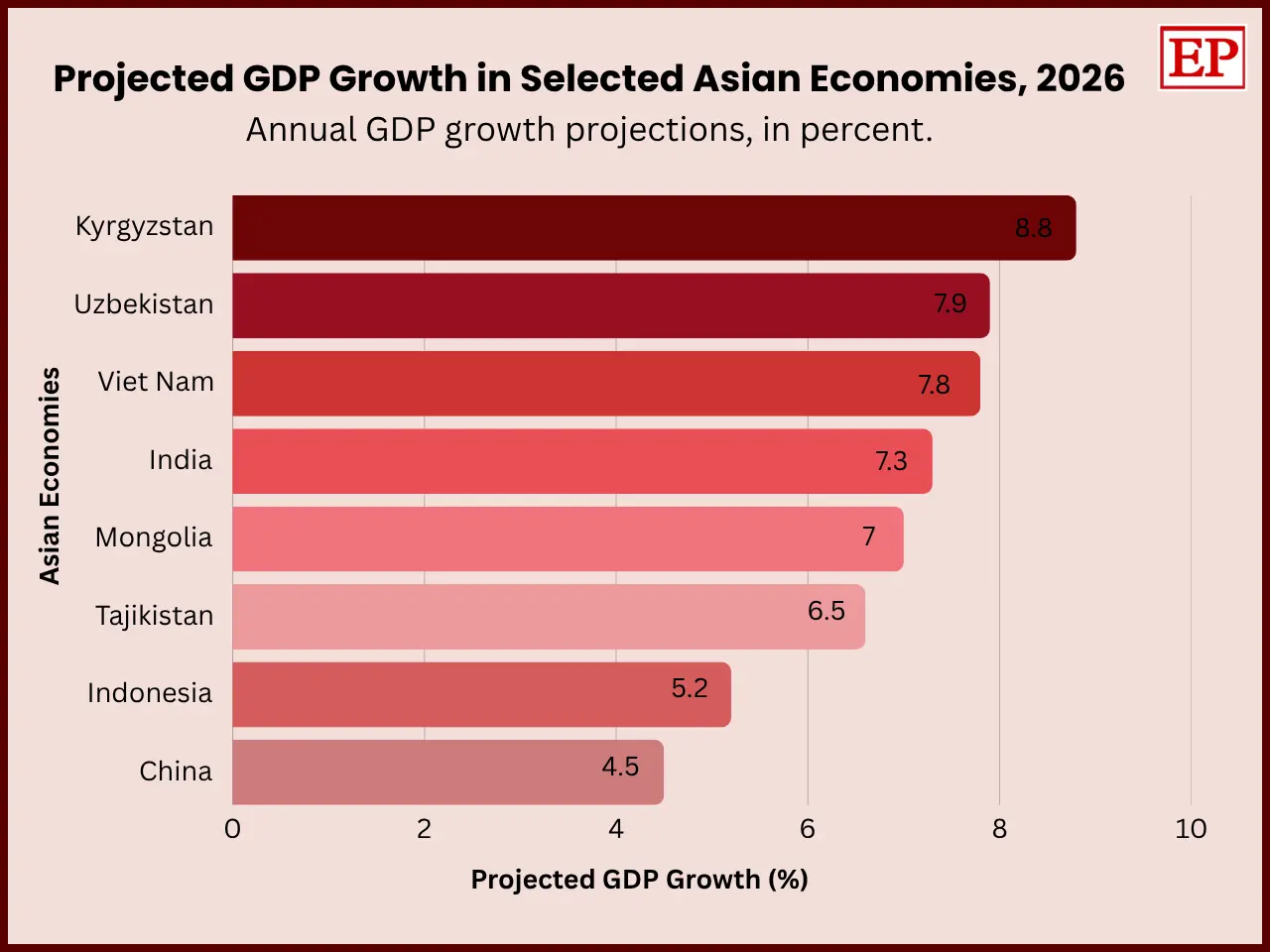
Kyrgyzstan is the economy that is forecast to grow the fastest at 8.8%, followed by Uzbekistan at 7.9% and Viet Nam at 7.8%. India is expected to grow 7.3%, while Mongolia's forecast is at 7.0%. Tajikistan is forecast to grow by 6.6%, whereas Indonesia will grow by 5.2% and China by 4.5%.
Emerging Economies Keep the Growth Train Moving in Asia
While the pace of growth of these nations cannot be compared to the fast convergence expected in the major Asian economies, they could nevertheless contribute to regional output and domestic demand growth and create new trade and investment opportunities. However, growth rates alone are not sufficient to capture differences in size, productivity, or distribution of benefits.
Converting Growth into More Inclusive Economic Development
In terms of the contributions made by Asia to global economic growth, it is pertinent to consider how sustainable this growth would be in the future. Infrastructure spending, job creation, productivity increases, and participation in international markets are some factors that would affect the sustainability of the projected growth.
Policymakers have the task of turning such impressive headline growth into better standards of living and increased economic resilience. While the increasing share of Asia in world output is an important development, continued growth will depend upon improving the economy's productive capacity and broadening the benefits from growth.