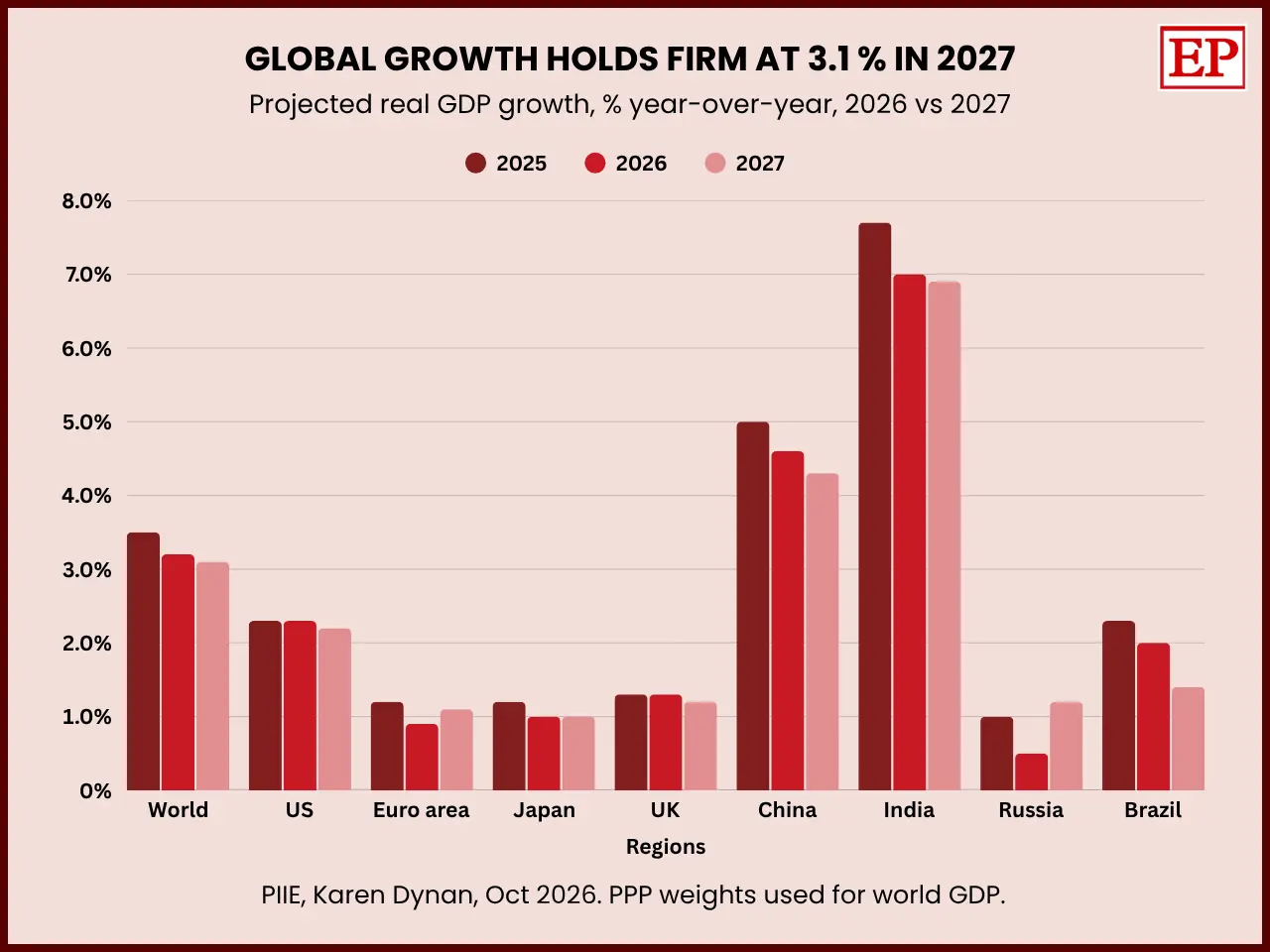
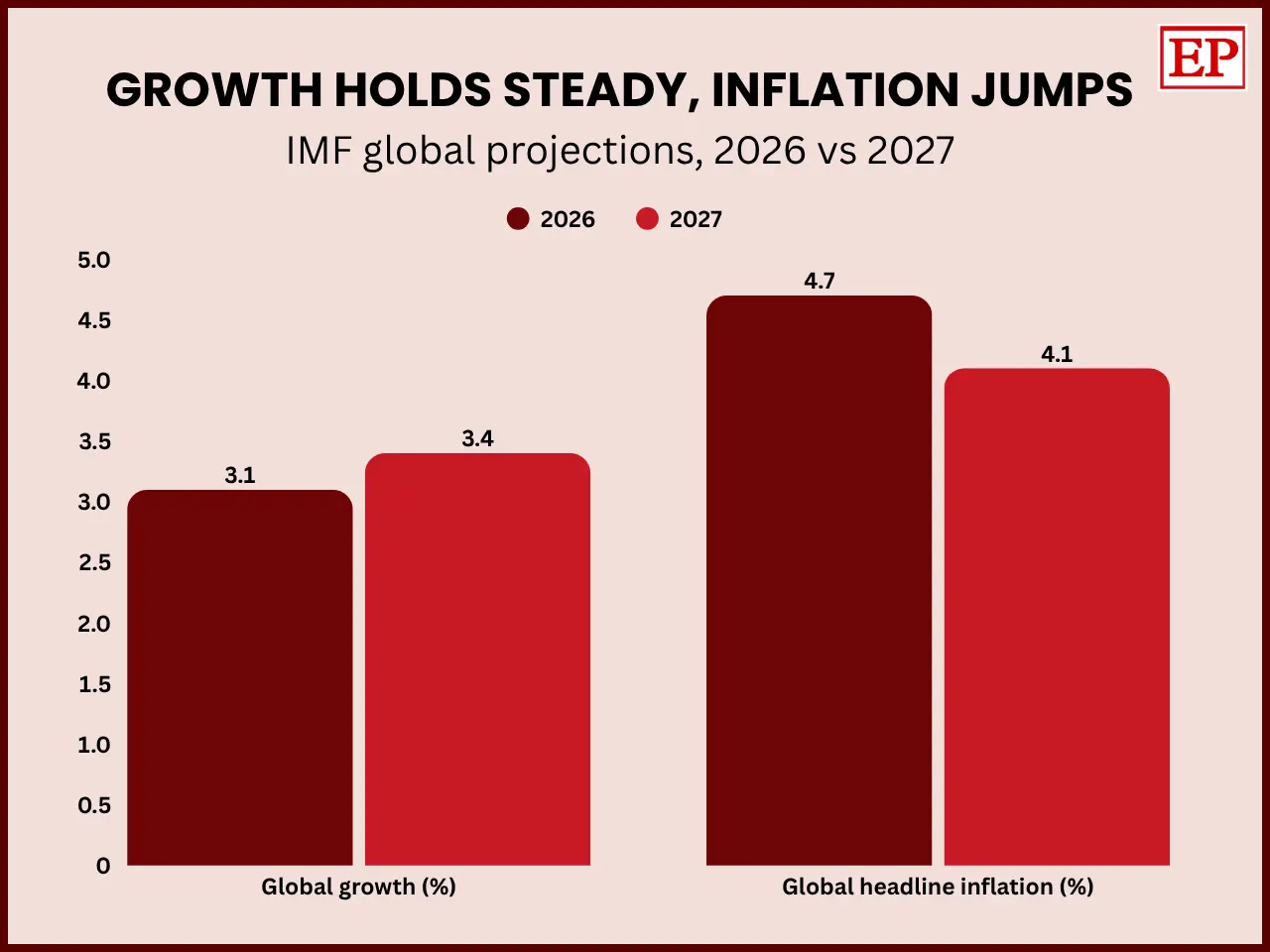
The growth of world output is projected at 3.1 percent in 2026 and 3.4 percent in 2027 in the October 2026 World Economic Outlook. 2026 is unchanged from April, while 2027 has been slightly revised higher.
Inflation is more concerning:
Headline inflation in the world is forecasted to reach 4.7 percent in 2026 and fall to 4.1 percent in 2027. This is a total upgrade of 0.7%. This has been driven mainly by energy and food price inflation. The IMF expects this to be short-lived. While headline inflation remains stable, there is a divide between countries due to geopolitical and technological factors. Countries are seeing increased demand and trade due to increased investment in AI. Countries exporting technology-related goods or with little direct exposure to the war are seeing stability or improvement. Energy exporters outside of the conflict are seeing improvements in their terms of trade.
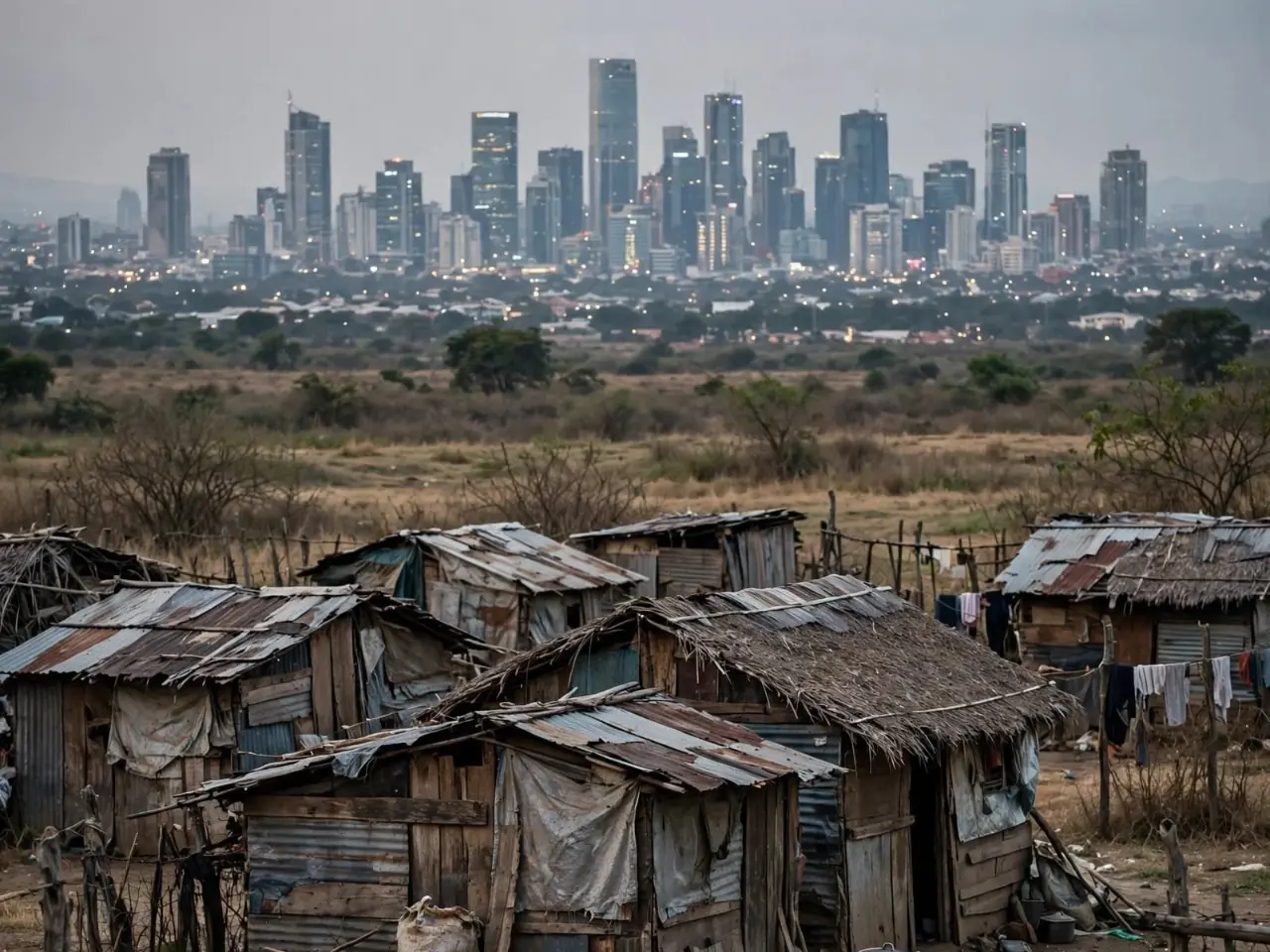
Energy-importing nations with little involvement in the technology chain will face a challenging mix of increased imports, currency pressure, reduced real income, tighter government budgets, and little increase in demand. Many low-income and vulnerable countries will fall into this category. Recent shocks may increase the gap in income between and within countries.
Trade growth worldwide will weaken again in 2026 and may stagnate in 2027, as tariffs and, increasingly, changes to production chains put a brake on growth. Medium-term growth will remain weak, as countries differ in their level of AI preparedness and energy security.
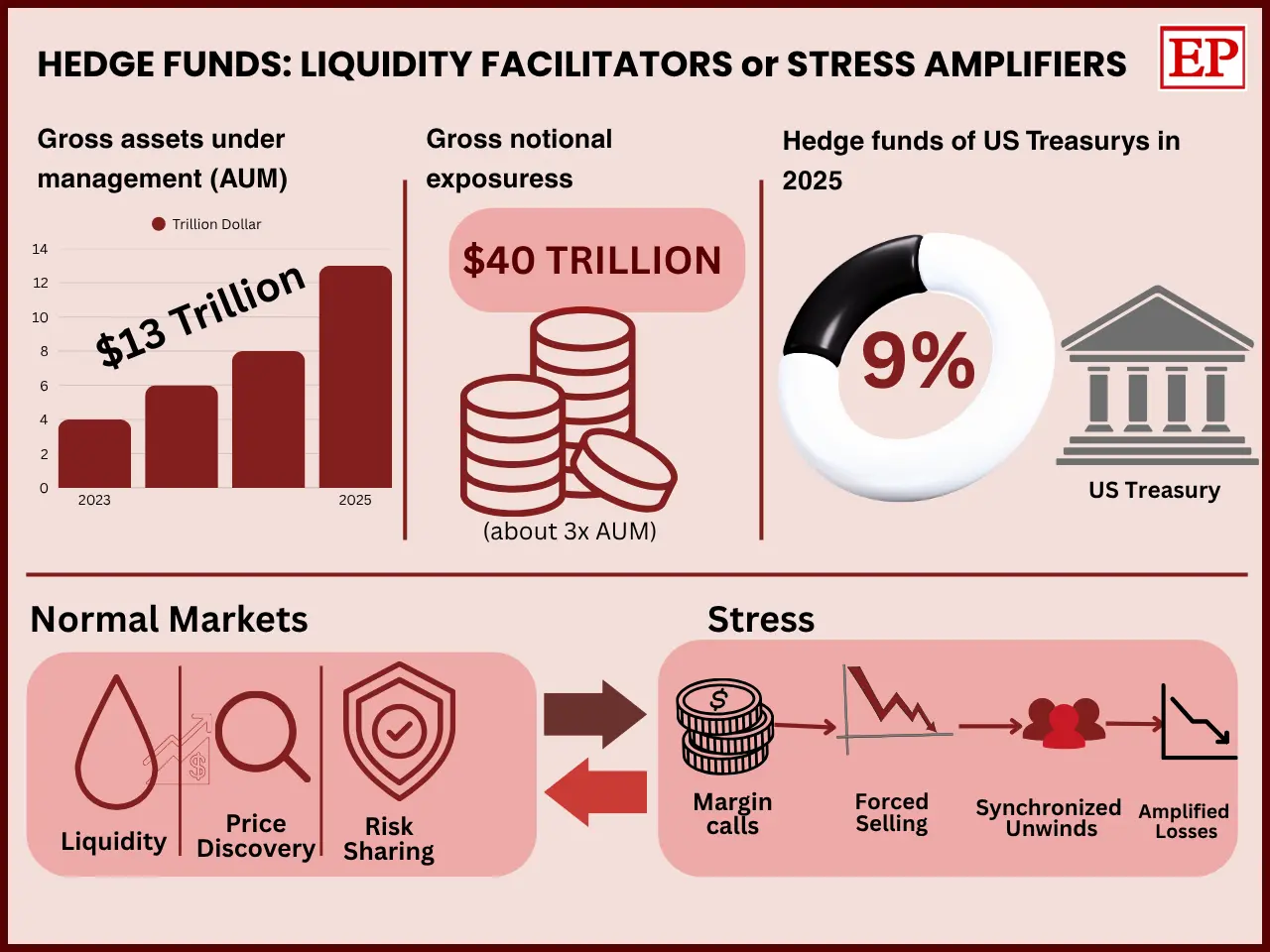
Flexibility has helped so far; companies have been able to reroute shipments, reduce inventories, governments have provided support, and economies have become more efficient using less energy per unit output. But the IMF cautions that there are still restrictions to inventories, which have run low, and commodity markets may be volatile. Fragmentation may cause inefficiencies. If uncertainty continues, this could cause a loss of confidence. Energy constraints could cause delays to the AI boom. Also, the lending environment could change quickly, such as due to concerns regarding government debt.
Overall, the risks are on the downside. A prolonged stand-off or escalation in the Middle East could cause high energy and food prices, causing inflation to return. Energy infrastructure could be attacked, cyberattacks could occur, or extreme weather could occur. Price increases due to supply shocks have had a larger and longer-lasting impact than those due to geopolitical risk.
The promise of AI profits and productivity could come under review, causing a reduction in investment, causing corrections in stock markets and tighter financial conditions. However, there are positives. Investment in AI may be more sustainable, productivity gains may occur quicker, new trading arrangements may provide more certainty, and higher fossil fuel costs may cause faster spending on energy security.
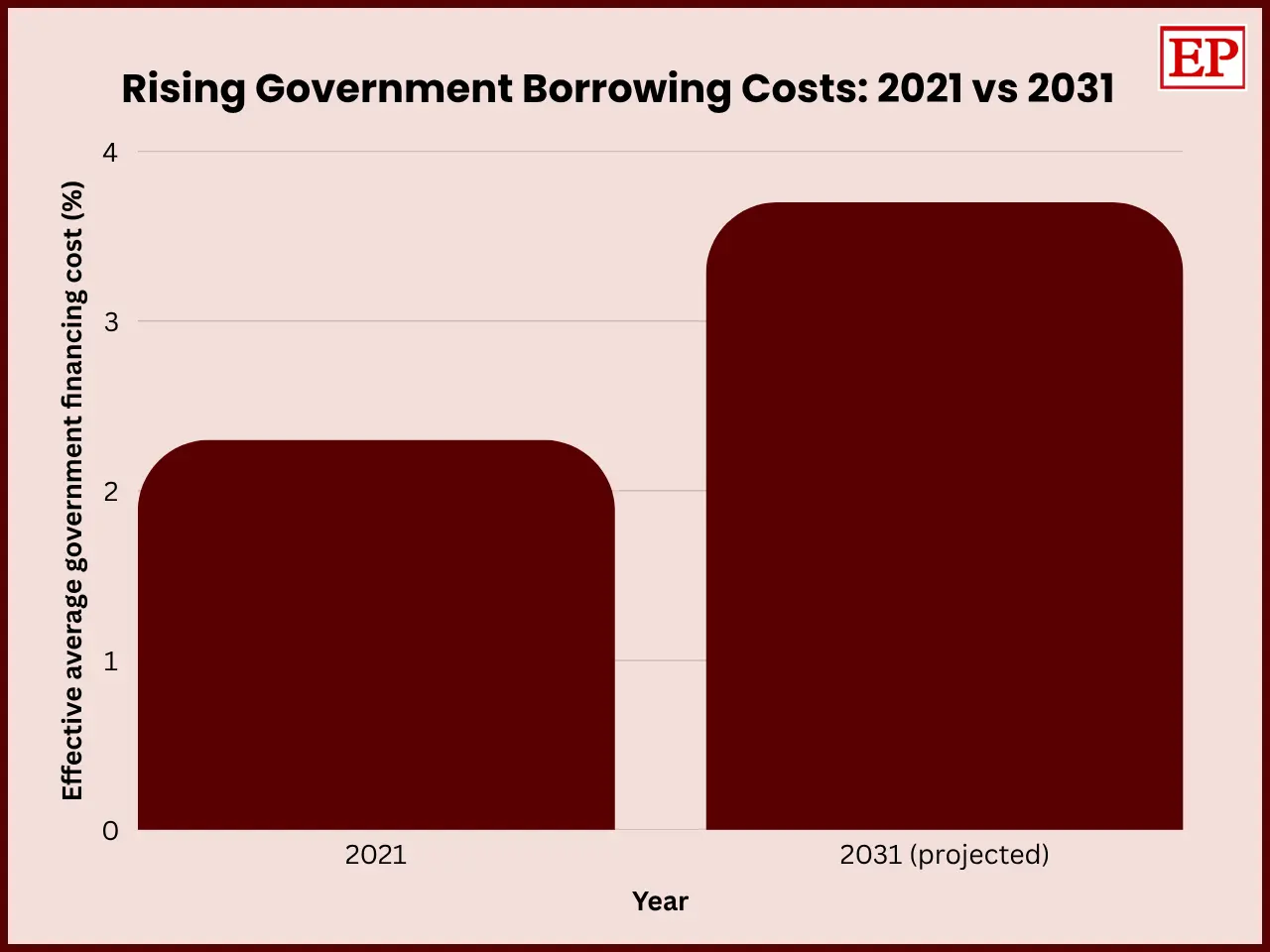
Overall the message from the IMF is that there is an opportunity to create fiscal space. This is important because high debt, increasing borrowing costs, and high spending requirements are present. Therefore, governments should increase taxes and reduce spending sensibly. Energy and food subsidies should be temporary and targeted to reduce any negative impact on price signals. Improved social protection systems will help. Central banks should be adaptive. Those who import energy and are not part of the technology-driven economy should be cautious. However, those experiencing strong technology-driven demand should tighten, as they will have inflation at or below target.
Corporate Income Tax
The impact of reducing corporate income tax depends on how it is financed. If it is financed through debt, then domestic activity will increase. However, it can negatively impact other economies in the short run. Over time knowledge spillovers can create positive impacts. However, it can reduce public investment due to lower tax revenue. This will be more of an issue for emerging and developing economies as they are more reliant on this tax.