Rising Borrowing Costs to Test Public Finances
Around the world governments are facing increased borrowing costs, with the International Monetary Fund (IMF) predicting that global public debt would be above 100% of GDP by 2030, the highest level seen since shortly after the Second World War.
The market has demonstrated that the average yield of 10-year government bonds across the G7 increased by over 1% between February and September 2026, the highest level seen for over 20 years. This is because we have had high inflation, high energy prices, and investment requirements. This has increased our debt, so we need to spend. The government will have to borrow lots of money, meaning yield has gone up.
The government will pay more in interest, meaning they will have higher borrowing costs, which will cause problems with their budget. This situation may lead to financial strain and will cause investors to demand a higher return.
Increased interest payments reduce government flexibility
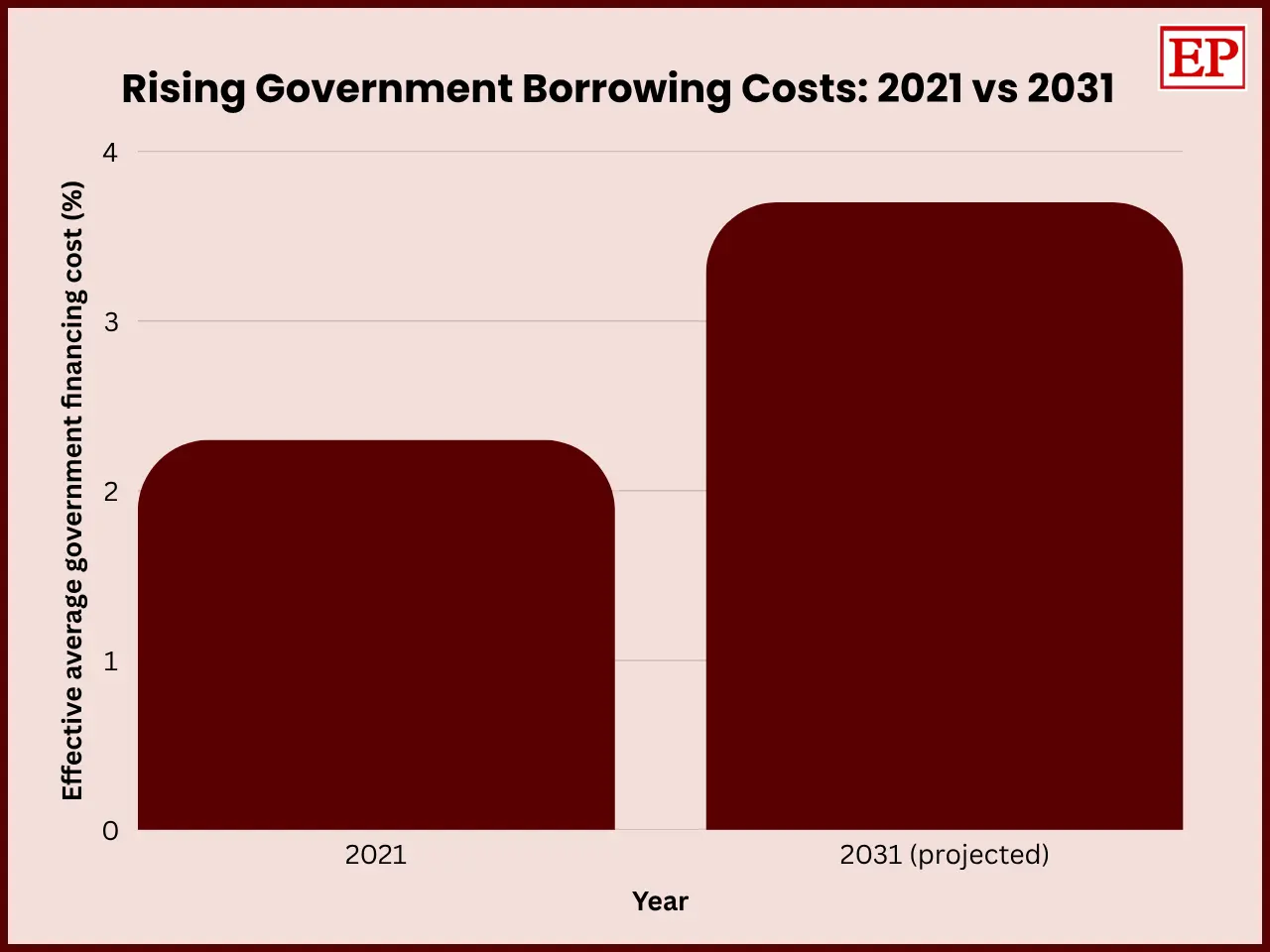
As interest payments rise, this means less money will be available to allocate to areas such as infrastructure, healthcare, security, and various other development projects. In 2031, the interest rate (on average) that governments will be paying will rise to 3.7% compared to just 2.3% in 2021 (IMF).
This has a significant effect on those countries with limited financial resources. Over 15% of low-income economies’ interest payments are now being paid from their total fiscal revenue, compared to around 9% on average between 2011 and 2019. The United States is set to pay around 5.7% of GDP to interest by 2031, which is similar to the amount it will pay out on Social Security.
The interest rate risk comes from the nature of the debt structure. If governments are having to refinance their debt at shorter intervals, then the increase in interest rates will hit their budget quicker. As well as this, there are increased pressures on government spending due to aging populations and defense and energy security issues, meaning governments have less flexibility when absorbing shocks to the economy.
The IMF also warns that increased borrowing costs can create spillover effects. If the benchmark rates rise in key economies, then this can make financing harder elsewhere. This means that emerging markets and developing countries will struggle with debt management.
Reassuring Fiscal Frameworks
The IMF stresses that it is too late to delay fiscal reform. Advanced economies with high debt levels will need to produce realistic frameworks to return their fiscal position to a sustainable trajectory. Emerging markets need to reduce risks to their fiscal position and improve debt management. Low-income countries need to improve their tax bases and increase efficiency in how they spend to ensure that they have enough money for their priorities.
Fiscal consolidation needs to be implemented to ensure there is a proper balance in government tax, spending, and debt servicing. If left too long, more interest has to be paid, and there are fewer options in terms of fiscal policy. This could lead to more painful reforms in the future.
It is important to make sure that the borrowing is reduced and that we have a reassuring framework for investors. By reducing debt levels and interest rates we can control borrowing by getting good reforms in place quickly. This will limit any risks to the economy and still allow governments to support long-term economic growth.
The IMF is stressing that having reassuring fiscal frameworks is not something to work towards; it is something that needs to happen now to keep our economy stable.