Why the Old Development Playbook No Longer Works
Gordon Hanson, Dani Rodrik, and Rohan Sandhu contend in this essay that an established blueprint for economic growth based on exporting, education, and job generation is outdated and irrelevant in relation to the current state of developing economies. The role of national security and geopolitics in government policy formation allows for skepticism about export-based industrialization as a source of job generation; on top of this, the transition to green energy and concern about climate change affects new industry development in countries that are economically less developed.
The writers predict that in the future most workers in developing countries, excluding China, will not have any higher education. Additionally, most people will be employed in non-tradable, non-college-level jobs that aren't influenced by international trade or digital outsourcing. In fact, two-thirds of the global labor force will be accounted for by jobs that are both non-college and non-tradable. These jobs include all sorts of low-paid jobs like street vending, domestic work, food service, and subsistence farming. In this context, the introduction of progressive education programs and efforts to create another boom in manufacturing exports will not create many job opportunities for the majority of the population.
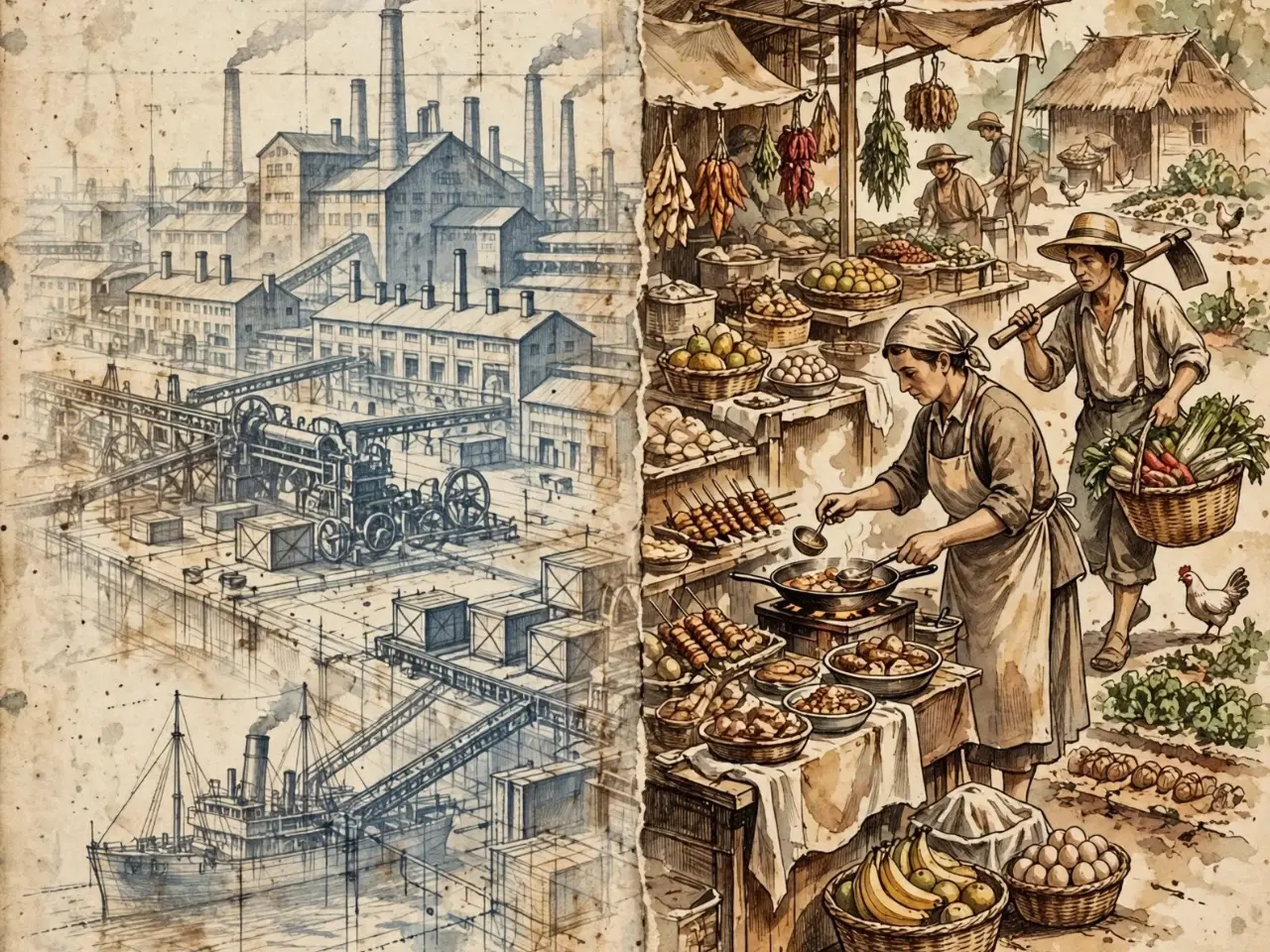
The main challenge for the developing countries, as per the authors, is to find ways to increase labor productivity in the informal service sector. Manufacturing’s Shrinking Role and the Rise of ServicesManufacturing remains important and continues to offer benefits such as productivity improvements, attracting investments, and supporting strategic independence; however, it has become more automated and requires more capital than before and uses less labor.
While manufacturing achieves high productivity in certain production areas or export zones, this does not lead to improvements in labor productivity nationwide unless this productivity benefits regular workers. Since most of the workforce is employed in the nontrade sector, it is argued that development strategies must replace factory-based industrial policies with policies focused on the nontrade sector.
A Two-Pronged Fix: Skills and Firm-Level Productivity
In this paper, the authors propose a plan aiming to cover both aspects of the labor market. They recommend changes to education programs on the supply side, as most young people will move directly from secondary schools into the workforce.
The current system of education lacks the educational programs that equip young people with both the necessary technical skills and the required soft skills. Moreover, the system should be adapted to the new trends in the sphere of education, as countries start setting the compulsory upper secondary education as an obligatory requirement. Thus, it would become possible to implement vocational education into the learning process. The authors refer to the positive experiences of some countries, which show how such programs can help young people build successful careers in fields such as IT support, healthcare, personal services, and construction.
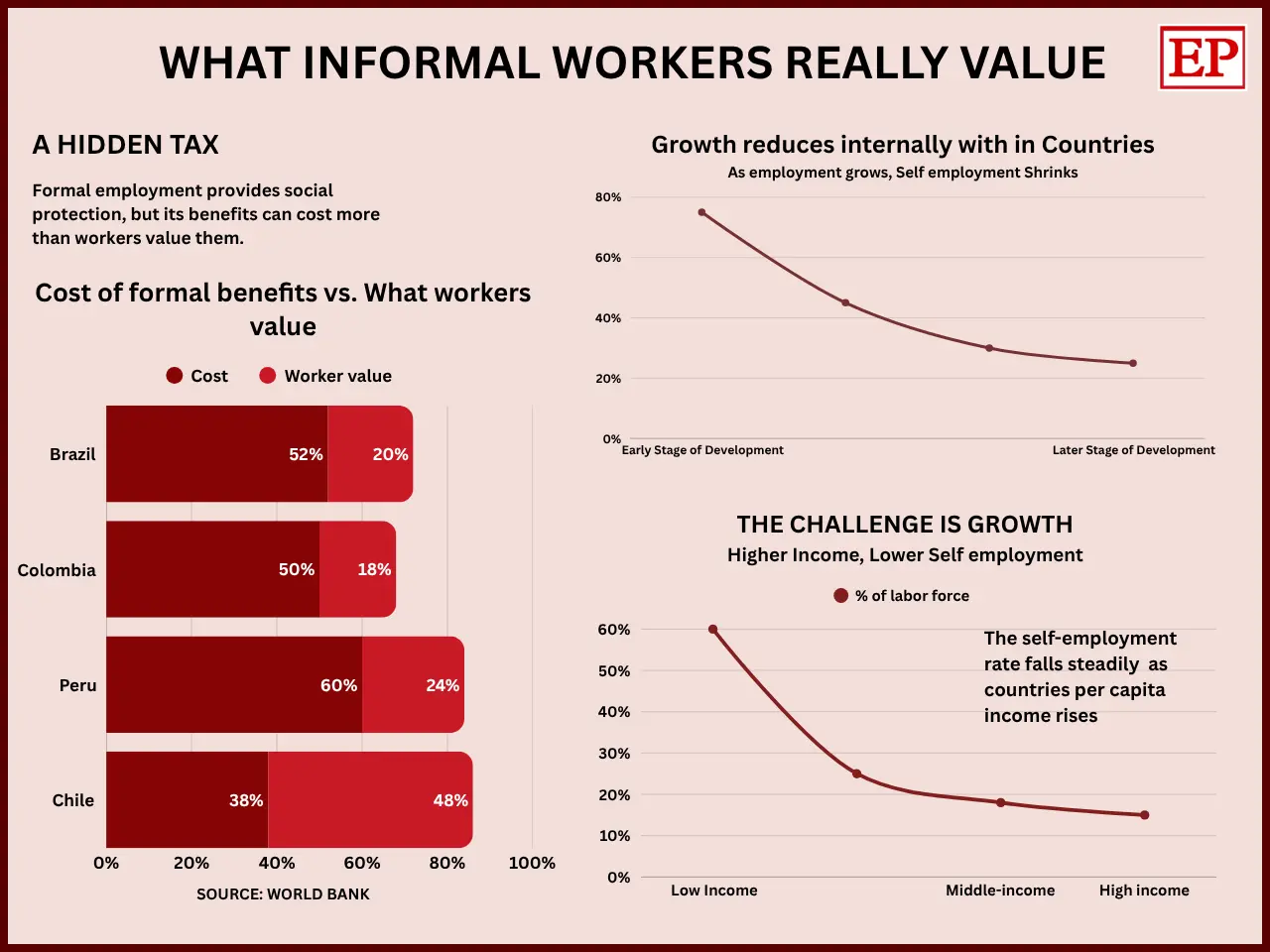
Policy must facilitate small businesses’ productivity in order to increase demand. This can be accomplished by encouraging large companies and platforms to support suppliers and gig workers with marketing and technology or by persuading governments to adopt regulations requiring large companies/agencies to improve local supply chains. Providing micro and small firms with direct public support such as loans, management training, and access to technologies resolved the issues faced by micro and small enterprises and contributed to increased production and jobs in the shadow economy.
The authors caution against applying a rigid type of top-down scheme involving the government picking business winners beforehand. On the contrary, it is their preference to use a flexible, experimental approach involving making adjustments as evidence appears since uncertainty needs to be treated as an inherent feature of policy design rather than something to be avoided from the start.