Why Workers Stay Informal
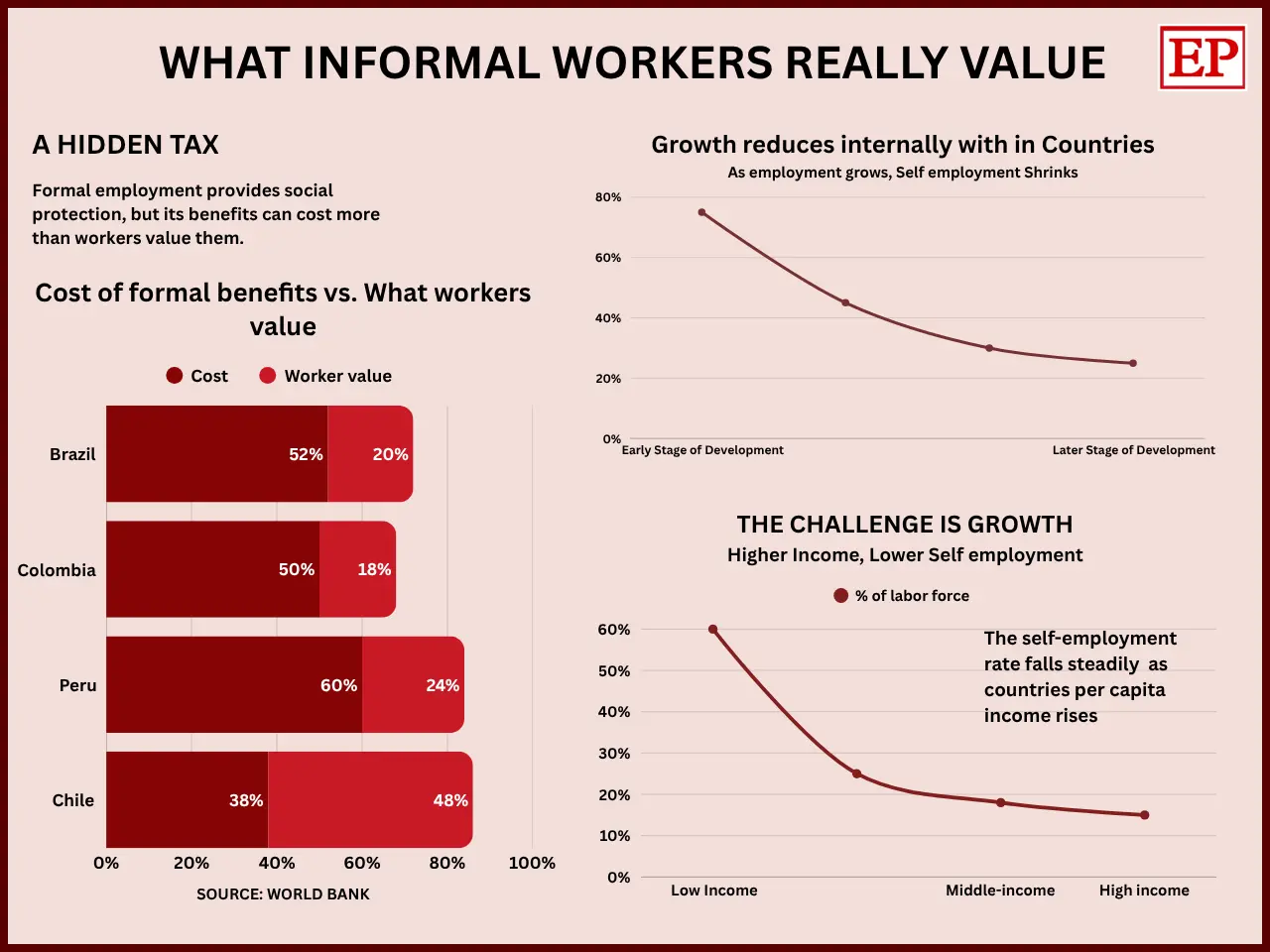
A recent World Bank report presents the idea that informal employment in Latin America and the Caribbean cannot be taken simply for a signal of informal working. Around 55% of the workforce within the region has been in the informal sector for nearly 20 years, even though some measures were taken to simplify business registration and reduce hiring costs. The report considers two categories of informal workers. The first category is young people using informal work for their transition to better career opportunities. The second is older self-employed workers that tend to remain in the informal sector not because of lacking chances, but out of choice. According to a conducted survey of workers in seven countries, workers prefer to have some liberty of independent schedule rather than getting a full paycheck.
The Hidden Cost of Formality and the Role of Growth
The authors also indicate that there is a discord between the actual cost of formal benefits and the perception that employees have regarding their worth. The studies in Brazil, Colombia, and Peru suggest that this disparity is responsible for around 32% of hidden tax on formality, thus pointing to the reason for not engaging in formal employment practices. The authors mention Chile as an exception where benefits are perceived as more valuable than formal employment costs. According to the researchers, mere registration reforms will not be effective in solving the problem, while the key factor in bringing about any change is economic progress. Thus, it seems that the process of transitioning into self-employment would slow down as the incomes increase. They suggest that one of the biggest problems in this case is that big formal enterprises lack dynamism.