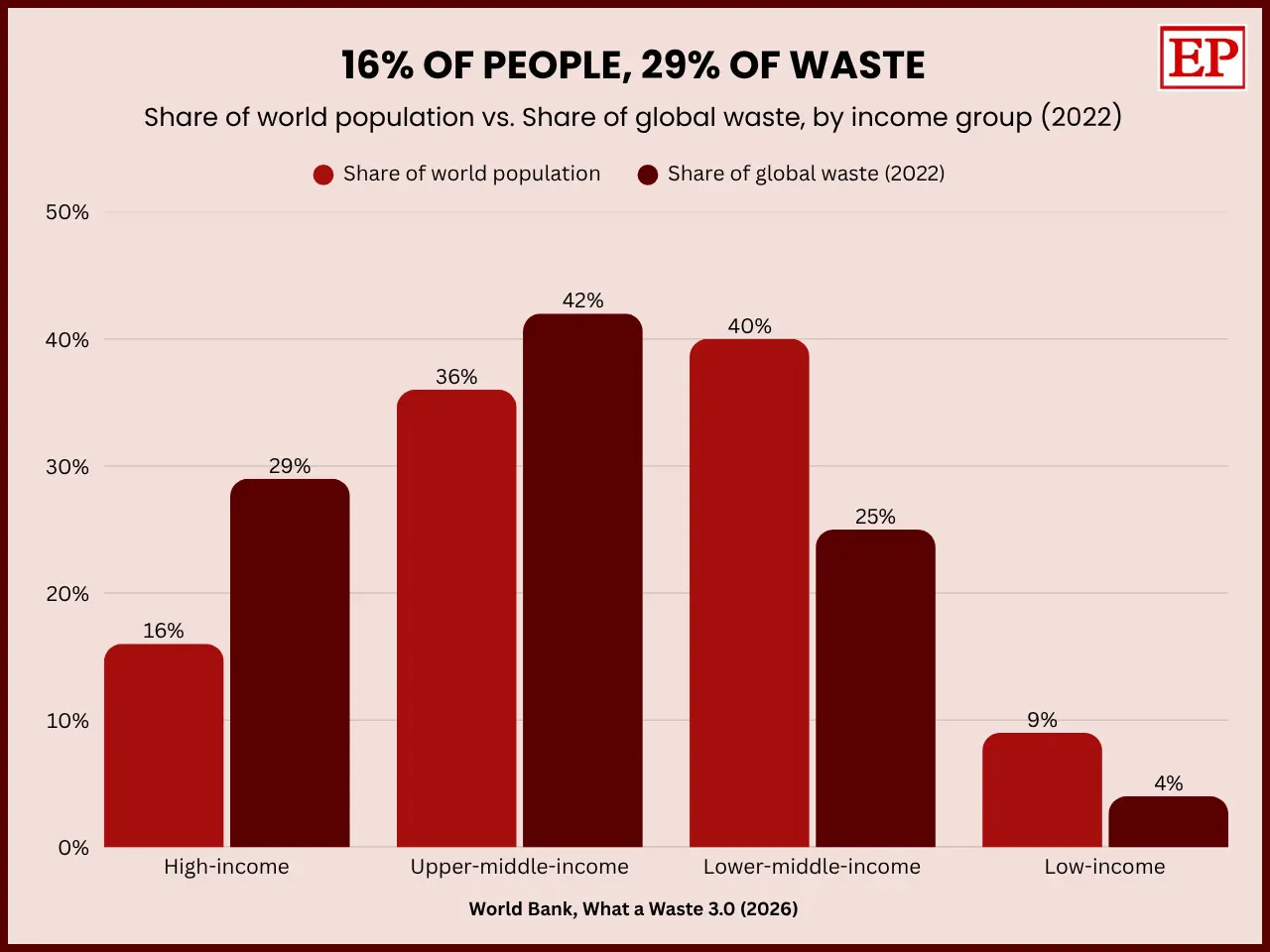
The world today has 16% of its population living in the high-income countries that produce 29% of the waste, with the highest amount of waste per person produced in 2022, according to the World Bank report What a Waste 3.0. 42% of all waste generated was from upper-middle-income countries, which encompassed 35% of the world's total population and 4% of low-income countries, with 9%.
Waste is piling up: In 2022, the world generated 2.56 billion tonnes of municipal solid waste, and by 2050, that number is expected to reach 3.86 billion tonnes, a 50 percent jump if things keep going the way they are. The most rapid growth of waste volumes will be in Sub-Saharan Africa and South Asia and in low-income countries.
Collection Gaps and the Road Ahead
What a country throws away is only half the story. High-income countries manage nearly all their waste in controlled facilities, but low-income countries manage only 3 percent that way and collect just 28 percent. Globally, about 30 percent of waste is dumped openly or never collected. The report’s high-ambition scenario shows waste generation could be capped at today’s levels despite population and economic growth. Separately, it estimates that basic universal collection and management would cost about 0.3 percent of GDP in middle-income countries, a modest share compared with the costs of inaction.