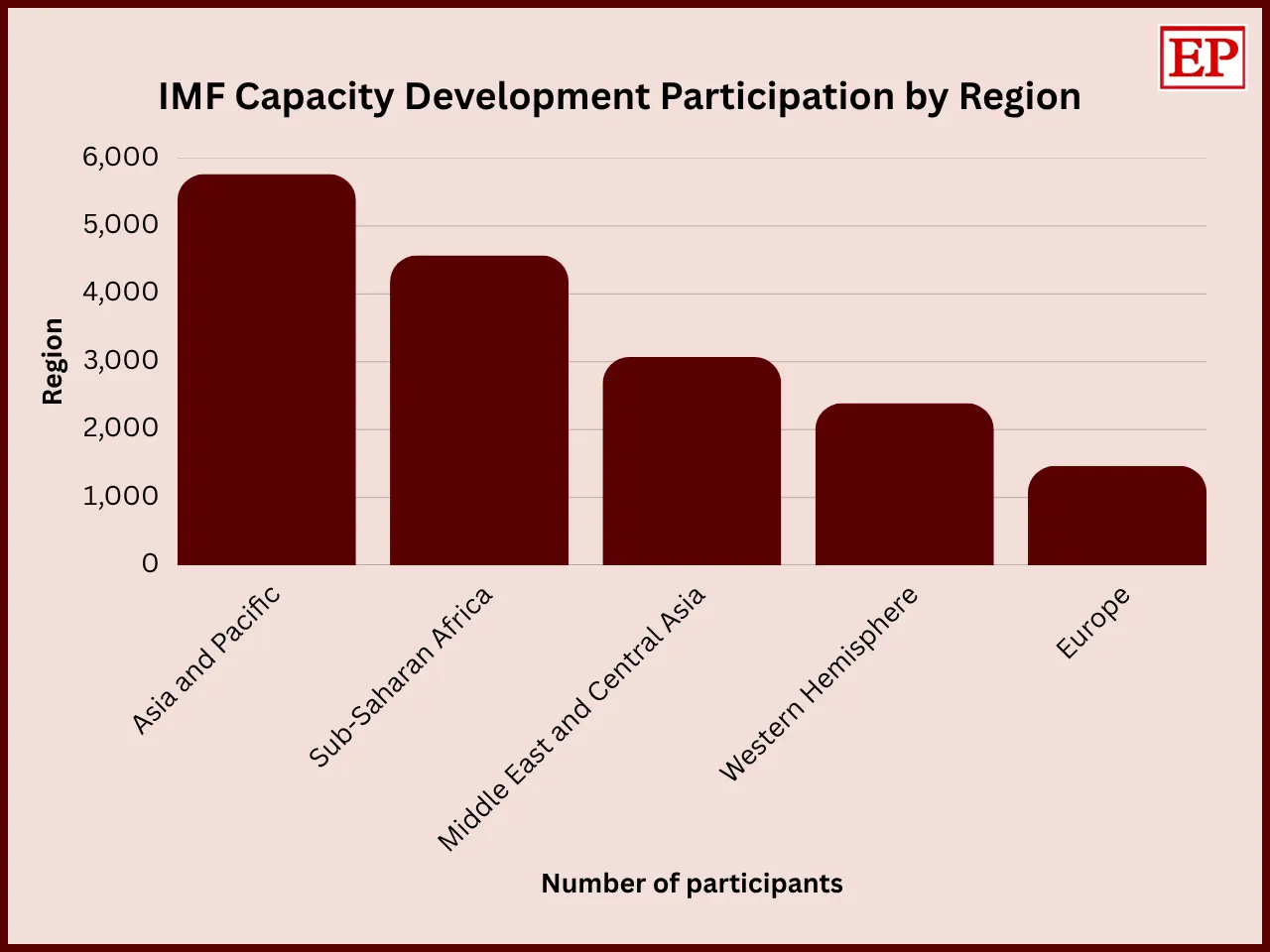
The issue of economic stability is determined not only by the inflow of money but also by the functioning of the institutions and mechanisms that ensure their efficient use, minimize the risks, and appropriately make economic decisions. This process can be facilitated through the provision of capacity development, which is performed through technical assistance, including training and peer-to-peer learning programs provided to countries by the International Monetary Fund.
Peer-to-Peer Learning and Assistance
The Fund is considered vital in ensuring nations' growth, employment, and stability through the development of their institutions and strengthening their governing capabilities. This approach addresses a wide range of areas, from the Ministry of Finance and Central Bank management and operations to revenue administration and statistical systems and financial sector supervision. However, it should be noted that the IMF does not promote a one-size-fits-all method but rather the unique development of each country's capabilities in demand.
Thus, the main purpose of the Fund's capacity development is to ensure that countries have the practical knowledge and institutional and procedural expertise to make balanced economic and financial decisions. In addition, the institution offers a high level of technical assistance through training, seminars, webinars, and learning programs. Moreover, the IMF has a network of 17 regional centers that provide countries with the opportunity to learn in a familiar environment.
Focus on Broader Macroeconomic Issues and Legal Framework
The areas covered by the IMF's capacity-building programs are extremely wide. They include not only tax and customs administration, budget, and public expenditure policies, and preparation of the state budget, management of its execution, and public financial management but also macroeconomic framework, economic statistics, and legal framework.
It is known that one of the most pressing issues for governments in ensuring stability and economic growth is the collection of revenues through taxes and the allocation of these funds to specific government expenditures. However, the Fund also helps nations build capabilities in areas of public debt management, including analyzing government debt dynamics and developing strategies and policies within the framework of this sector. The IMF also works with the World Bank through the Joint Debt Management Facility, which provides technical assistance to countries in this area.
As a result of such interventions, the positive results of the IMF's work in this area can be seen as early as Mongolia, where, thanks to technical assistance, the tax-to-GDP ratio was increased by 5% from 2020 to 2024, and revenues increased by one billion dollars.
Financial Sector Stability
Another critical area of the IMF's activity is the strengthening of the financial system through the provision of technical assistance to central banks and nations' financial authorities. At the same time, supervising and regulating frameworks, analysis of systemic risk, crisis management, monetary policy, and central bank operations are also considered. The experts of the Fund are working on developing, implementing, and improving micro- and macroprudential policy, supervision, regulation, and safety nets via the Financial Sector Stability Fund, allowing them to timely respond to emerging risks.
Country-specific solutions are developed to assess the capacity of a nation's authorities to analyze and monitor financial stability and respond to emerging risks, follow up on recommendations, and provide technical assistance.