The world economy entered the year 2026 in a much better state than was expected. According to the IMF Annual Report 2026, the global growth remained positive during 2025, with falling inflation rates, despite the disruption in trade and several conflicts. The report cites three factors that contributed to the resilience of the world economy, namely, global private business’s agility, prudent government and monetary policies, and increased technological capitalization. Following this, the situation changed for the worse starting from the end of February due to hostilities in the Middle East that impacted energy and other commodities’ supplies. The International Energy Agency reports that the war, along with the blockade of the Strait of Hormuz, led to the largest ever disruption in energy supply in the world. Although the conflict remained centered in the Middle East, there were “downstream effects on prices and supply chains beyond the region.” Despite a lack of additional crises, the IMF remains pessimistic about the global economy’s prospects in the medium term due to “demographic changes in many countries, including an aging population.”
Debt Is the Pressure Point
Public debt is the place where the squeeze is felt. Before the conflict started, it was on course to equal the peak of World War II levels reached in 2028. Now, soaring energy prices and financial costs and slowing economic growth will put further pressure on public debt. Rising bond yields also hit emerging markets, leaving sovereign debt more volatile.
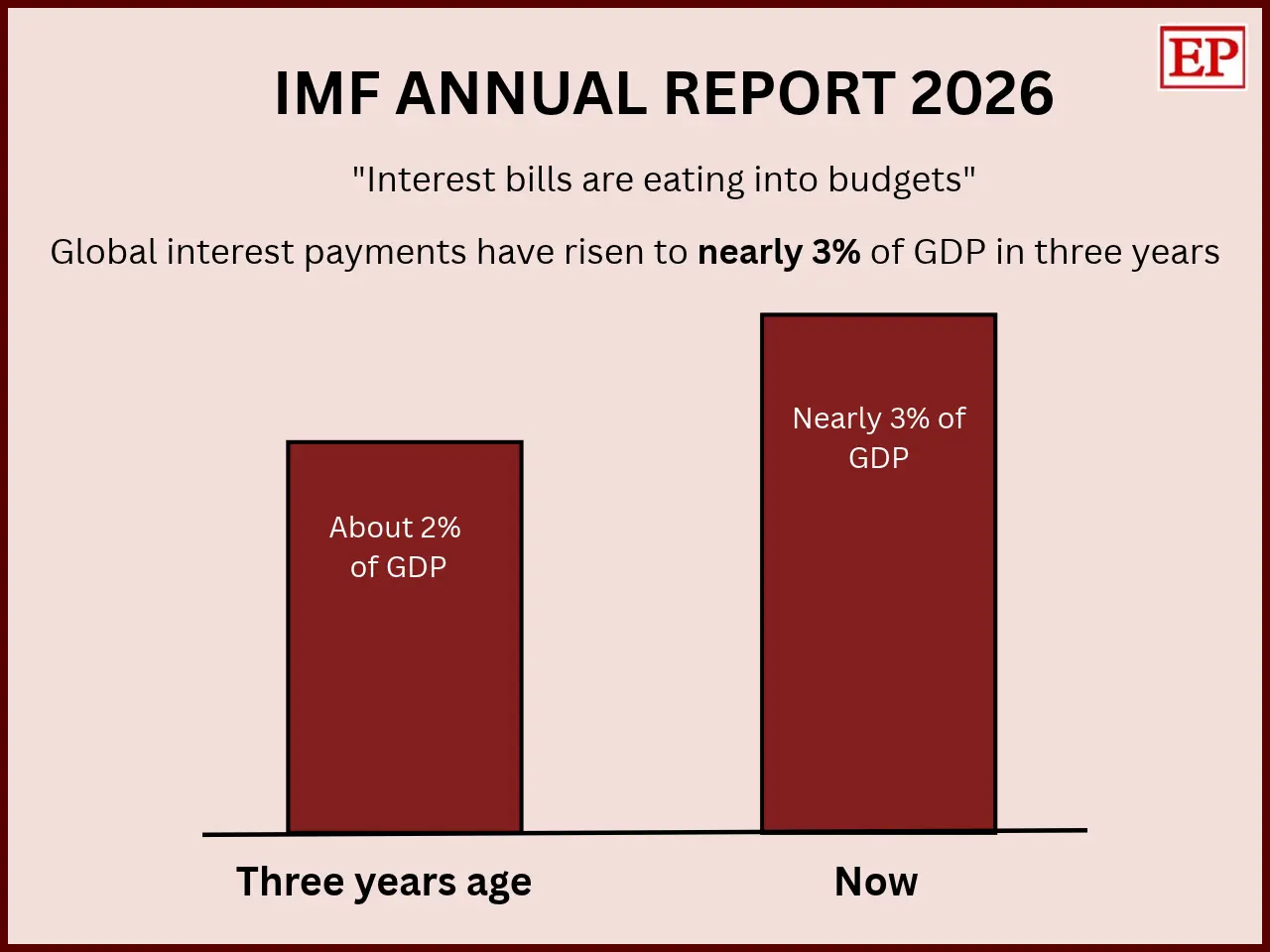
Interest payments on public debt have increased from about 2 percent of gross domestic product to nearly 3 percent of gross domestic product within just three years, leaving trillions of dollars around the world that cannot be invested in education, infrastructure, and other areas. In addition, many large debtors sell short-term debt to finance the repayment of their obligations, exposing them to the risks of liquidity and the cost of capital.
Energy-importing countries, especially developing countries, are most vulnerable to high energy prices. Many countries also face a reduction in concessional assistance. The recommendations of the IMF are pragmatic in this regard: where domestic energy subsidies are justified despite the increase in prices, they should be temporary and targeted. At the same time, governments need to adopt a strategy of smart spending. It emphasizes the need to reform unviable pension systems and cut fuel subsidies, politically difficult decisions but necessary to free up resources to reduce debt and stimulate growth.
AI, trade, and what's next?
AI-related investments added 0.5 percent to the United States' GDP in 2025, according to estimates. In 2026, AI investments in the private sector could account for more than $2 trillion, according to outside estimates. The International Monetary Fund has identified a link between AI-related skills and high wages, while low-skill service workers who cater to high earners also benefit. However, those with mid-level skills that are easily substituted by AI lack this financial protection. There is also a financial risk. As many AI expenditures are being financed by debt, there is a risk that disappointing returns on investments would cause share prices to plummet and throw economies into panic. Singapore is currently ranked first according to the International Monetary Fund's AI Preparedness Index.
Trade was also resilient. Flows rose by nearly five percent in 2025, despite large-scale changes in U.S. trade policy, although the growth is set to slow this year. At the same time, digital finance is booming. Stablecoins are exploding in popularity, and the two biggest stablecoin issuers now hold more U.S. Treasury bills than Saudi Arabia. Asia is a critical testing ground because many people there have mobile phones but no bank accounts, so they rely on digital payments.
To provide support to its 191 members, the IMF made a total of $40 billion to 18 countries in the past financial year, including about $2 billion to nine low-income countries, and conducted 138 country health checks. Its message to governments is to use fiscal policy to promote resilience, help people adapt to AI, and ensure trade remains open and predictable.