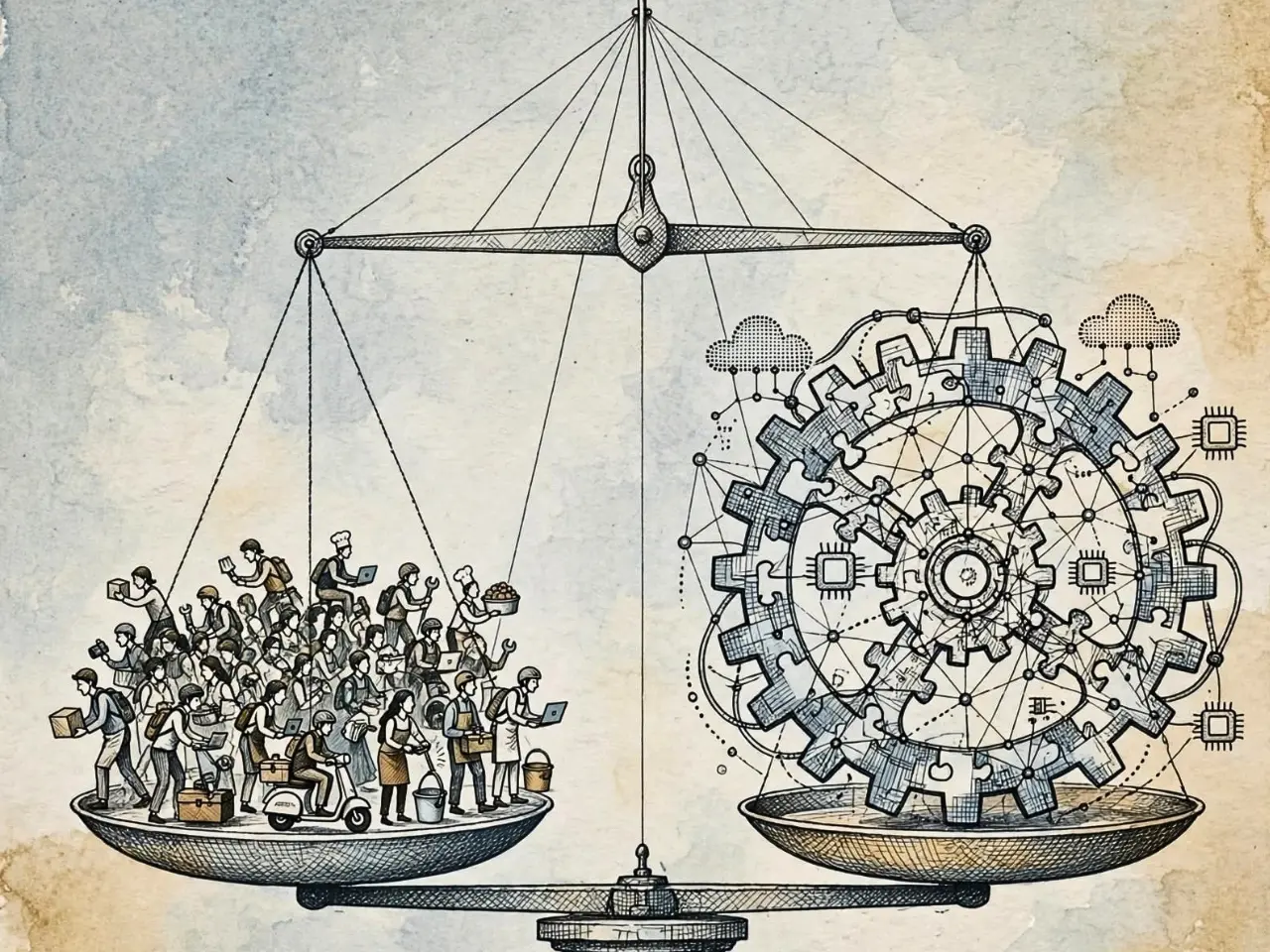
Global openness remains essential for small economies; nevertheless, growing exposure to supply-chain disruptions and external shocks drives policymakers to rethink industrial strategy, says a new OECD analysis. Small open economies are caught in a balancing act of strengthening resilience at home but without losing their pull in the world economy. The availability of markets, investment, knowledge, and technology has played a big part in growth and prosperity in small open economies. However, such openness also exposes them to shocks originating elsewhere.
Policymakers will need to develop industrial policies that help a diversified range of industries to remain competitive while embracing the risk-reduction benefits of diversification, and all of this without resorting to protectionism, says the OECD in an analysis published in July 2026.
Limited Resources Mean Governments Need to Support Only Selected Sectors
Small economies generally have fewer fiscal and financial resources than larger economies, limiting the scope to support most or all existing industries. According to OECD data, small open economies devote an average of 1.48% of gross domestic product (GDP) to grants and tax expenditures, while this figure is 1.68% in large economies. This means that policymakers need to make educated decisions about who to support with public funds.
The OECD recommends that governments should identify sectors in which the economy has a comparative advantage or potential for growth and sectors for which the adoption and transfer of technology from the rest of the world would be more advantageous than leading it themselves.
The report also stresses that fragile specialization can be dangerous: it might leave an economy vulnerable if something happens to the narrowly defined industries that it supports, and too broad a focus might risk spreading limited public resources too thinly.The OECD finds that small open economies have, on average, avoided some of the market distortions associated with industrial policy in larger countries. International competitiveness pressures have helped prevent them from supporting less efficient industries.
Supply Chains Increase Risk of External Shocks
Small economies are increasingly vulnerable in the modern world of global production networks. Manufacturing and services are becoming more dependent on inputs produced in multiple countries before reaching final consumers.
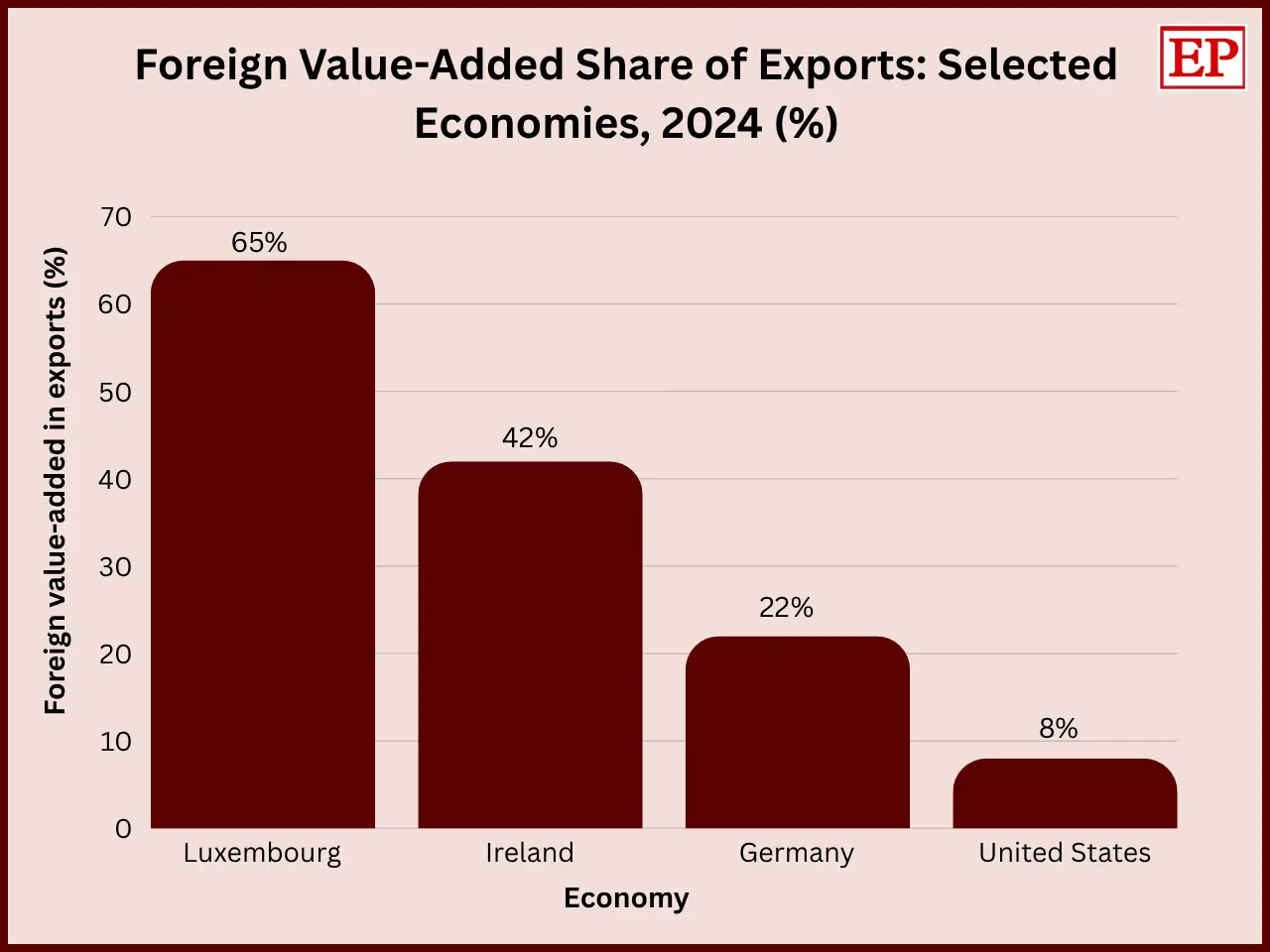
OECD Trade in Value Added data from 2024 show the importance of international inputs. In Luxembourg and Ireland, 65% and 42%, respectively, of exports included foreign value added, compared to 22% in Germany and 8% in the United States. On average, small economies are thus reliant on foreign value added two to five times more heavily than large economies.
This means that a shock to one vital input can ripple across several industries. In the example of COVID-19, a global shortage of semiconductors came from disruptions in relatively few semiconductor manufacturers, which then impacted other industries, setting off a chain of economic shocks. Small economies are therefore advised to look beyond individual industries to the greater whole of value chains that connect companies domestically and internationally.
International Cooperation Holds the Key for Greater Resilience
Small open economies require access to goods, services, investment, and information from beyond their borders—they can't achieve resilience solely from within. Their competitive position will always be connected to global value chains and international markets.
The OECD warns against countries competing to attract industries to their economies by offering ever-larger subsidies. International cooperation can help countries to coordinate incentives, pool resources, and reach the efficiencies of scale needed to develop large industrial projects, the OECD says. Examples include partnerships formed between two countries or at the level of several countries, such as the European Union's Important Projects of Common European Interest.
The OECD further highlights that it is important for industrial policies to be supported by other policies, such as trade policy, competition policy, and innovation policy, to ensure competitive markets and access to international markets and inputs and support for technological upgrading and diversification.
For small open economies, the focus is increasingly on managing interdependence rather than retreating from it. As supply chains and production become more interconnected and shocks travel across borders with ever-greater speed, targeted policymaking, diversified supply chains, and international coordination are some of the OECD's recommendations for building resilience.