Why Girls Outperform in School but Men Earn More: The HCI+ Explains the Gap
There is an interesting paradox recently revealed in a data release from the World Bank: girls outperform boys in classrooms all over the world, but men eventually earn about 21% more than women over their working life. According to the Human Capital Index Plus (HCI+), which measures human capital development up to age 65, the reason is to be found essentially outside formal education, rather than during it. The newest version of the HCI+ app introduces two additional diagnostic tools, female employment breakdown and NEET (not in employment, education, or training) analysis, as well as an improved simulation feature designed to help policymakers identify and resolve the issue.
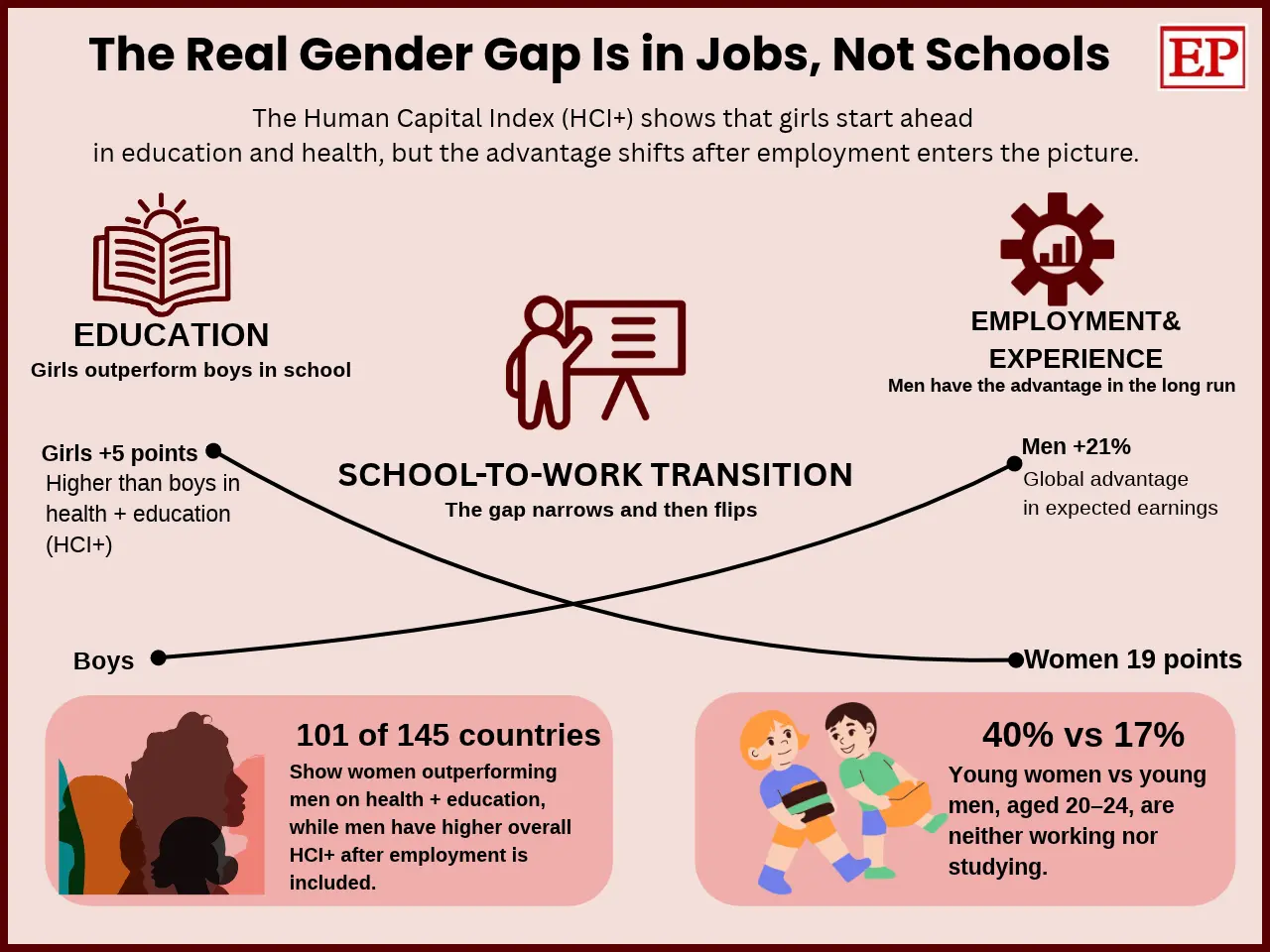
The Real Gender Gap Is in Jobs, Not Schools
Data reveal that women score almost 5 points more than men in terms of health and education combined. Even though they have this advantage, their total HCI+ score is 19 points lower than that of men. This drop is attributed to employment patterns. In South Asia, differences in workplace learning account for almost all of the gap. This is not a localized pattern; across 101 out of 145 countries with data according to gender, women score well in health and education but lag behind men when it comes to work experience.
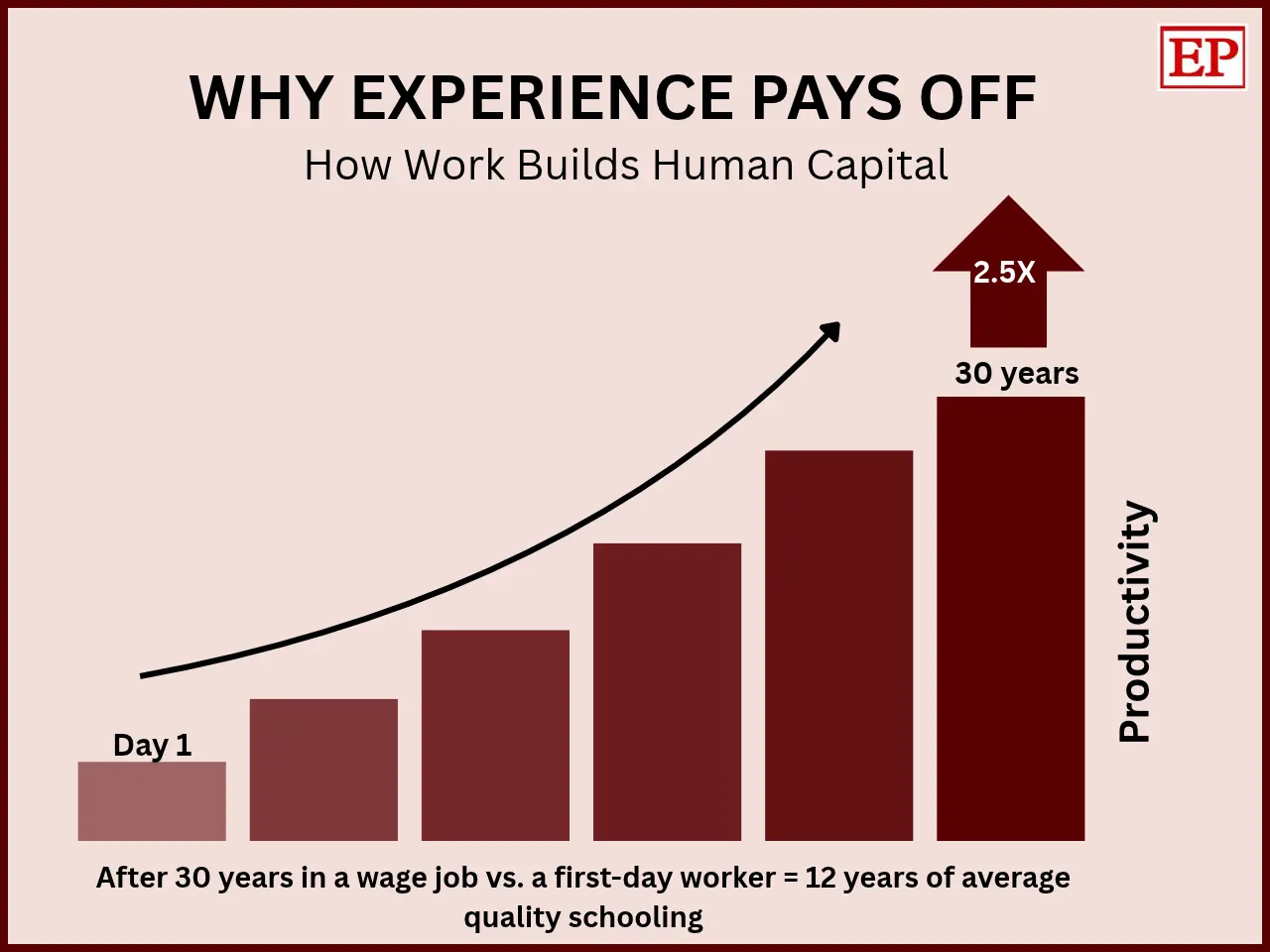
The basic concept is quite simple: workers gain competence and efficiency with experience. After thirty years of work, an employee is about two and a half times more efficient than someone new at the job, much like someone who has gone through 12 years of formal education. Working, in other words, does not only mean applying what one knows but also gaining knowledge about working. Women tend to work less and, therefore, do not participate in this process of gaining skills. The new employment-focused tool of HCI+ App helps users identify what the main problem is: whether it is the fact that women do not enter the labor market at all, or that they cannot find jobs, or that they work in those jobs that do not help them learn much.
Nearly a Third of Young People Are Disconnected from Work and School
Because young adults between the ages of 18 and 25 are generally in school or work or neither, the HCI+ framework considers them to be in a crucial stage. The NEETs neither go to school nor work, meaning that they miss an important opportunity to develop competencies, and already learned skills become obsolete at a rate of around 1.25% a year when not in use.
The statistics are impressive: around one-fourth of young persons from the world’s 151 nations can be classified as NEET. The figure climbs to one-third among developing countries and up to 41% in the Middle East, North Africa, Afghanistan, and Pakistan. At the same time, it is important to mention that young women carry the burden of this issue around the world, as 40% of women of 20-24 years of age don’t study or work, in contrast to only 17% of men, and the difference is the greatest in some parts of the world (63% women vs. 20% men in the Middle East/North Africa/Afghanistan/Pakistan zone, 55% vs. 15% in South Asia). The situation explains how women can study successfully but, despite the academic achievements, fall behind in lifetime human capital due to low employment rates among adults. With the help of a new function of the application, the users can study the post-education trajectories of young people from different countries.
A Smarter Simulation Tool for Turning Data into Policy
Having identified the problem only completes part of the task. However, thanks to the new feature of the HCI+ app simulator, this app solves the problem of completely turning a diagnosis into an action. Now, users can pinpoint factors affecting future productivity and earning, such as health, education, or employment. This allows policymakers to model situations, such as increasing women’s participation in the labor force or decreasing the number of NEETs by a certain amount, and get national forecasts. Coupling all of this with two new diagnostic instruments, this latest update serves the wider purpose of the platform, which is to equip authorities with necessary instruments not only to measure the loss of human capital but also to remedy the issue.