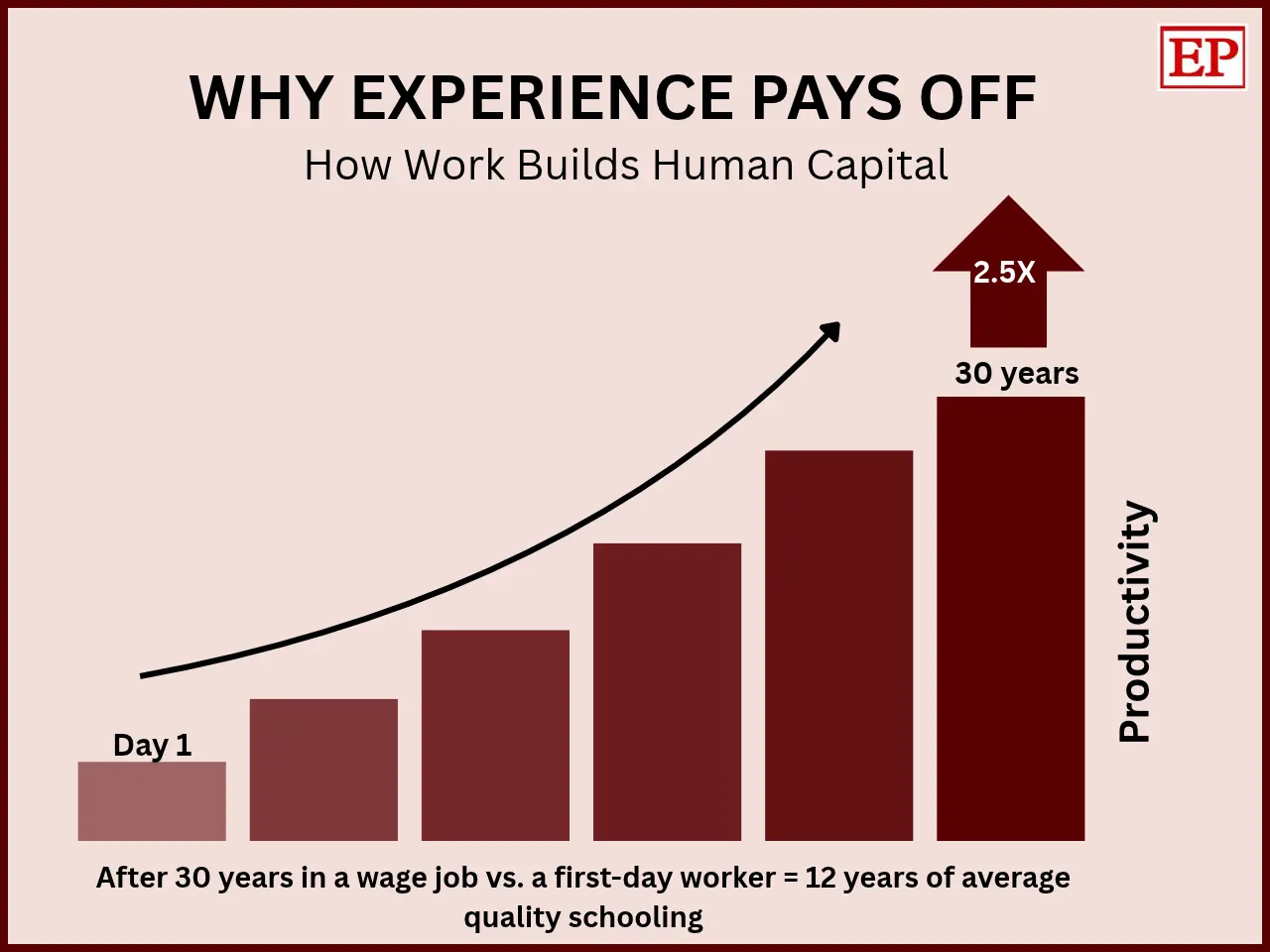
There's a new Global Bank tool that confirms what we already know in workplace 'experience' makes a significant contribution to people's capital. To put a number on this, the Human Capital Index (HCI) finds that a worker with 30 years of wage employment is about two and a half times as productive as a 'new entry,' which represents about 12 years of the median level of education.
Work Doesn't Just Utilize Skills; It Develops Them
This result revises our understanding of the workplace. Education creates the foundations, but paid work is what sees those skills multiply, expand, and manifest as actual productivity. The more years spent away from paid work or study, the more that bedrock can decrease by 1.25 percent per year.
A New Method for Measuring the Gap: The HCI app now offers an analysis by country and gender, revealing where intervening to fit more jobs into an individual's learning window might have a bigger payoff. The bottom line: Rounding more people into working life earlier and for longer could have a bigger economic impact than an extra year of schooling by itself.