Extreme Poverty Falls, but Progress Is Losing Momentum
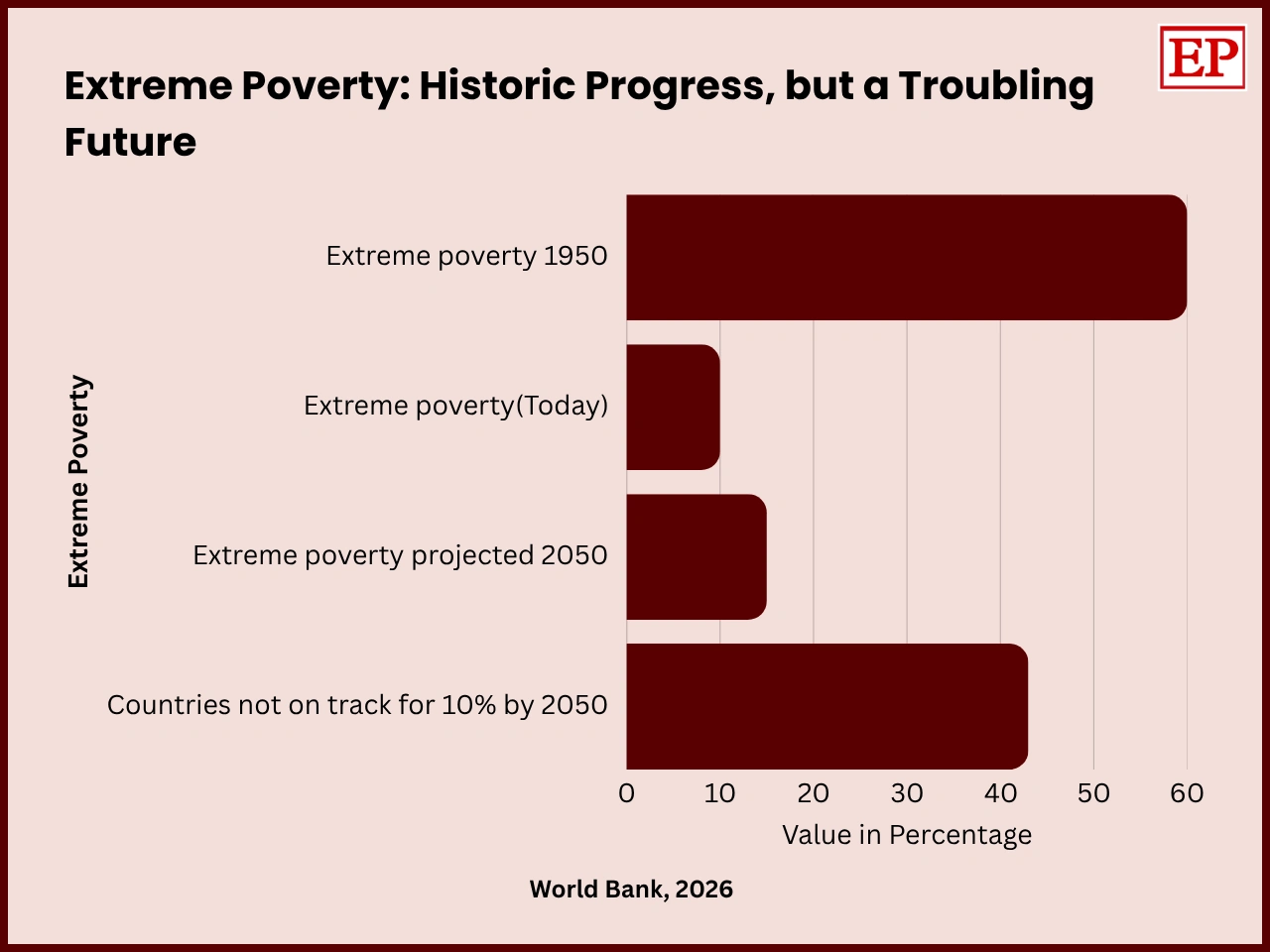
The world has seen one of the amazing success stories in modern history. Extreme poverty has dropped a lot since 1950. Then about 60 percent of people around the world lived in extreme poverty. Today that number is 10 percent. This is an indicator of a decline in poverty in some nations and improvement in living standards. This process happened as well during periods of economic growth. And this is normal, as is a demonstration of the possibility of a sustainable increase in economic growth with hard work. Many people's lives have been improved.
But this global success masks an alarming trend. The countries that have seen the most rapid reductions in poverty in recent decades have largely already crossed into low-poverty countries. At the same time, there are large numbers of the world's poorest people who live in countries where poverty has barely changed.
The Global Poverty Success Is Becoming Uneven
The pace of the reductions in poverty has slowed dramatically. The World Bank (2026) analysis finds that more than half of the world's extreme poor now live in countries where extreme poverty has actually increased over the past decade, a major shift from the past when the majority of the world's poor lived in countries that were making significant progress.
About half of the world's poor live in only eight countries. Of these, India has seen significant reductions in poverty over the past decade, while the Democratic Republic of Congo and Tanzania also registered low increases in poverty levels. In Nigeria, Ethiopia, Mozambique, Pakistan, and Sudan, extreme poverty has gone up.
The Risk of Reversing Decades of Progress
The challenge of development is becoming more than about cutting down poverty around the world. It is also about getting to the places where poverty's really hard to deal with. If countries keep going the way they are, the number of people living in extreme poverty around the world could go up from about 10 percent now to as much as 15 percent by 2050. This could mean adding more than 600 million more people to the list of those living in extreme poverty.
Some countries are dealing with problems at the same time that stop them from growing economically. These problems include fighting, bad leadership, dishonesty, and unfair treatment. These issues can hurt the lives of people and stop efforts to put money into new skills, new tools, and better things like health care and schools. The report also says that being at risk from climate change and being unequal are problems that make it harder for countries to cut down extreme poverty.
The story of development is moving into a time. The historic fall in extreme poverty demonstrates that transformation is possible, but the slowdown shows that the success of the past is not necessarily a guarantee that progress will accelerate through the future. Countries that have reduced extreme poverty must continue to grapple with other forms of deprivation, while countries where poverty has remained entrenched must build up their foundations for growth, jobs, and governance to be able to make significant progress in extreme poverty reduction. Without addressing these structural barriers, the world's extraordinary 75-year decline in extreme poverty could actually begin to reverse.