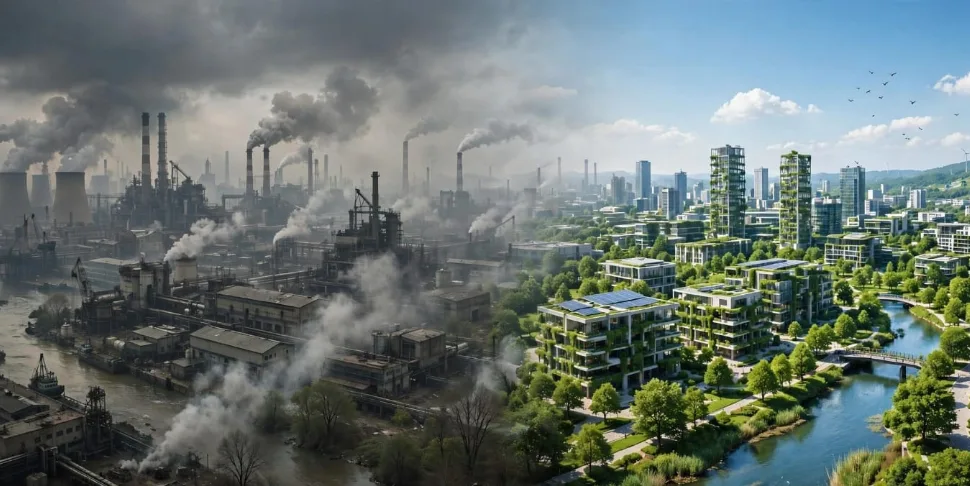
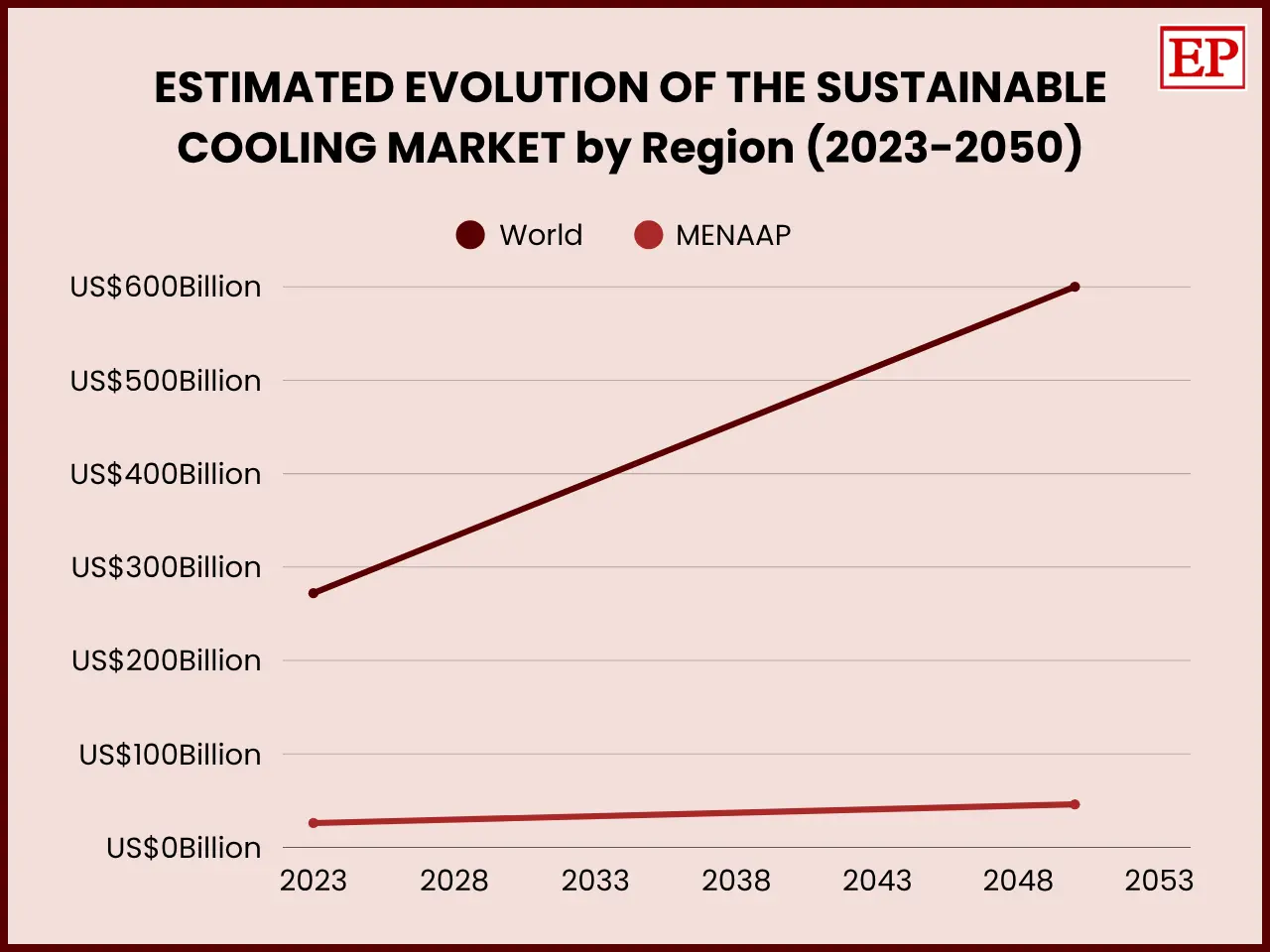
A new World Bank report says the Middle East, North Africa, Afghanistan, and Pakistan (MENAAP) region is experiencing tremendous climate change-related economic harm; the record summer heat has started to diminish revenue for businesses, and the recent European trade rules will change the markets for exports. According to the report, prompt policy measures can help MENAAP to take advantage of these challenges.
Extreme Heat Is Already Hurting Businesses
Based on information obtained from firms in seven MENAAP countries over the years 2019-2024, the report indicates that about one-third of firms now face over 100 days annually where average temperatures exceed 35 degrees Celsius. This has a significant impact on their financial performance, with firms encountering more days of intense heat registering a decrease in sales of around 6%, a reduction in productivity of about 4%, and a lower wage experience of about 8%. The impact of high temperature is not evenly spread over companies, as small firms and firms not connected to international supply chains are among the hardest hit groups of companies, in addition to firms encumbered by numerous regulations or lack of access to credit.
Adaptation to heat stress is very low. As an illustration, only one out of 10 firms in Egypt has invested in cooling equipment, and the report curtails the problem by suggesting lack of awareness among companies, high costs, and a complicated permitting process, rather than lack of necessity. Another aggravating factor is that economies of the region utilize much more energy per unit of output compared with other Southern European countries.
New European Carbon Rules Add a Second Challenge
Besides the issue concerning heat generation, the study considers how the new carbon border policies adopted by the European Union and the United Kingdom will reshape international trade. The European carbon border device became a reality in January 2026, while the British analog would come into force in 2027. Both of them will impose fees on imported goods depending on the level of carbon emitted during their production. The predictions made in the current report show that the processes used in each economy do not have a significant influence on their overall GDP. However, the impact of the policies will be different depending on the country and the economic sector. For example, Algeria and Egypt are anticipated to suffer from a decline of their steel and iron exports to Europe by 70–80 percent because of their production processes characterized by excessive carbon emissions. One of the countries to benefit from the new policies is the United Arab Emirates, which may increase aluminum exports by over $1 billion. Morocco also has good chances to increase its fertilizer exports if it is able to track the level of its emissions.
A Path Forward: Financing, Reform, and Green Competitiveness
According to this report, the main recommendation is that governments and businesses have to see these combined pressures as a possibility to improve their technologies instead of only taking losses. Some of the priorities are increasing financial opportunities through means such as green loans and bonds based on sustainability, simplifying laws that inhibit investments in cooling and clean technologies, and creating equal chances for state-owned companies and private firms since profitable government organizations operating in pollution-emitting industries can put on brakes for transformation processes. As far as trade issues are concerned, the report presents four main suggestions, such as lowering barriers for green technology imported products, creating better systems for certification and quality checking to help companies show their carbon emissions, and assisting small companies to meet European standards before the costs of compliance make them uncompetitive.