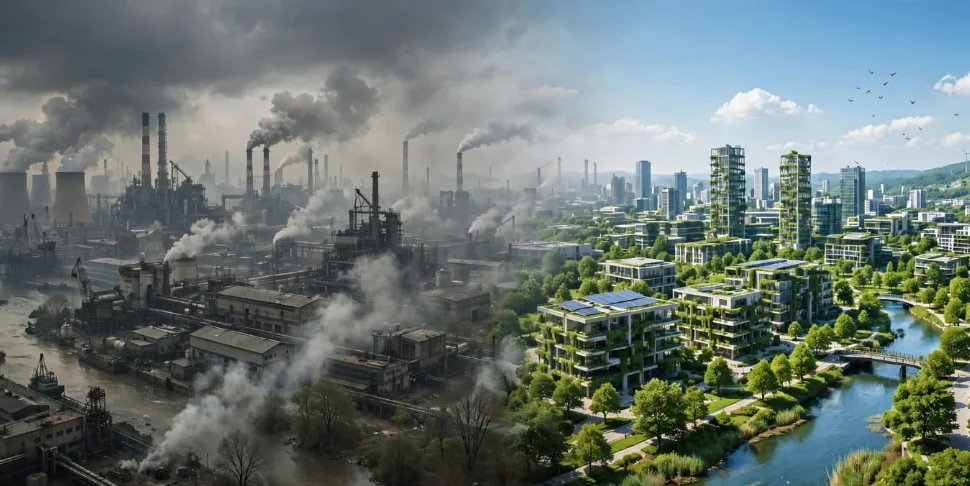
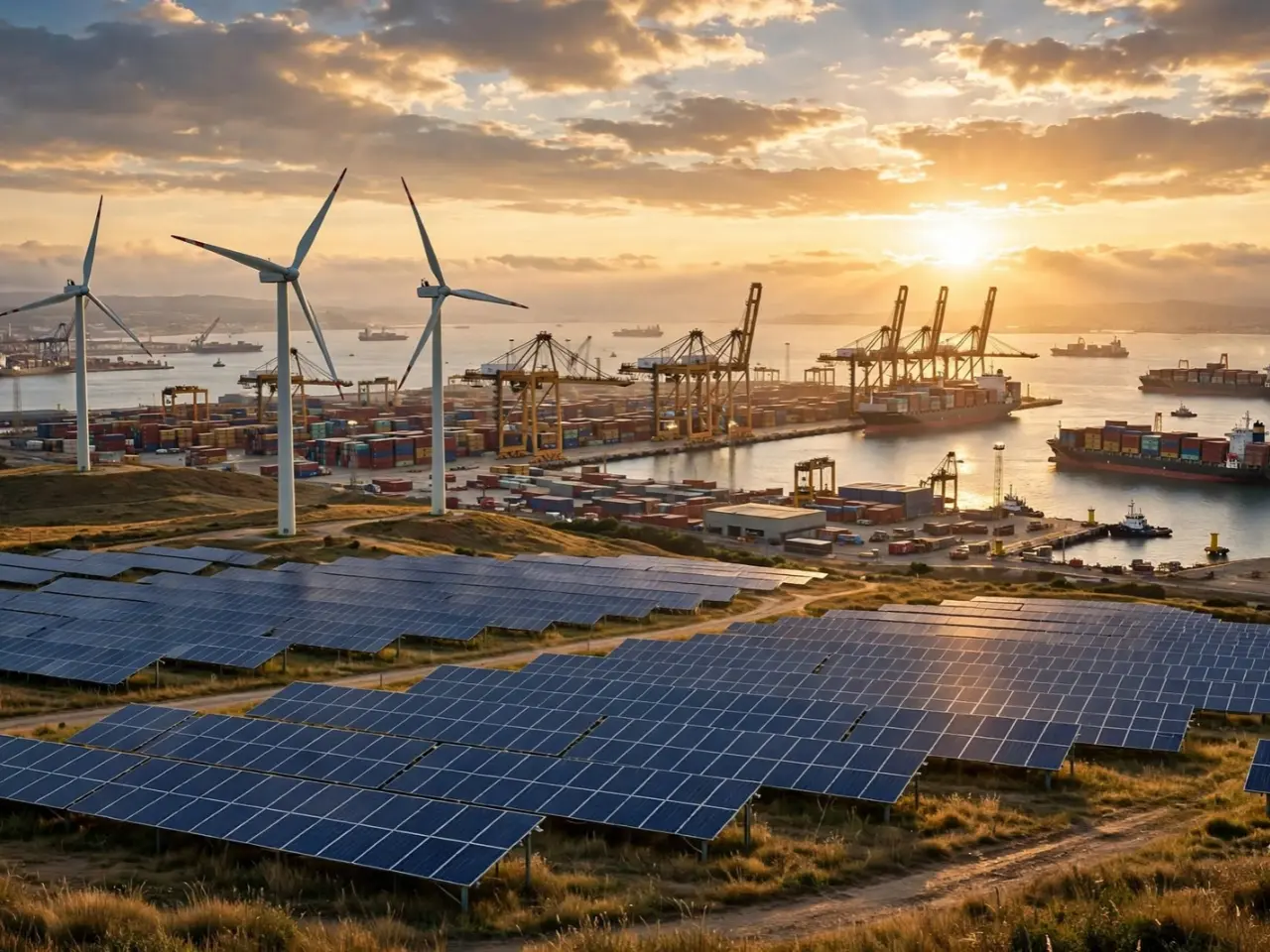
We often associate globalization with free trade, specialization, and trade based on comparative advantage. The classical foundations of free trade can be traced back to the late eighteenth century, beginning with Adam Smith's ideas. However, the period surrounding those early theories was less complex than what we see today. Geopolitical considerations have become increasingly influential in shaping international trade. Growing trade wars, retaliation, protectionism, and many new trade barriers have led to the erosion of free-trade principles. Since this era carries many of the features of the centuries-old mercantilist system, it is reasonable to frame this as a revival of mercantilist thinking. Neo-mercantilism itself is a vast subject, influencing the entire domain of international economics, although its influence varies from sector to sector. Growing environmental concerns emerged towards the late twentieth century, and since then, many developed as well as developing countries have come together to find ways to protect the environment and ensure sustainable growth. However, agreeing upon a common objective and its practical implementation are two different things. The interaction between rapid advancements in green technology and the growing influence of geopolitics is particularly interesting.
It is easy to understand why we are moving towards green technology, but understanding the path we are taking is the main challenge. The principle of efficiency suggests that goods should be obtained from producers who can supply them at a lower cost. This is broadly consistent with the idea of comparative advantage, which suggests that countries should specialize in producing goods for which they have a relatively lower opportunity cost and trade for others. However, this is not always what happens in reality. For example, China has established a significant cost advantage in green technology manufacturing. According to the International Energy Agency (IEA) 2024, producing clean-energy technologies such as solar PV modules, wind turbines, and batteries can cost up to 40% more in the United States and 45% more in the European Union compared with China. Yet, rather than relying entirely on cheaper imports from China, both countries are pursuing policies to strengthen domestic manufacturing. The US has used tariffs and other incentives, while the EU has taken steps through its Net-Zero Industry Act to increase its domestic production.Despite having access to cheaper imports, many countries are relying on relatively costly domestic manufacturing. There could be many reasons behind this. For instance, if a country imports goods at a lower cost, its domestic industries are most likely to be affected adversely. In the short run, the consumers may experience a net gain in welfare, but gradually, domestic firms may fail to compete with these imported goods and eventually wind up their operations. This could put the country in a position where it becomes heavily reliant on imports for that particular good. As a result, any supply shock in the long run could adversely affect the country. Another possible reason for relying on relatively expensive domestic manufacturing could be the conservation of foreign exchange reserves, as well as protection of domestic jobs. There could be another interesting explanation for this on geopolitical grounds. Many countries do not want strategic competitors to gain excessive control over critical technology supply chains. According to the IEA’s Energy Technology Perspectives 2026, China accounts for approximately 85% of global solar PV and 80% of lithium-ion battery supply chain production capacity. Such concentration gives rise to concerns that dependence on a single major supplier could become a strategic vulnerability, particularly amid geopolitical tensions. For the United States, therefore, expanding domestic manufacturing is not simply about competing with lower-cost Chinese producers; it is also about reducing strategic dependence and safeguarding its position in industries that are increasingly important to its economic and national security.
The IEA’s State of Energy Policy 2026 highlights the growing use of trade measures that incentivize or restrict imports and exports of clean energy technologies. In 2025 alone, 45 new measures were introduced, adding to the existing measures affecting clean energy technology trade. These policies are not solely aimed at protecting domestic industries; many are also intended to strengthen domestic manufacturing capacity. This reflects a shift in the nature of free trade, which is increasingly being shaped by national industrial and strategic priorities.
Despite the growing emphasis on domestic manufacturing along with increasing government intervention, the importance of free trade cannot be overlooked. International competition is necessary to make the domestic industries more competitive and dynamic, and free trade can act as a catalyst for innovation and diversification in domestic industries. Which could help them to secure a long-term position in the global market. Moreover, prolonged protection through subsidies and other incentives may create dependence on government support, weakening the incentive to innovate and improve productivity. Many industries may simply seek to retain these incentives, and this may even encourage rent-seeking behavior. However, completely exposing underdeveloped industries to international competition may also hinder their growth. This is particularly relevant for the developing countries, where temporary and targeted protection could provide sufficient time for these industries to work on their technological capabilities, economies of scale, and managerial expertise, eventually making them capable of competing without continued protection or preferential support.
The growing green technology race has revealed a conflict between competing economic priorities, where a nation has to choose between relying more on cheaper imports or encouraging domestic manufacturing. There is no clear-cut answer to this; both alternatives have their pros and cons. Although there is a tendency towards neo-mercantilism in the green technology race, not all restrictions are leading to a transition towards neo-mercantilism. Some restrictions are there to address climate goals, market failures, and energy security. This implies that the future of free trade may not necessarily lie in choosing between complete dependence on global markets and complete domestic self-sufficiency. Rather, the challenge will be to strike a balance between building domestic capabilities and maintaining the benefits of international trade. Therefore, the green technology race is not necessarily ending free trade; it is changing the conditions under which countries are willing to participate in it.