Adaptable Economy Amid Regional Conflict
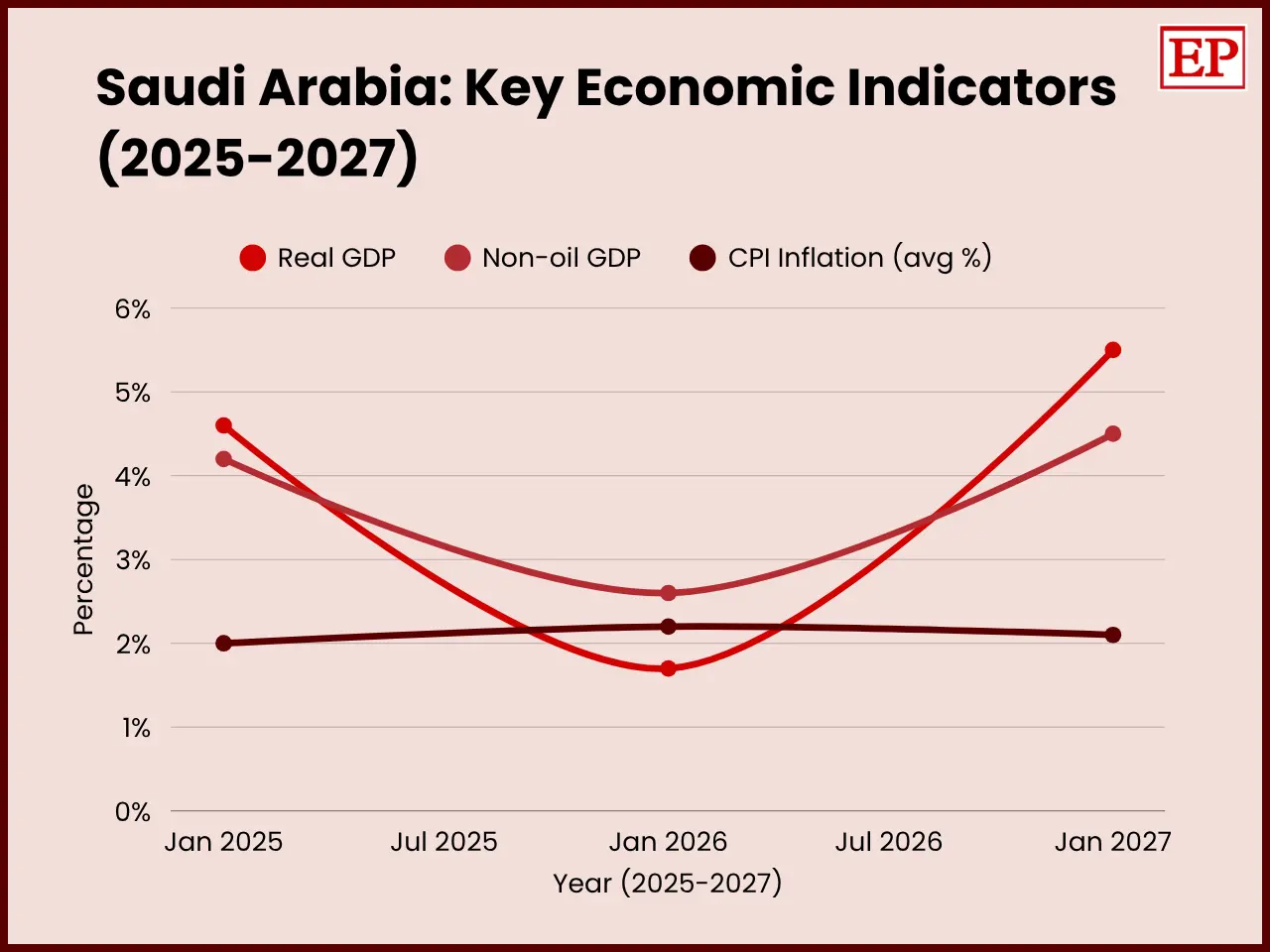
According to the IMF’s Article IV report published in July 2026, economic activity in Saudi Arabia is performing relatively well under strain from the ongoing conflict in the region, including difficulties pertaining to shipping through the Strait of Hormuz. The combination of solid economic fundamentals, diversification of energy resources, and logistics infrastructure (including the rerouting of oil along the East-West pipeline to ports on the Red Sea) as well as adequate reserves has mitigated the negative influence of the shocks. In 2025, the economy experienced an increase in GDP by 4.6% as it maintained a low inflation rate and unemployment level, although GDP growth is predicted to fall to 1.7% in 2026, which will be followed by recovery in 2027, with growth reaching 5.5%.
Policy Priorities and Projections
The IMF Executive Directors commended the quality of the response of the authorities to the crisis as well as the reforms initiated under Vision 2030. They approved a slight and short-term reduction of the non-oil fiscal deficit for 2026, financed through reprioritization of expenditures rather than any new debt, while mentioning that Saudi Arabia will remain on a solid fiscal foundation should the shock deteriorate. In a longer-term view, they advocated for ongoing consolidation, growth of non-oil revenue, subsidy reform, and deeper diversification. The dollar peg was properly assessed, and the financial sector was seen as strong enough. Risks are assessed as downside-oriented, with the development of the hostilities being of key importance.