G20 Growth Faces Regulatory Headwinds
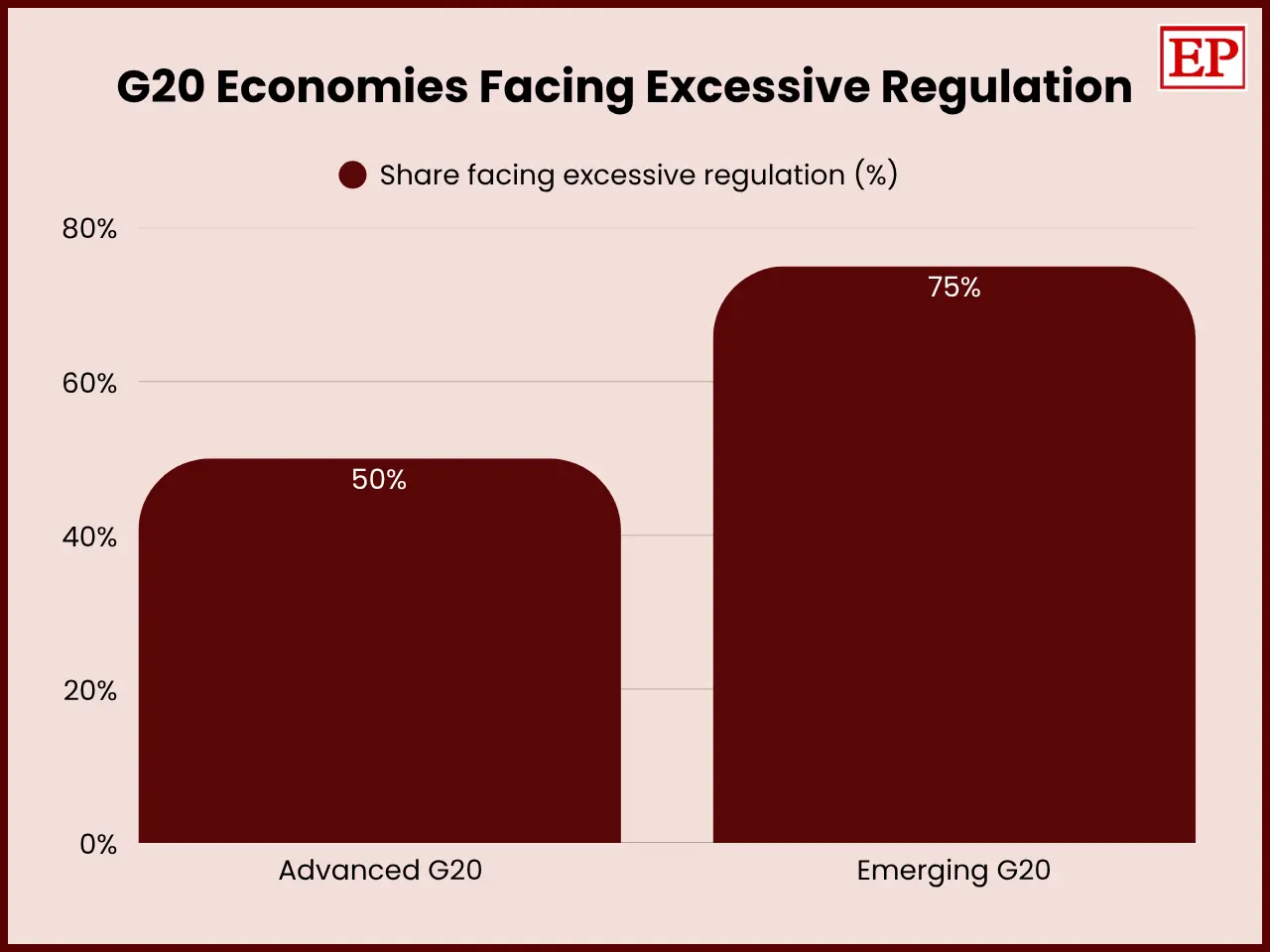
The IMF anticipates that economies in the G20 will expand at less than 3% annually by 2031, which is almost comparable to the periods after the financial crisis despite emerging from recent shocks like hikes in energy prices and increased protectionism. A recent survey conducted by the International Monetary Fund indicates a key reason for this low growth rate. Almost half of the advanced G20 economies and three-quarters of emerging economies are faced with excessive labor, products, and consumer protection laws, although in some countries excessively low regulation is still a problem. However, the issue is not about the amount of regulation but rather about the efficient regulation design.
Dependent on a level of income, the challenges are different. Advanced economies are facing poor housing regulation and difficulties in dealing with the aging population, while emerging economies experience such issues as underdeveloped capital markets, low income of the public sector, and governance problems.
Reform Momentum Has Stalled
Studies have shown that the lifting of regulations led to better investments and growth in various developed economies of the G20, but labor-market liberalization seems to work when the regulations are very rigid from the start. Even though deregulation is helpful, it seems to be less and less common since the 1980-1990s. Part of the reason for this is political economy tensions among different stakeholders, governments, or unions. The IMF thinks that the process requires a trustworthy entity, openness to the groups involved, and mitigating measures, such as retraining programs.