Why Productivity Plateaued
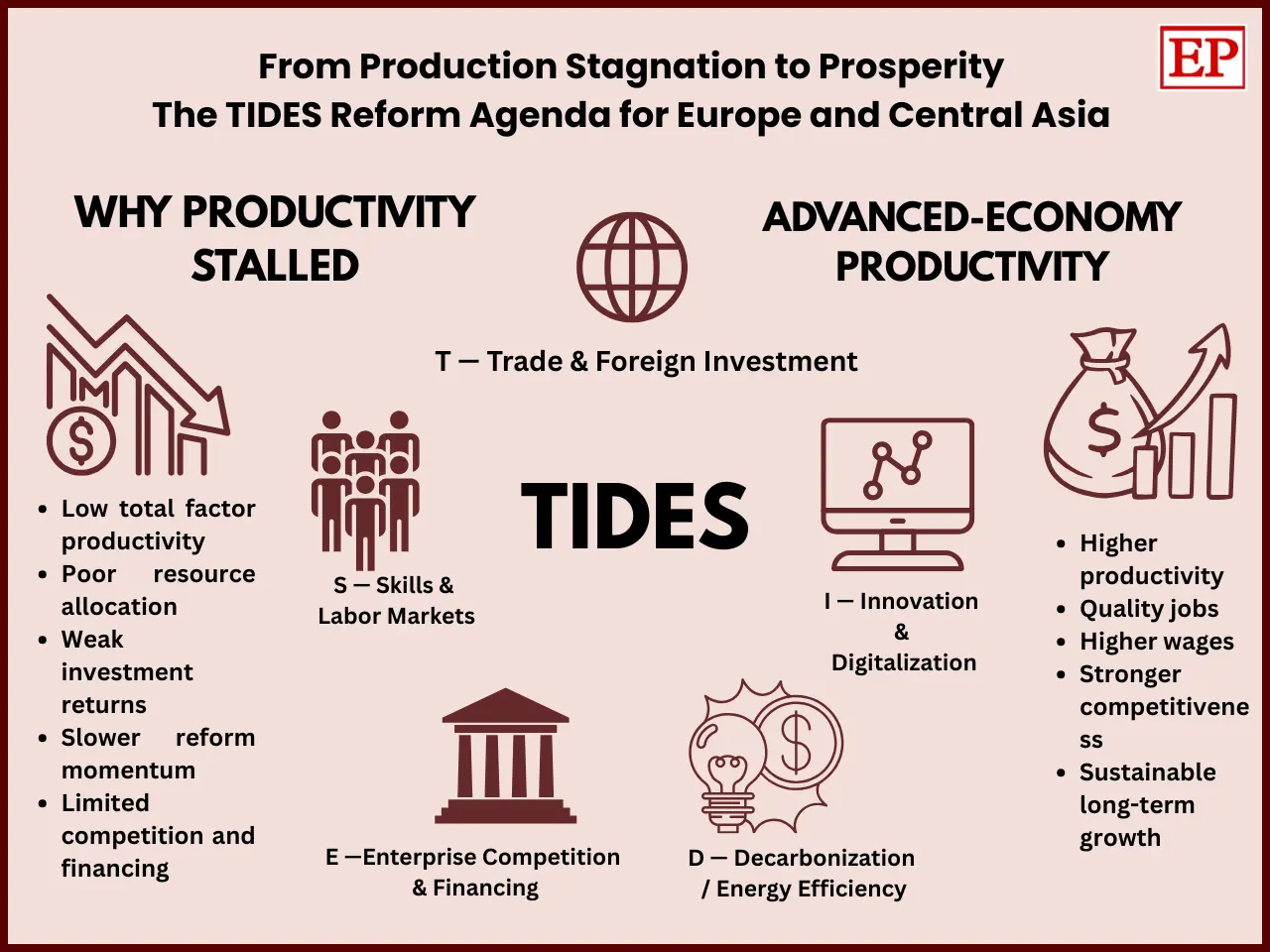
Since the 2008 financial crisis, Europe and Central Asia have seen a slowdown in growth due to low productivity levels rather than capital shortages. The growth in total factor productivity was cut in half due to lower investment returns and a lack of momentum in reforms. The main problem is that resources are poorly allocated by state companies, monopoly competition, and restricted financing.
The TIDES Reform Agenda
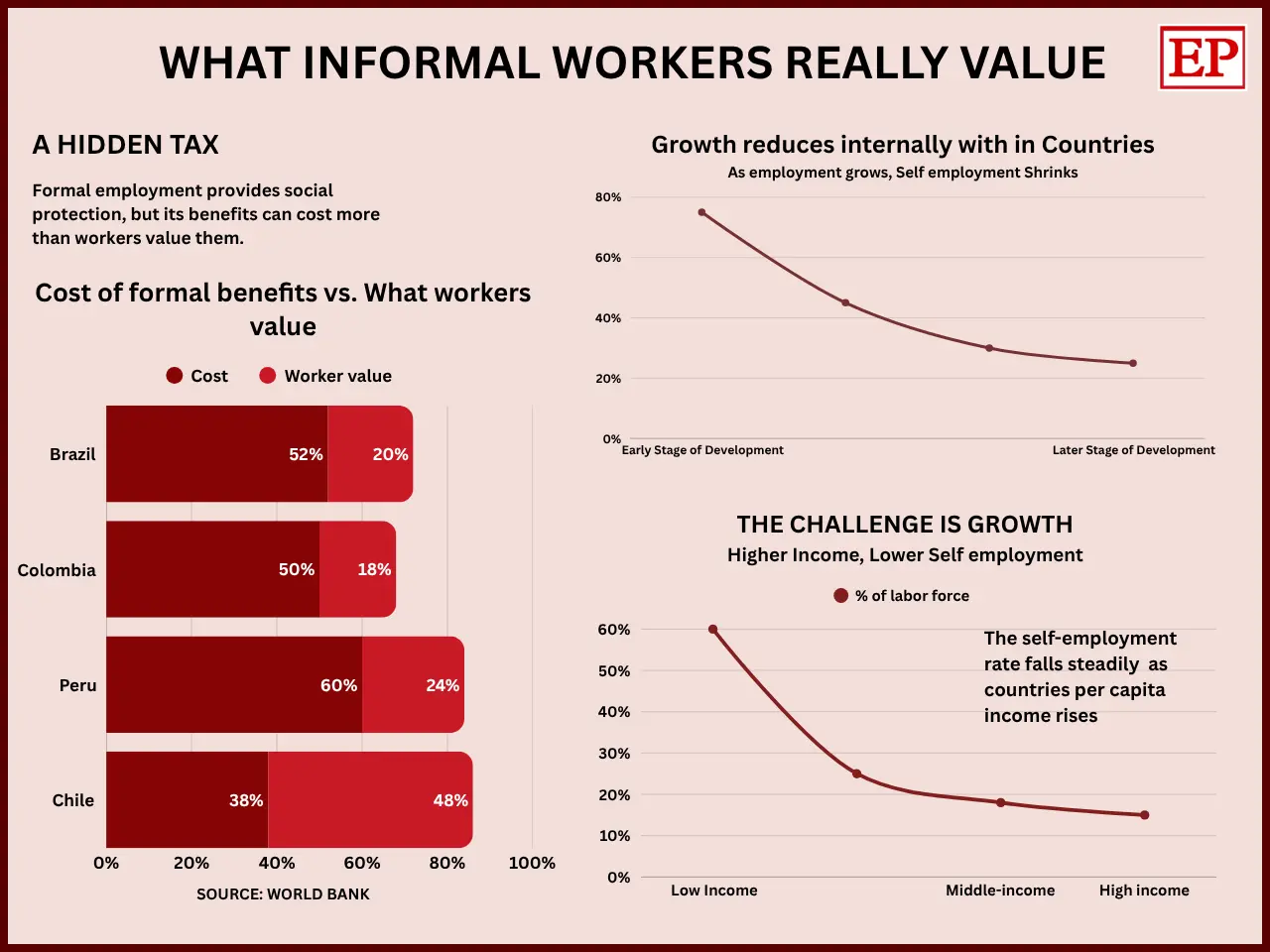
The report outlines five interlinked levers to turn this trend around. Trade and foreign investment are still underused, while many countries’ exports are far from what could be. Despite the role of exporters in raising the number of jobs and salaries, companies won’t be able to reach their full potential without the use of digitalization. Though energy efficiency is closely connected to productivity, the subsidization of fuel and electricity does not encourage energy upgrades. Lastly, mismatched skills need to be addressed, because the workforce is not able to work efficiently because of skills related to informal labor markets. These five elements create a roadmap for the region to reach productivity levels of advanced economies, as well as create quality jobs and higher salaries.