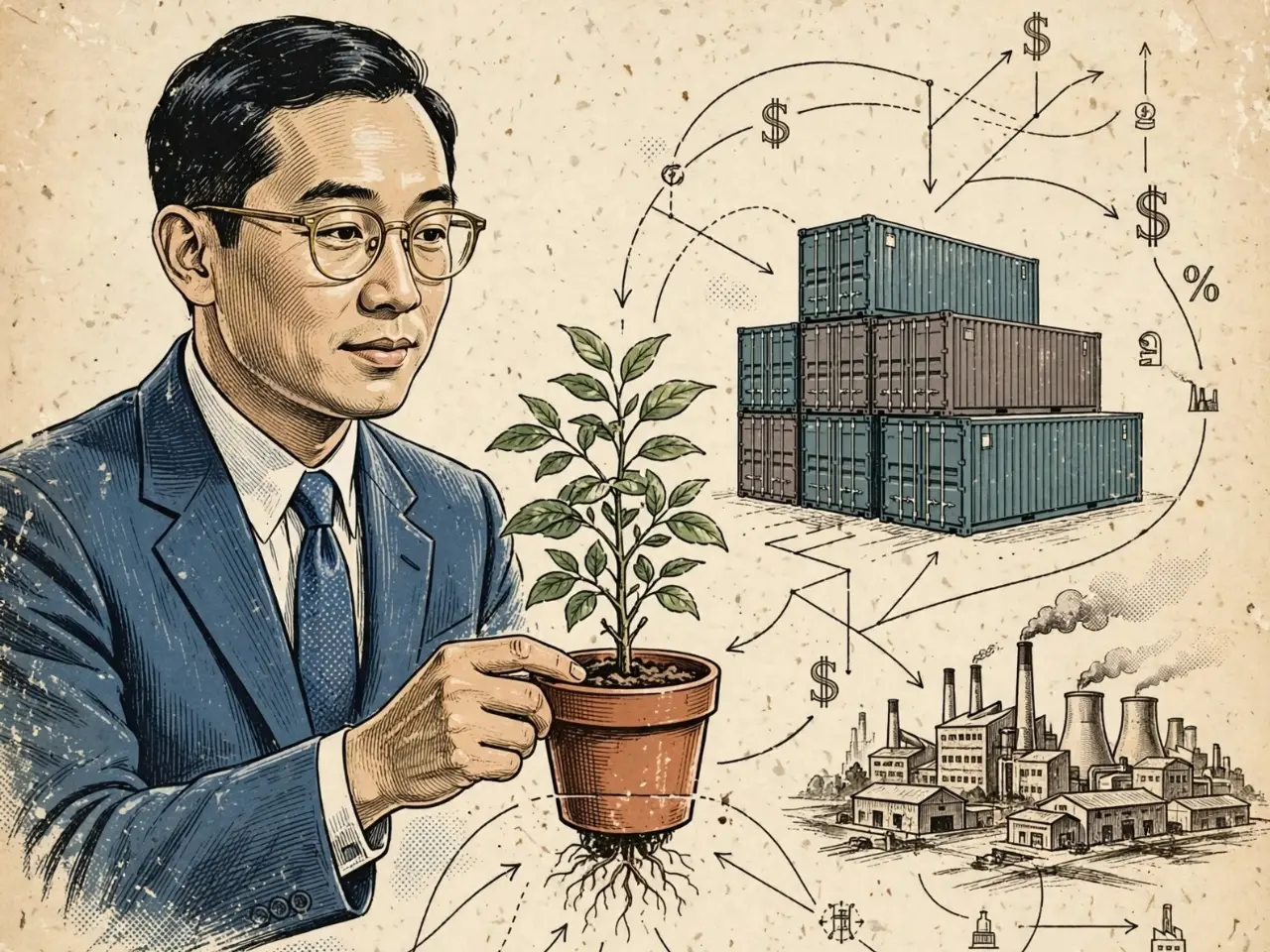
South Korea’s move from a poor, mostly farming-based economy to a powerful industrial one helped shape what economist Ha-Joon Chang thinks about how developing countries can build strong industries. His viewpoint draws a lot from the development changes he saw with his own eyes.
South Korea’s Transformation Shaped a Development Economist
Chang was born in South Korea in 1963, at a time when it was a relatively poor country. Life expectancy was only 53 years, and the country’s economy was based on a handful of products, most importantly, rice, fish, and vegetables. But the early 1960s also saw the start of a big push for development. This involved five-year plans, industrial policy, and putting the banking system under government control.
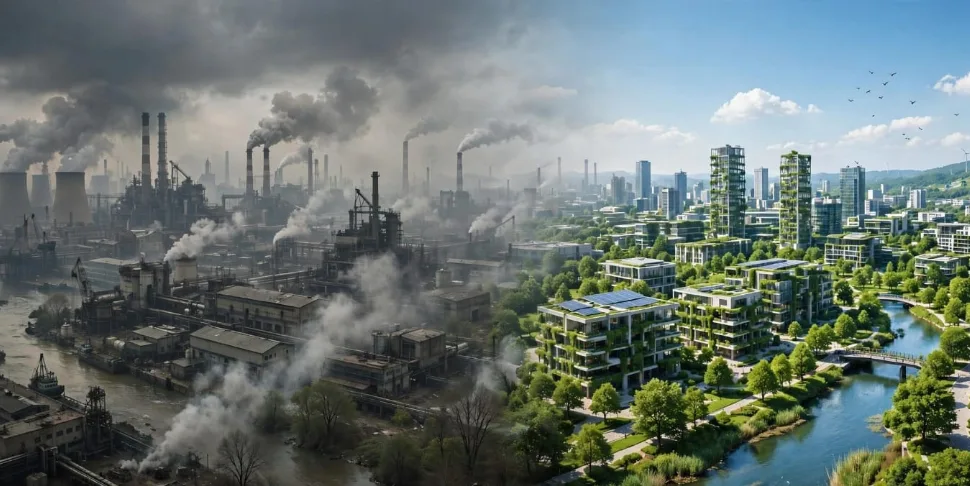
That strategy helped push growth rates up into double digits and changed how the economy worked. Chang describes that time as feeling like “riding a time machine.” Over the first 43 years of his life, he watched South Korea go from making mostly farm goods to turning out cars, ships, and steel.
For Chang, though, this shift wasn’t just a story of economic success. He also lived through military dictatorship, exploitation, and political repression. These broad and mixed experiences prompted him to study economics and to examine how growth in the economy could be accelerated without neglecting grave social and political problems. His thoughts have been influenced by various approaches to studying economics and development issues. In particular, attention is drawn to the ideas of developmental economists and theorists (such as Marx, Albert Hirschman, and Simon Kuznets).
Infant Industries Need Time to Grow
A big idea in Chang’s work is protecting new industries. He says developing countries need a starting period of protection so their young businesses can grow, get better at making things, and later compete against older foreign companies. Chang uses history to back up his point. He points out that the United States kept protection going for almost one hundred years while building up its economy. South Korea and other East Asian countries also put high tariffs in place to give new industries room to invest and get better at what they do.
For Chang, tariffs are just one piece of a bigger plan for industry. He talks about how important it is to have government subsidies, money put into roads and bridges, a working banking system, government bonds, and patents. He says this whole approach goes back to Alexander Hamilton’s 1791 report on manufacturing (which he calls an early plan for economic growth).
Chang also warns that protection can be used the wrong way. In his opinion, state support worked best when the industries getting help were held to high standards and expected to boost their output and ability to compete.
Industrial Policy Returns to the Global Economy
Chang argues that industrial policy used to be a completely normal part of capitalism but became increasingly contentious from 1980 to 2020. The author focuses on the resurgence of industrial policy due to deindustrialization in advanced economies and rising technological competition. He further argues that industrial policies did not cease to exist during the period that they were considered politically inappropriate. Industrial policies continued to exist, albeit in a different guise, as governments supported research that formed the basis of semiconductors, computers, and the internet. Chang makes a distinction between protective policies for emerging industries and protective measures for established industries. He argues that many of the recent industrial policies being considered in advanced economies are a ‘geriatric version of infant industry protection’ and that their efficacy will be determined by the design of the measures.
Trade is a vital element in development, as Chang emphasizes. He argues that development is impossible unless there is trade. However, developing countries must invest in building their export industries. Chang observes that Korean and Taiwanese authorities were subsidizing their export industries since they needed to use the foreign exchange earnings to buy machines and technology.Chang argues that sustainable development should not only encompass economic growth but rather include political and social aspects. He discusses the need to address the issues such as the poor working conditions, job insecurity, and inequality. Chang puts emphasis on the need for economic literacy and education about economic issues to enable people to have the required public intellectualism to have a social consensus on the issues relating to the economy.