$3 a Day Still Matters as the Global Challenge of Extreme Poverty Persists
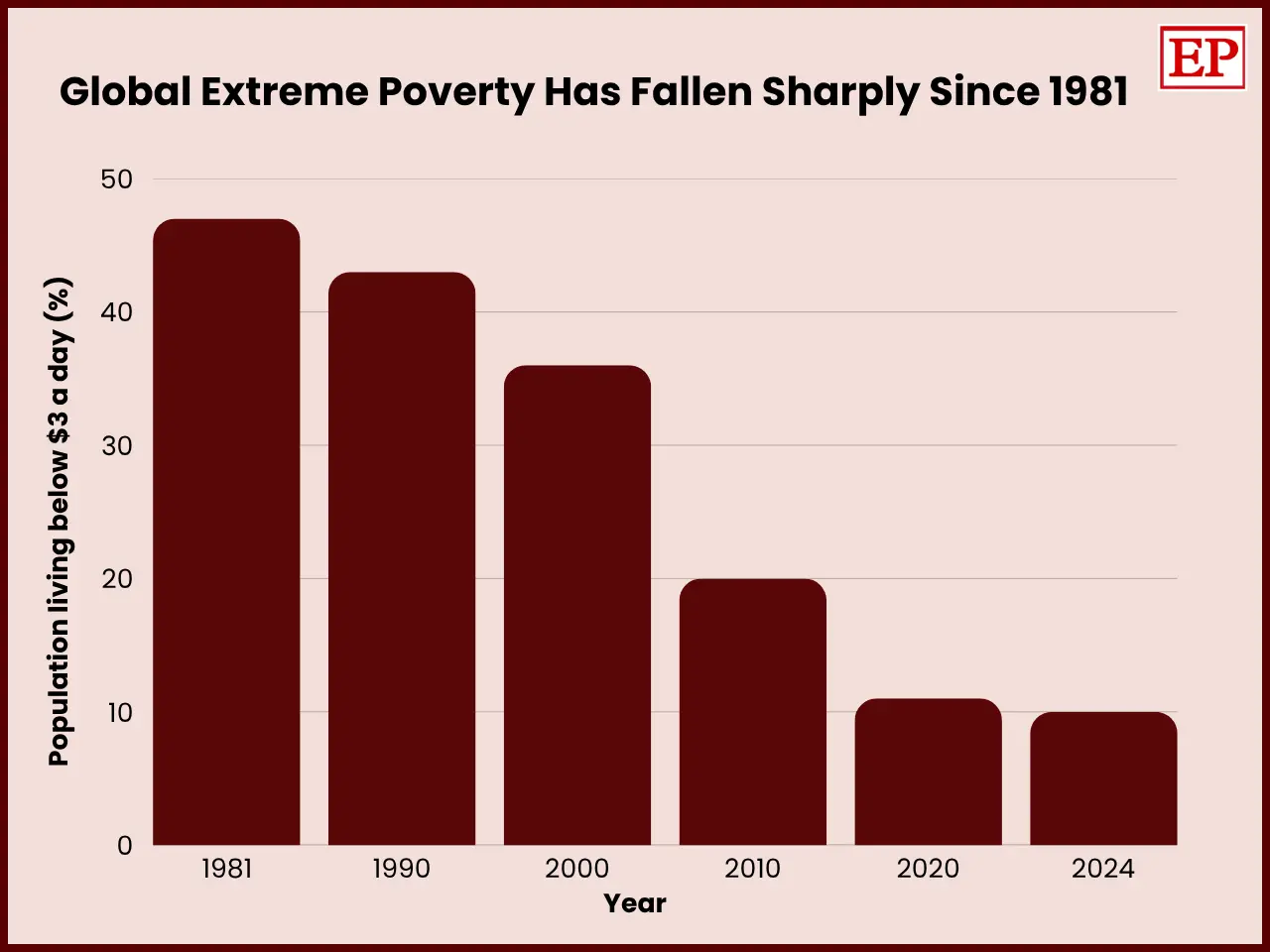
Despite progress that’s reduced it drastically over three decades, 826 million people remain in extreme poverty. This raises a question for the global economy: how low should the world draw the line to put poverty to an end? The global economy has had historic success battling extreme poverty. But the spoils of growth have been unequal. The share of people struggling in the most severe form of poverty fell by nearly three-quarters, from 43 percent in 1990 to about 10 percent. But roughly 826 million still earn below the World Bank’s international extreme poverty line of $3 per day per person.
The $3 threshold can look paltry for those in higher-income economies. But it’s not designed to identify a livable existence, let alone luxury. Instead, it’s a threshold set solely to define those experiencing the most desperate form of monetary deprivation.
Extreme Poverty Becomes More Concentrated
While the world achieved incredible progress in reducing global poverty rates in the 1990s and first decade of this century, gains have come unevenly. Many major economies—particularly China, India, Indonesia, and Brazil—have seen rapid improvements over the past two decades, bringing rates of extreme poverty down from more than a third of the population to only single digits. Others continue to see more than 40 percent of their population live in extreme poverty.
For the world’s 30 or so poorest economies, further reducing poverty is getting harder: The bank says that at historic rates of progress, some may need more than three generations to drop extreme poverty to the 3 percent level, due to ongoing conflict, frail governance, and weak economic potential. Moreover, its June World Development Report analysis shows that reducing poverty has become increasingly concentrated in poorer countries that continue to languish at high rates of deprivation, where it has either stalled or become extremely slow, exacerbating disparities between countries. It might be possible for global average poverty rates to continue dropping while tens of millions remain on the extreme end of life at the very bottom of the economic ladder.
Why the Lowest Poverty Line Still Matters.
The $3 threshold can look small in the global economy—a meager sum for a person to survive on even on modest incomes. But not because the bank is suggesting a minimum adequate living standard or has no concern for “people,” but because the poorest segment of society remains incredibly poor. The World Bank’s focus in setting such a low threshold was, instead, to provide a consistent global standard that would allow governments and policymakers to accurately track and guide efforts to alleviate the most severe form of poverty in countries around the world, even as the pressures on those resources mount: official development aid fell roughly 30 percent in the past two years. For this reason alone, the very poor continue to register their presence at the bottom of income surveys, providing us all a clear red line.
One Standardized Threshold Will Not Cover All Forms
This isn’t to imply anyone not in extreme poverty should be exempt from the poverty discussion. Poverty changes as overall incomes rise and as what constitutes a “good life” as wealth increases. That is why the World Bank has also developed a series of higher country-specific poverty lines: $4.20 for lower middle-income countries and $8.30 for upper middle-income countries. What they reflect is that poverty should probably adapt based on country prosperity: being not in extreme poverty may not mean your household would pass for middle- or high-income in the U.S.The $3 threshold itself comes from national poverty lines in some of the world’s poorest economies, which are then adjusted to reflect purchasing power differences around the world.
Ultimately, the test is of those left behind
This $3 threshold has become something more: a kind of signal. But at the end of the day, the question for the world economy is not so much the numbers that this and other poverty lines create but what those numbers imply or fail to imply as we look toward global development and growth as a cause for optimism. Yes, overall growth has pulled a lot of people up from deprivation.
But those who remain are mostly in countries already poor on many fronts and where many difficulties persist, like violence, poor governance, and lack of opportunities. Which is to say, boosting the world average can be a nice, if insufficient, start. It helps the world to focus on ensuring the farthest are reachable.