Lifting people out of poverty
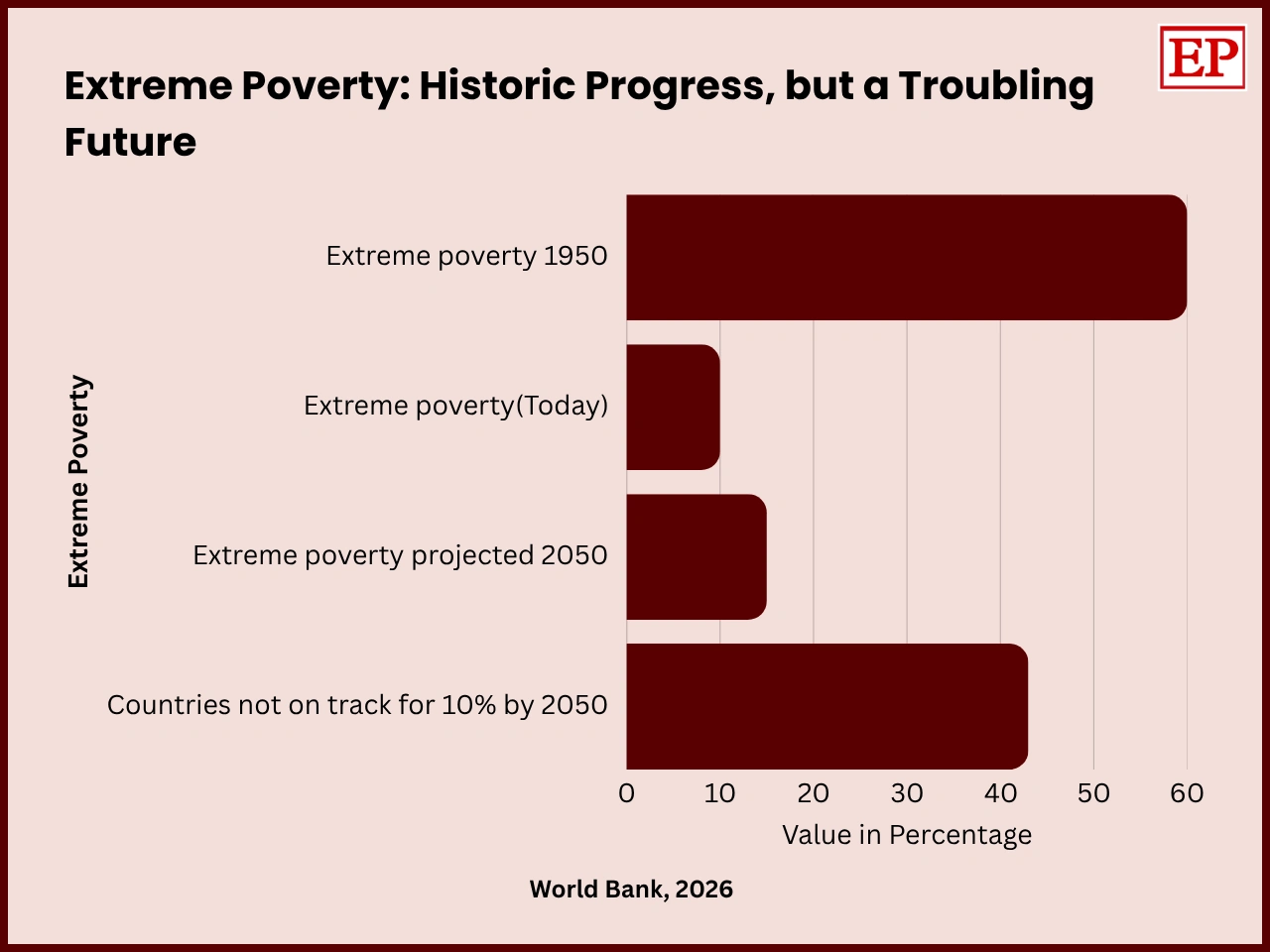
There is one of history’s finest humanitarian achievements in recent decades: the declining number of people living in extreme poverty. In the mid-1950s, 6 out of 10 people on earth were living in desperate poverty (not being able to consistently meet basic needs). Today, that number is down to around 10% as a result of continuous economic progress (particularly from rapidly developing countries in East Asia and South Asia). The lives of hundreds of millions of people who were once destitute have been transformed through better standards of living, improved access to healthcare and education, and increased participation in the economy. The trend is long-term, and it has been recorded in the Atlas of Global Development 2026 published by the World Bank, a testament to how great development policy and international cooperation have been over the years.
Where Progress Has Stagnated
While this overall positive trend is present globally, it is not consistent. There’s been no progress or even a slowdown in the fight against extreme poverty in a group of 43 countries. They have some common and worrying issues: fragile and weak governance institutions, a lack of diversification, restricted markets and opportunities, and persistent armed conflict. These interrelated barriers are a context in which the reduction of poverty has a poor chance of making headway and any gains are poorly sustained. These countries seem to be stuck in the vicious cycle of fragmentation, resulting in continual deconstruction of the economies in question, thereby slowing down the economic growth of these countries and adding further to the already aggravated political and social instabilities associated with inadequate economic development. However, only targeted interventions that tackle the underlying causes of chronic poverty will help individuals get out of this cycle, not the traditional methods of development.
The likelihood of the reversal
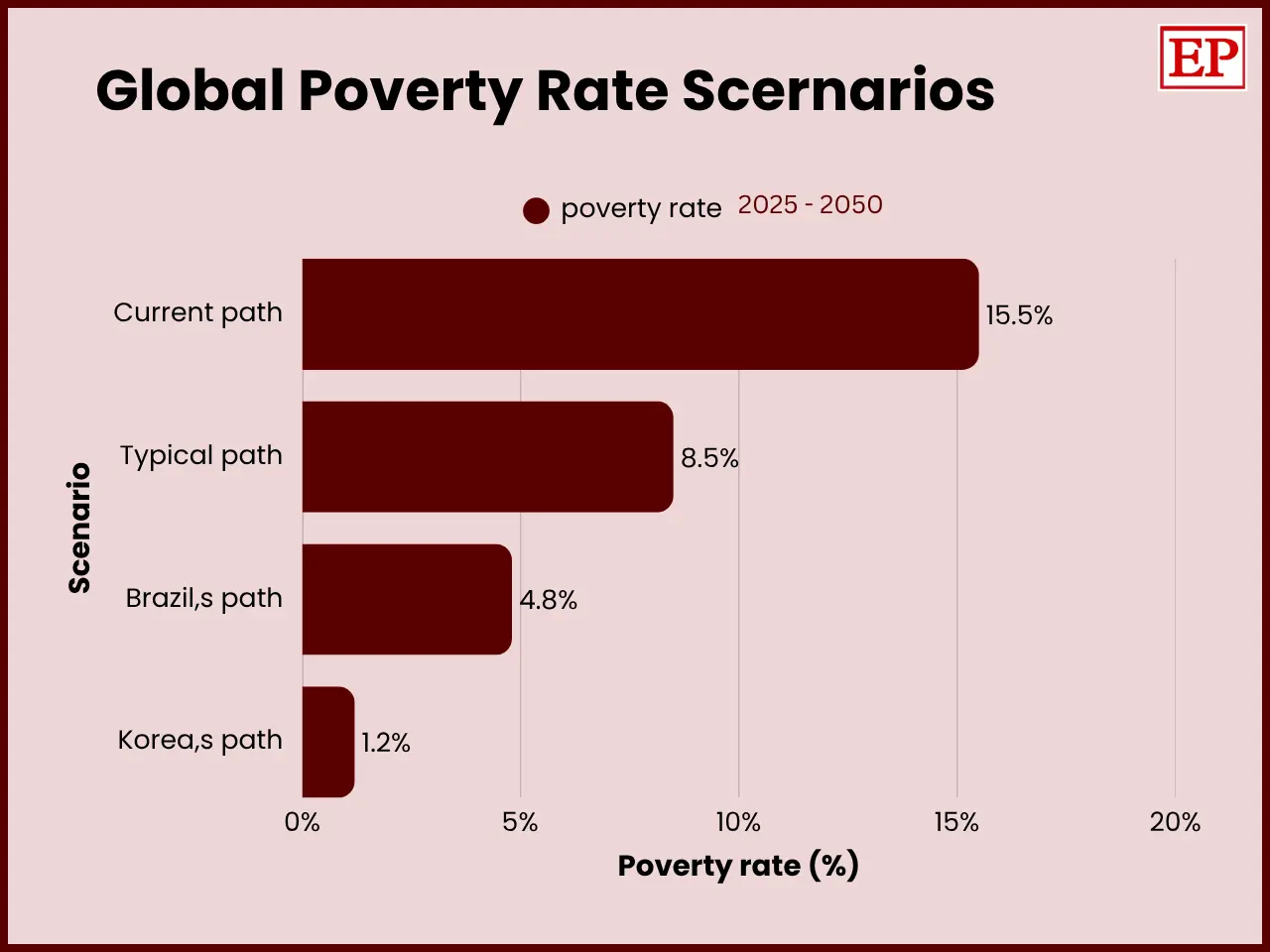
The most worrying if-then conclusion of the Atlas of Global Development 2026 is that the world may soon start to see the number of those living in extreme poverty start to climb instead of decline. Many of the nations where poverty continues to be highest have stalled in making progress. Most importantly, over half of the world’s poorest now reside in countries where poverty is not being reduced. However, current trends, if not halted, could result in the addition of up to 600 million extremely impoverished people by 2050. This would be a radical and deep change from many generations of continuous improvement. The road to an end to extreme poverty has once again become a much more precarious one, and the most vulnerable groups are less likely to get out of poverty than ever before.
The Road Ahead
This potentially reversed trend will need a whole-of-community, whole-of-country approach to poverty reduction. Work on resolving the problems that underlie stagnation in the most affected countries, which include entrenched conflict, weak governance, and structural economic weakness, cannot be done with traditional aid and investment. It is essential that comprehensive strategies are developed that integrate institutional reform, investment in peace and security, and capacity building in the longer term. Meanwhile, international collaboration should be expanded and enhanced to ensure funding and focus are concentrated on where people are most in need and most at risk of not achieving. The window of opportunity to avoid a major rise in global poverty is closing. If action is not taken and coordinated decisively, the accomplishments achieved over the last century are in danger of being lost, leaving hundreds of millions of people in a world in which the means and knowledge to end extreme poverty are at our fingertips.