How the Market Cushioned the Shock
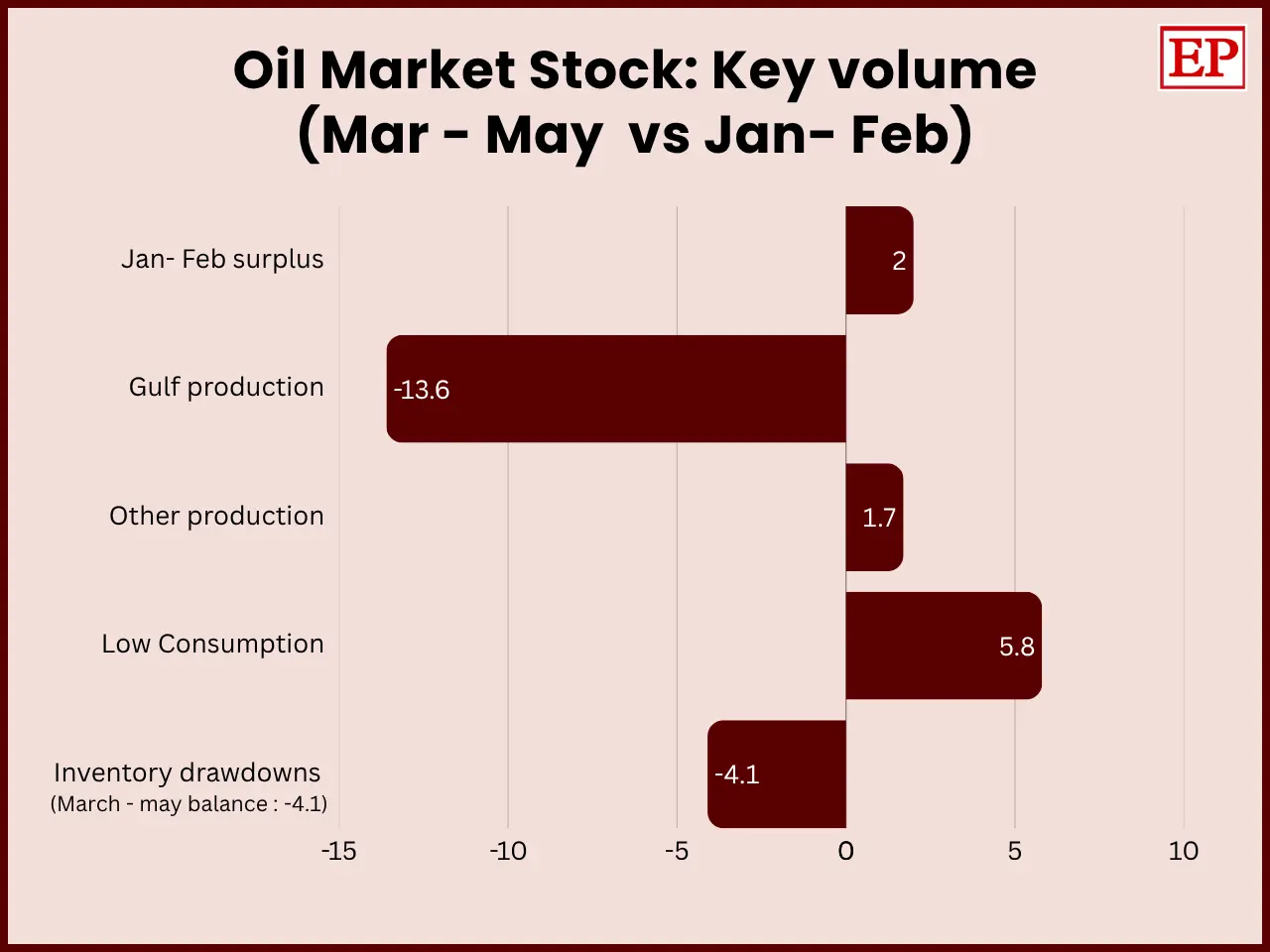
The war in the Middle East has disrupted the oil market on an unprecedented scale, practically blocking the Strait of Hormuz and stopping around 20 percent of the global flow of crude oil. However, prices increased only to the range of $90-100 per barrel instead of skyrocketing due to three factors. Firstly, people need less oil (particularly in Asia, where high oil prices made economies turn towards coal and renewable sources of energy). Secondly, non-Gulf production surged (e.g., US oil production, as well as oil production by Venezuela, Guyana, and Russia). Finally, there was a decline in oil reserves worldwide, including commercial reserves in China and strategic reserves. As a cushion against the shock, the surplus of supplies before the war kept the economy afloat.
Dwindling Buffers and Policy Priorities
Though the recent US-Iran agreement aimed at decreasing tensions is promising, it would still take around two to three months for shipping to return to normal, and any prolonged closure would cause irremediable losses in production. The loss of the spare capacity and ability to shift demand and inventories means that the future disruption will find the system much more helpless. The authors call for stockpiling, diversifying energy supply sources and trading routes, and targeted consumer support in order to protect both budgets and prices.