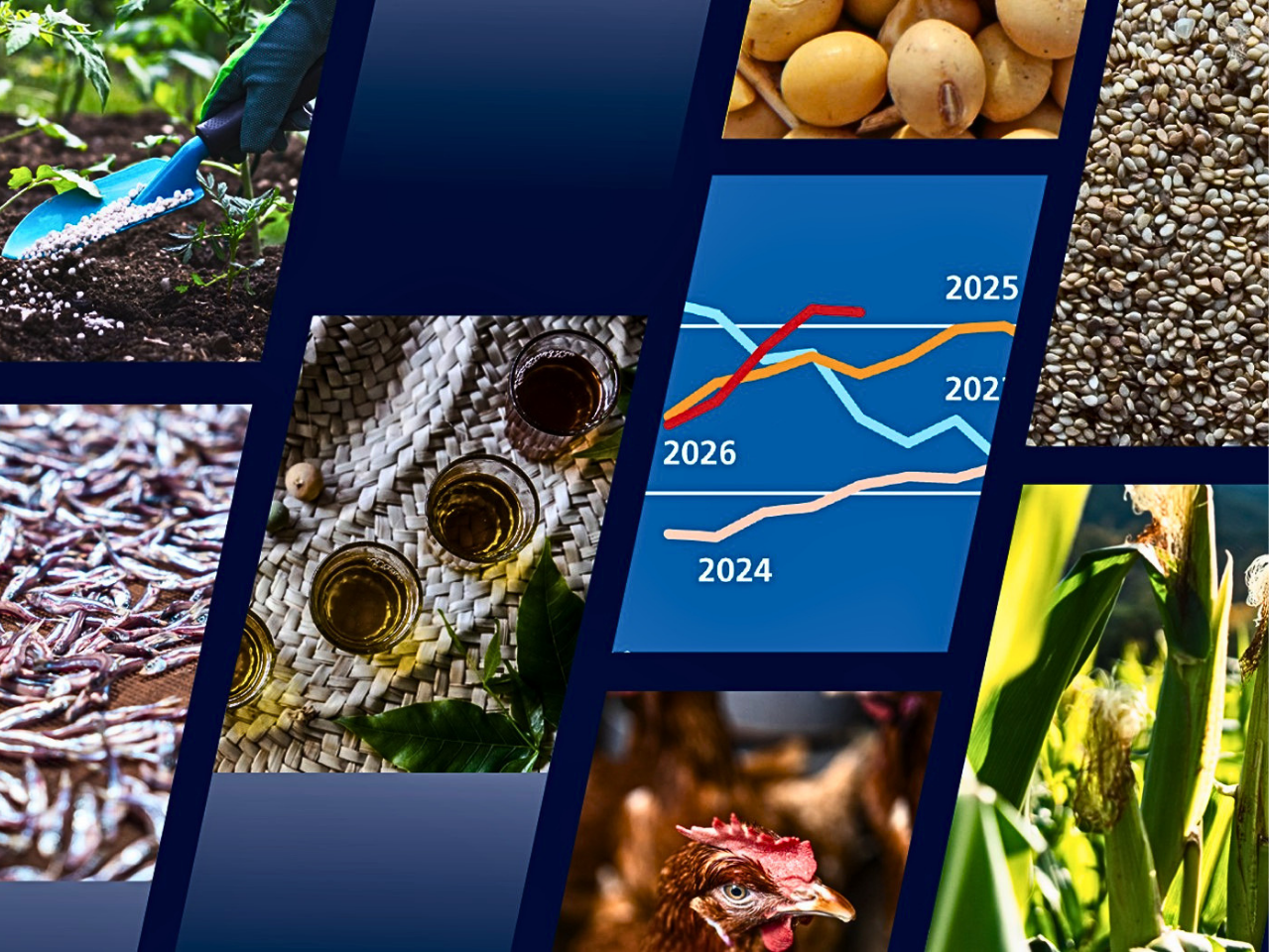
The global food commodity markets are enjoying a phase of relatively calm weather, but new FAO data released today indicate the margin for error is narrowing. Global cereal production may shrink from the highs recorded last year, the new FAO Food Outlook reveals. However, supplies continue to remain readily available due to substantial carryover inventories. The report nonetheless points to the familiar set of risks that loom in the future: erratic weather patterns, the advent of a new El Niño event, wild energy and fertilizer prices, and rising geopolitical tensions.
A little less cereal is coming off the lines, but we have some stored up!
But fear not; the report says, "Global cereal output is predicted to decrease by 2 percent in 2026 to approximately 2.98 billion tonnes." There are plenty more cereals to go around because "stocks have been accumulating since the beginning of previous marketing seasons and will continue to buffer the market." Demand, on the other hand, is going up because "human cereal consumption is estimated to increase by 1 percent." The not-so-good news: "Cereal consumption per capita in food-deficit low-income countries is estimated to contract by 0.4 percent."
Declining Wheat and Coarse Grains and Rising Soybeans
Looking at individual crops tells a less uniform story. World wheat output in 2026/27 is forecast to decline 3.8 percent to some 811 million tons, with the reduction mainly in an underperforming US and part of the EU. Coarse grains are forecast down 1.2 percent, though with the North American harvest weakening, while South American production (notably Argentine maize) is strong.
Soybeans, on the other hand, go against the flow: world production is seen rising to a record high of 432.3 million tons, with the extra Brazilian and Russian grains more than offsetting below-par harvests elsewhere.
Elsewhere, meat output is seen advancing slightly, led by poultry, while vegetable oil markets are tightening as consumption again exceeds output for a third successive year. Fisheries and aquaculture are seen to grow again, albeit with fishing, as some species are subject to quota reductions.
Rising costs of energy, fertilizer, and shipping have overshadowed the outlook
Apart from the fields, the report highlights intensifying pressures building up from energy and input markets. Fertilizer trade volumes experienced a massive decline in the period from January to April 2026 as compared to the same period a year ago, and buyers in Europe and North America continue to be cautious heading into the new season. The FAO issues a stern warning that potential disruption to shipping lanes through the Strait of Hormuz may, in the short term, have varying effects on fertilizer and energy prices. A separate special chapter analyzes how the move of the shipping industry towards cleaner fuels, as part of the overarching goal of net-zero emissions, could have unintended repercussions on food markets, especially for small island developing states, which are heavily dependent on imports.
Highest Record of Food Import Bill
The most surprising number in the new report seems to be the world food import bill, which FAO now estimates would have risen 7.9 percent in 2025 to reach a record US$2.22 trillion in 2025. Presumably, this was not a reflection of record prices for cereals, sugar, and oilseeds, which all fell; rather, it was driven by the escalation of prices for more high-value food commodities, including coffee, cocoa, spices, fish, and fresh and processed fruits and vegetables, which are destined for mostly high-income economies. More than two-thirds of what the world spends on food imports today is spent by high-income countries (which experienced a 9.3 percent rise in import bills in 2025 over 2024) than by middle- and lower-income economies.
However, as the FAO chief economist Maximo Torero said, the agrifood system is very resilient and can continue to serve us well, but the increasing risk environment must be countered by increased resilience, open trade, and shock absorbers.