The capacity to secure favorable trade agreements is a major source of economic power in the interconnected world economy. The EU shows the benefits of economic integration in improving international bargaining power it speaks with a single voice when negotiating trade agreements on behalf of its 27 member states and around 450 million consumers. A common trade policy is an economic tool used to open foreign markets, promote competitiveness of exports, shield EU industries, and harmonize standards for imports. In an age where international trade is characterized by geopolitical rivalry and trade-disrupting shocks, the EU collective's trade policy is an instructive case of regional economic integration.
27 Countries, One Negotiating Voice
The power to sign trade agreements with third countries has, as a result of the EU common commercial policy, been handed to the European Commission (and not to Member State governments) acting for all 27 Member States. Such transfers of authority are intrinsic to the integration process and so ensure an externally coherent commercial policy that supports the Single Market.
As one single market, the EU gathers together the buying power of its 450 million consumers and the productive capacities of its member states into one single economic actor. Being an actor at that scale gives it significant clout on the global scene when the EU sits down at the negotiating table with another country or bloc of countries. The European Commission represents the member states in trade negotiations with third countries, including WTO (World Trade Organization) negotiations.
The EU has developed a wide network of trade links to 80 countries, with 45 trade agreements concluded (EC). Agreements are intended to reduce duties, remove trade obstacles, open markets, and protect the use of intellectual property rights. By implementing a single trade regime for its exporters, the EU avoids having to comply with different sets of rules and brings a degree of predictability to accessing foreign markets. Instead of having to rely solely on their individual economic size, states benefit from belonging to a large bloc of economic actors.
Exports, Employment, and Economic Benefits
International trade is vital in providing jobs and business to all over Europe. According to the European Commission, more than 33 million jobs in the EU depend on exports. This goes to show that international trade not only supports multinationals but also their workers, suppliers, and smaller businesses.
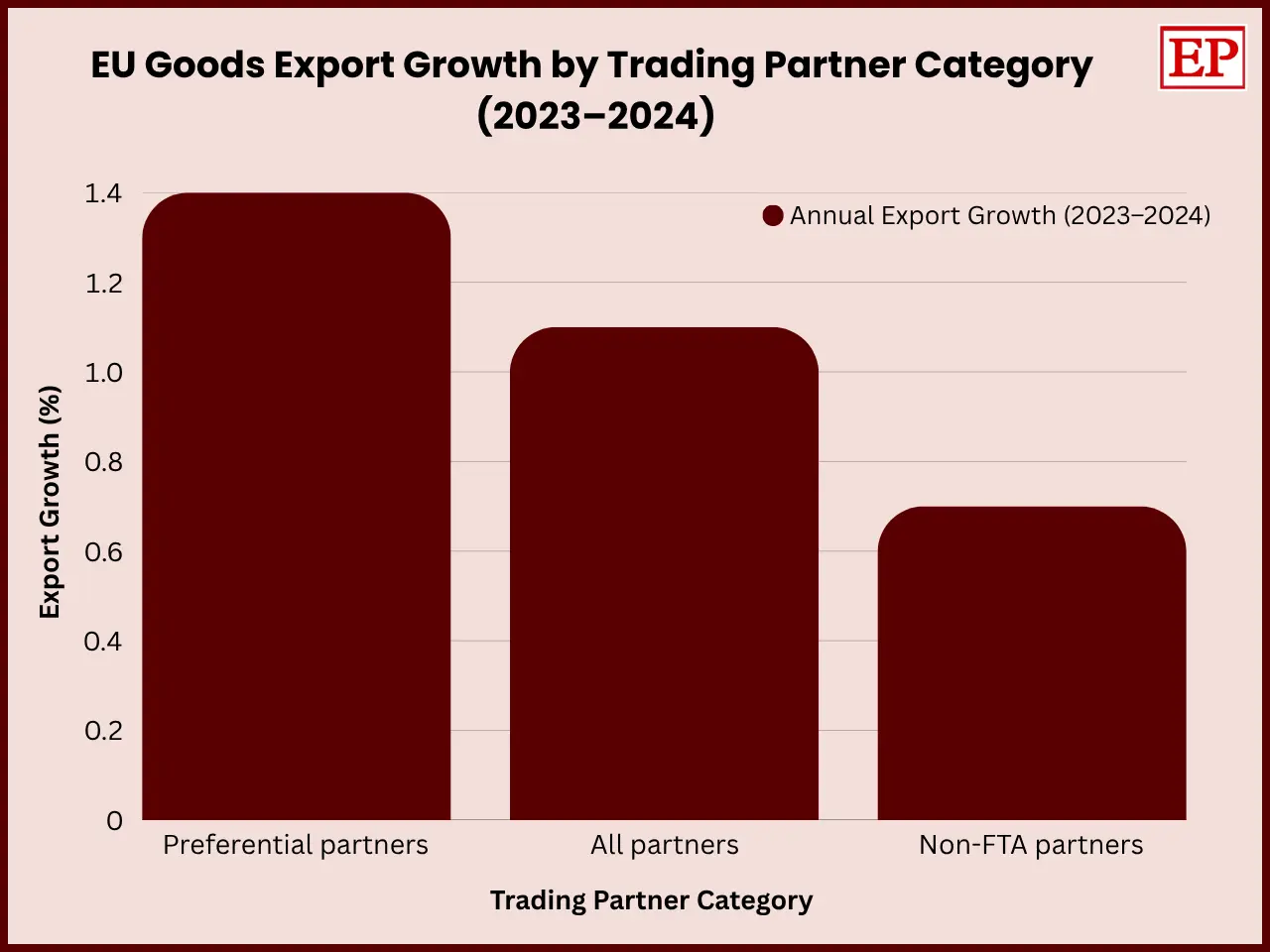
The good relationships developed through these trade deals facilitate international trade by eliminating tariffs and opening up markets. The Commission says in 2024, exports of goods to its 76 trade agreement partners grew at twice the rate of exports to third countries without a trade deal. While not all of this growth can be put down to trade deals alone, it at least demonstrates their value.
Enterprises benefit from the elimination of customs duties, more straightforward procedures, and predictable environments. For instance, under the EU-Canada Comprehensive Economic and Trade Agreement (CETA), Canadian customs duties on certain French urban lighting products were cut from 7 per cent to zero. For consumers, trade agreements might broaden access to goods and services, while heightened competition may help drive prices down. Yet, the realization of these benefits may be shaped by factors like a nation's economic framework and the competitiveness of its firms on a global stage.
Global Standards and the Future of EU Trade
Europe's influence doesn't stop at tariff barriers and export refunds. Its system for goods is based on product, environment, labor, and consumer standards. Goods put on the European market—whether they're European or imported—have to meet the standards that apply to them. From food and cosmetics to electrical equipment and toys, many different products are covered by these rules. It's the importer who must ensure that products put on the market comply with the relevant European goods and product standards. Although regulations like these provide European consumers with a high standard of protection, they can raise costs and be a barrier to small, less developed exporters.
So its power extends beyond just influencing European producers. For manufacturers outside Europe who want to supply European consumers, in many cases they will need to adapt their production processes to the European standards.
Essentially, the EU is an example of economic regional integration and the level of global political power that can result. Its large single market, the common code that applies to it, and a unified trade policy mean its 27 members can act as a single trader in the global markets. Its power is maintained by balancing the interests of its consumers, its innovative companies, and a level playing field in trade.