G20 Trade Trends: Mixed Merchandise Results, Service Sector Shines in Q4 2025
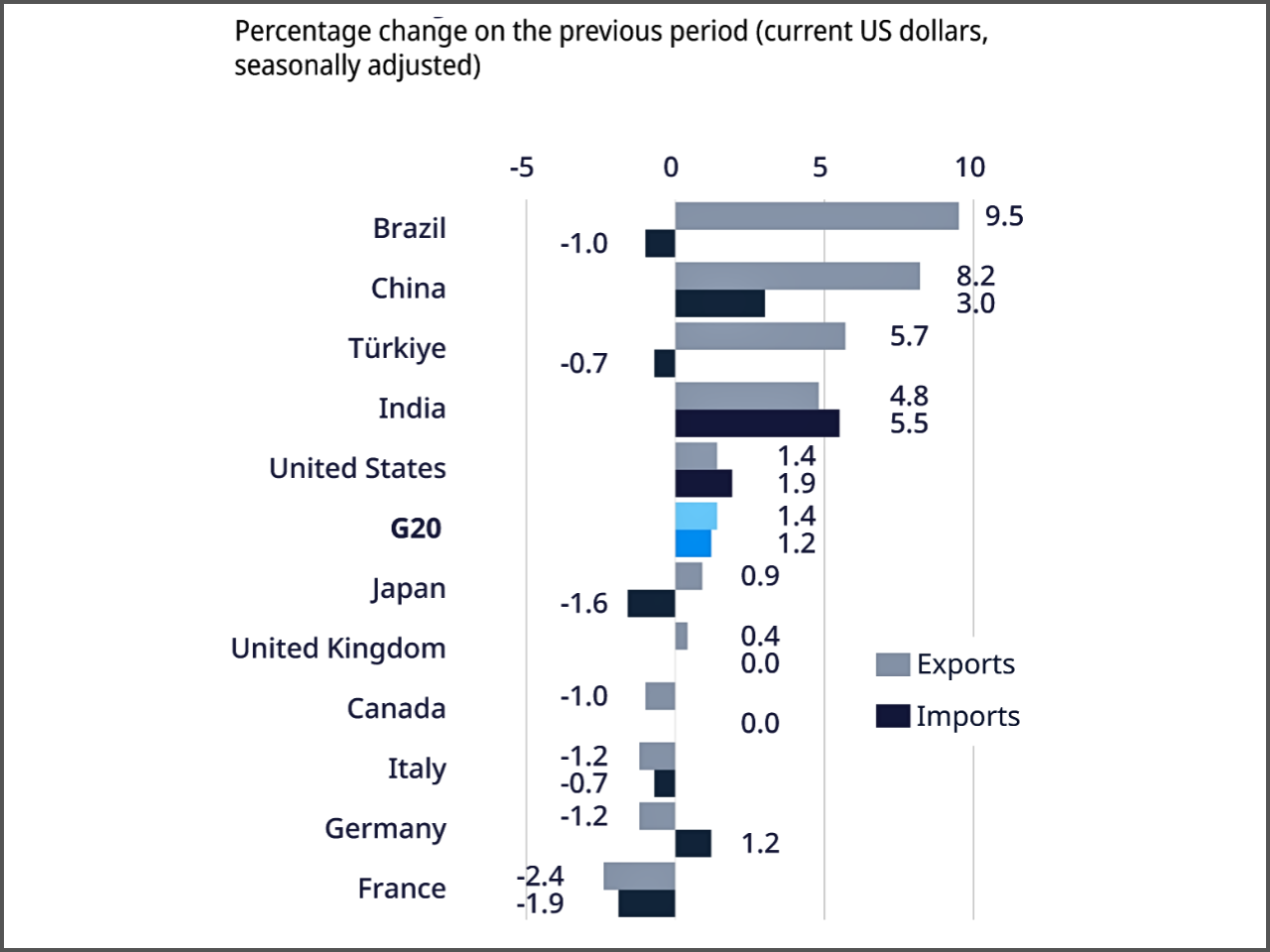
According to an OECD statistical report by the Organisation for Economic Co-operation and Development (OECD), the Fourth Quarter 2025 International Trade Statistics Report, which is focused on the slowdown of global trade developments among G20 countries in its final quarter of 2025, has mixed results in G20 economies’ merchandise trade but has seen modest growth in service trade. In the fourth quarter of 2025, G20 nations’ merchandise trade had mixed results, as G20 merchandise exports increased by only 0.9% and G20 merchandise imports decreased by only 0.5% when comparing quarterly exports and imports of the third quarter to the fourth quarter of 2025.
While these quarterly results were mixed for G20 merchandise trade, there was increased activity on an annual basis, with total G20 merchandise exports increasing 5.3% for all G20 nations and total G20 merchandise imports increasing 1.2% for all G20 nations, indicating a recovery of global trade within G20 nations. In North America, exports from the United States and Canada were primarily driven by an increase in precious metals, while Mexico saw great growth in both imports and exports largely due to machinery and electrical equipment. Trade activity in South America showed increased exports for Brazil, driven by higher export volumes of both coffee and ores; exports from Argentina increased because of export volumes of petroleum oils, while imports from both countries decreased because of weak demand. The overall trend in trade activity within Europe experienced minor reductions in cross-border trade activity for four quarters.
There was a fall-off in both exports and imports in the European Union; the United Kingdom also experienced a slowdown in trading as well. In East Asia, China registered very moderate growth of exports, while significant drops were noted in imports. Japan experienced stability of exports and deterioration in imports. In quarter four of 2025, service trade internationally grew very modestly despite the recession, as movements within this sector will continue rising steadily through 2028, supporting continued expansion of global trade overall. According to the G20 report, service exports increased by 1.4% and service imports increased by 1.2%, with significant increases from China, Brazil, and India spurred by growth within their respective service sectors (travel, ICT, and business services).
Latest News
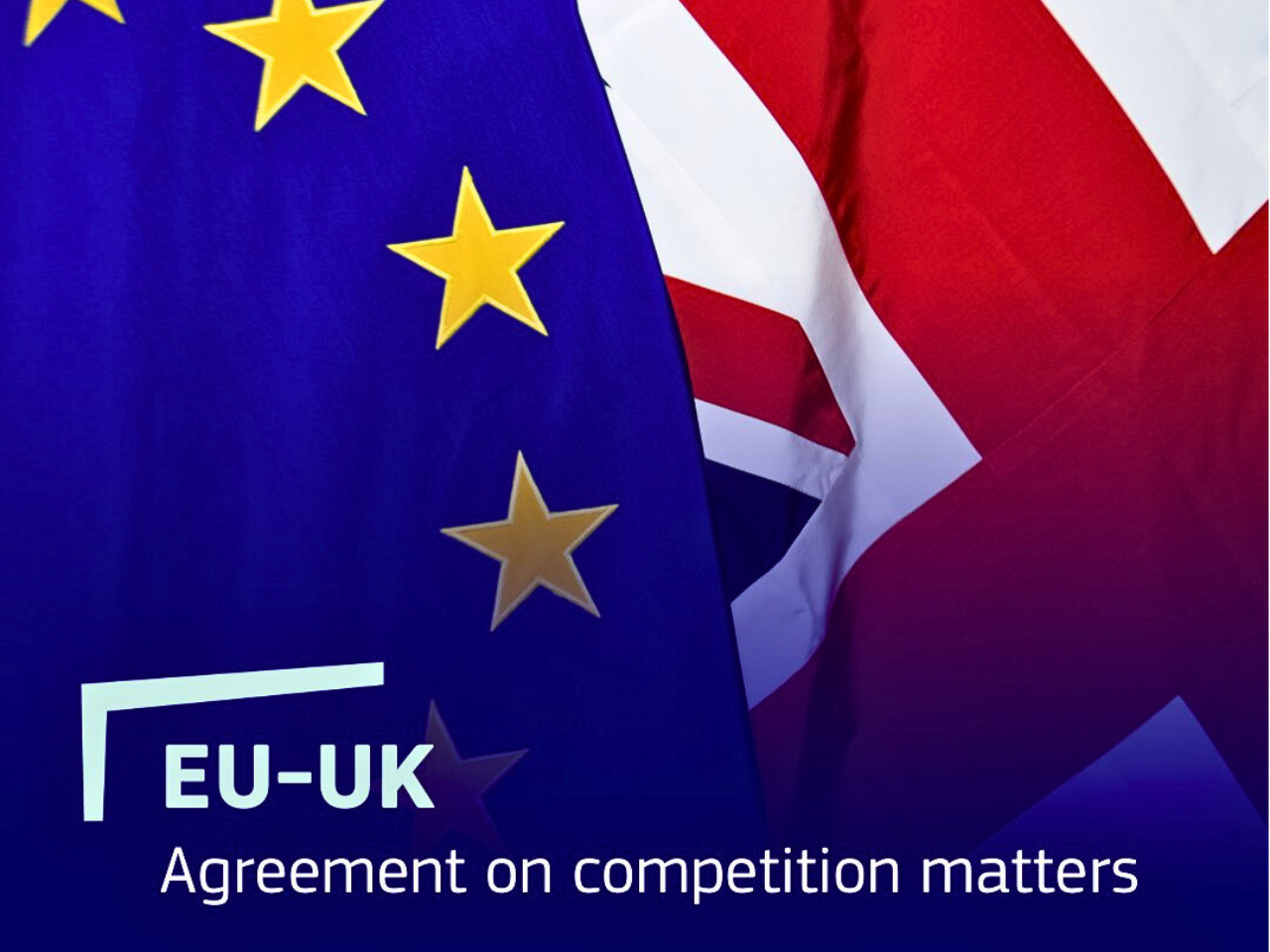
UK and EU Sign Landmark Competition Cooperation Agreement, Strengthening Post-Brexit Ties
The European Commission and EU member states, on the one hand, and the UK Competition and Markets Authority, on the other hand, to work together in relation to antitrust and merger investigations. Both parties will share information about significant antitrust and merger investigations and will coordinate their enforcement efforts to ensure consistent outcomes. The protection of confidential information is one of the main aspects of the agreement.

Philippines Economy Poised for Continued Growth, OECD Report Says
The Organization for Economic Co-operation and Development released a new report showing that the economic rise of the Philippines has continued for 15 consecutive years. The report showed the many opportunities for economic reform in order to continue this growth trend in the Philippines. The report also listed the projected GDP for the Philippines through the end of 2027. They predict that the GDP growth will be 5.1% for 2026 and 5.8% for 2027.

India's AI Revolution: Can Tech-Driven Growth Propel the Country to New Economic Heights
Recent analysis by the International Monetary Fund indicates that productivity growth could increase by almost 40 percent if the country manages to remove impediments that bar the expansion and creativity of firms. This would be economically meaningful, a boost to scale equal to adding the output of one of India's largest state economies to the national production every decade.

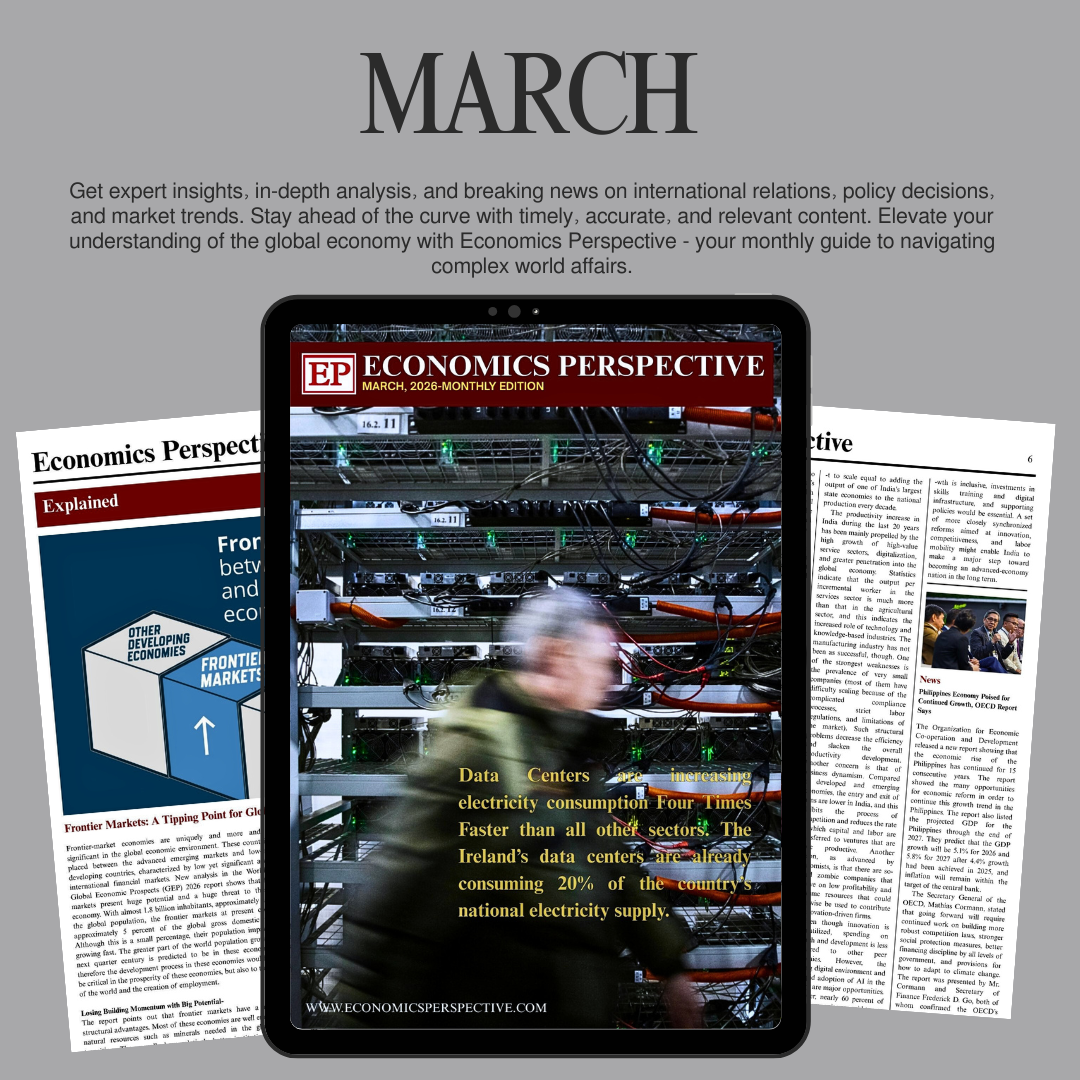
Monthly Edition
Latest Podcast

EP-Prime Membership